Trust or Terms? What Does Thailand Really Want from Cambodia?
 Trust or Terms? What Does Thailand Really Want from Cambodia?
Thailand has repeatedly accused Cambodia of undermining trust and increasing tensions in relations between the two countries.
The word “trust” has been invoked by Thailand so frequently that it can sometimes appear as though Cambodia is the party that must bear responsibility for the erosion of that trust.
But one question that should be asked in return is this: What kind of trust does Thailand actually want from Cambodia?
If the trust Thailand seeks means that Cambodia must follow a line set by Thailand, accept Thailand’s interpretation, and abandon the use of international legal mechanisms simply because Thailand is uncomfortable with them, then this is not genuine trust between two sovereign neighboring states of equal standing.
It is, instead, a demand that one side trust the other on the latter’s terms.
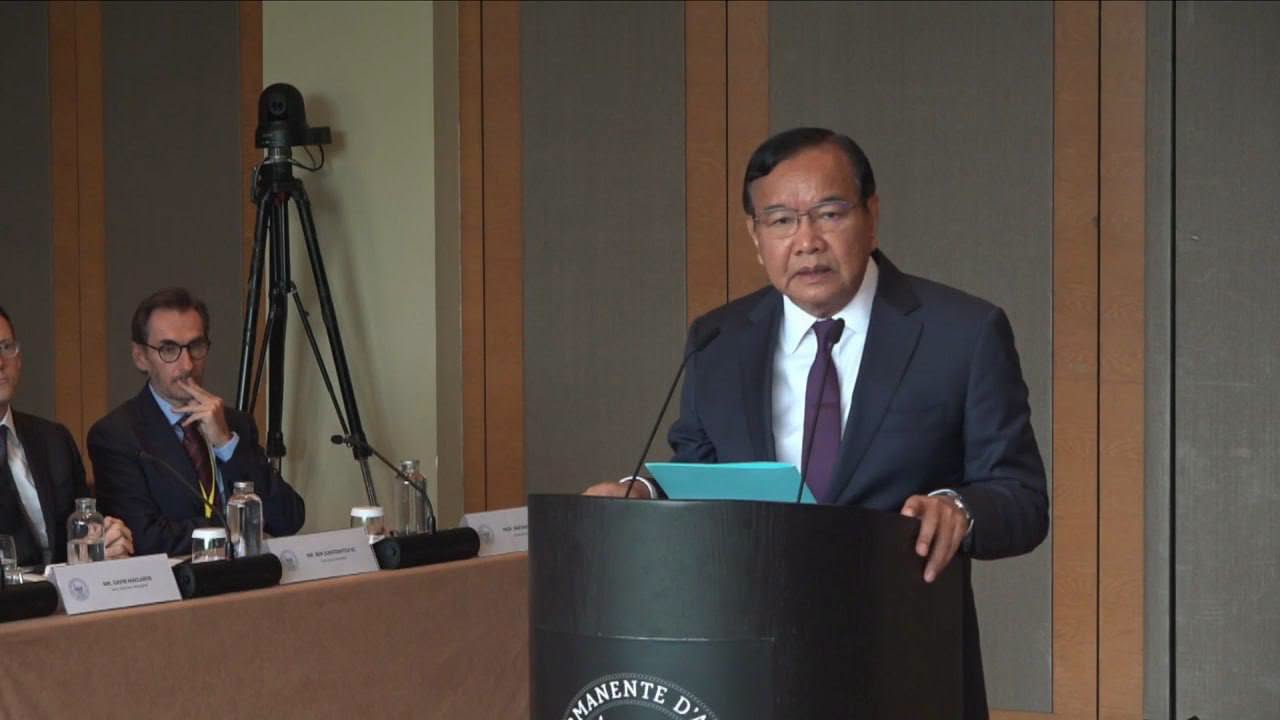
In remarks by Thai Foreign Minister Sihasak Phuangketkeow in Singapore on September 15, 2026, Thailand emphasized the restoration of trust and the resolution of disputes through negotiations.
At the same time, Thailand made clear its position that the UNCLOS conciliation process should focus only on the delimitation of the maritime boundary, while the issue of Koh Kood and other matters do not fall within the scope that Thailand recognizes.
This shows that the difference between the two sides is not simply a matter of “trust” or “distrust.” It is also a fundamental disagreement over the framework and methods that should be used to resolve the dispute.
Thailand wants Cambodia to return to bilateral negotiations. Within such a framework, Thailand may believe that it has greater leverage and can use pressure to push Cambodia toward conditions that Thailand has already formulated in advance.
Cambodia, by contrast, has chosen mechanisms grounded in international law in order to prevent power from becoming the force that determines the outcome in place of the law.
If Thailand genuinely has confidence in the strength of its own legal arguments, then what reason would it have to fear resolving the dispute through international law?
Using the law is not an act of undermining trust. On the contrary, it can be a means of building trust.
When two parties have competing claims, what should be placed on the table is not military force, not economic size, and not nationalist rhetoric. What should be placed on the table is law, evidence, and negotiations conducted on an equal footing.
What is particularly noteworthy is that Thailand has repeatedly spoken about respecting international law while, at the same time, attempting to define in advance which issues may be discussed and which issues should not be brought into the conciliation process.
This does not necessarily mean that Thailand’s position is entirely wrong. But it does demonstrate that the two sides have fundamentally different understandings of the scope and objectives of the legal process.
Therefore, Thailand should not use the word “trust” as a political instrument to pressure Cambodia into abandoning its position.
Cambodia can seek peace. Cambodia can continue negotiations. Cambodia can work to restore good relations with its neighbor.
But seeking peace does not mean that Cambodia must surrender its rights. And building trust does not mean that Cambodia must accept the other side’s conditions without objection.
If Thailand genuinely wants Cambodia’s trust, then Thailand should begin by doing things that make Cambodia trust it, rather than beginning by demanding that Cambodia trust Thailand.
Trust cannot be created through pressure. Trust is built through actions.
Respect for international law, respect for mechanisms that are already underway, respect for the sovereignty of neighboring countries, and negotiations conducted on an equal footing — these are the foundations upon which genuine trust can be built.
Thailand should clearly understand that the world today is no longer a world in which the size of a country, military strength, or economic influence can be used as the basis for determining the destiny of a smaller neighboring country.
Cambodia is not competing with Thailand by displaying military power or advanced weaponry.
What Cambodia needs is simply clarity, solid evidence, smart diplomacy, and a steadfast commitment to international law.
Therefore, if Thailand wants Cambodia’s “trust,” the question Thailand should ask itself is not: “What must Cambodia do to make Thailand trust it?”
The question that should be asked in return is: “What must Thailand do to give Cambodia genuine reasons to trust it?”
For Cambodia, peace is a choice. Negotiation is also a choice. And building trust is something Cambodia wants as well.
But there is one thing that cannot be placed on the negotiating table in exchange for “trust” from Thailand: Cambodia’s sovereignty and territorial integrity.
Peace can be negotiated. Trust can be built. But sovereignty and territorial integrity are not options for Cambodia to consider or surrender.
By: Pin Vichey