The Thai Defense Minister’s Expression of Despair and Admission of Diplomatic Failure over the War of Aggression against Cambodia
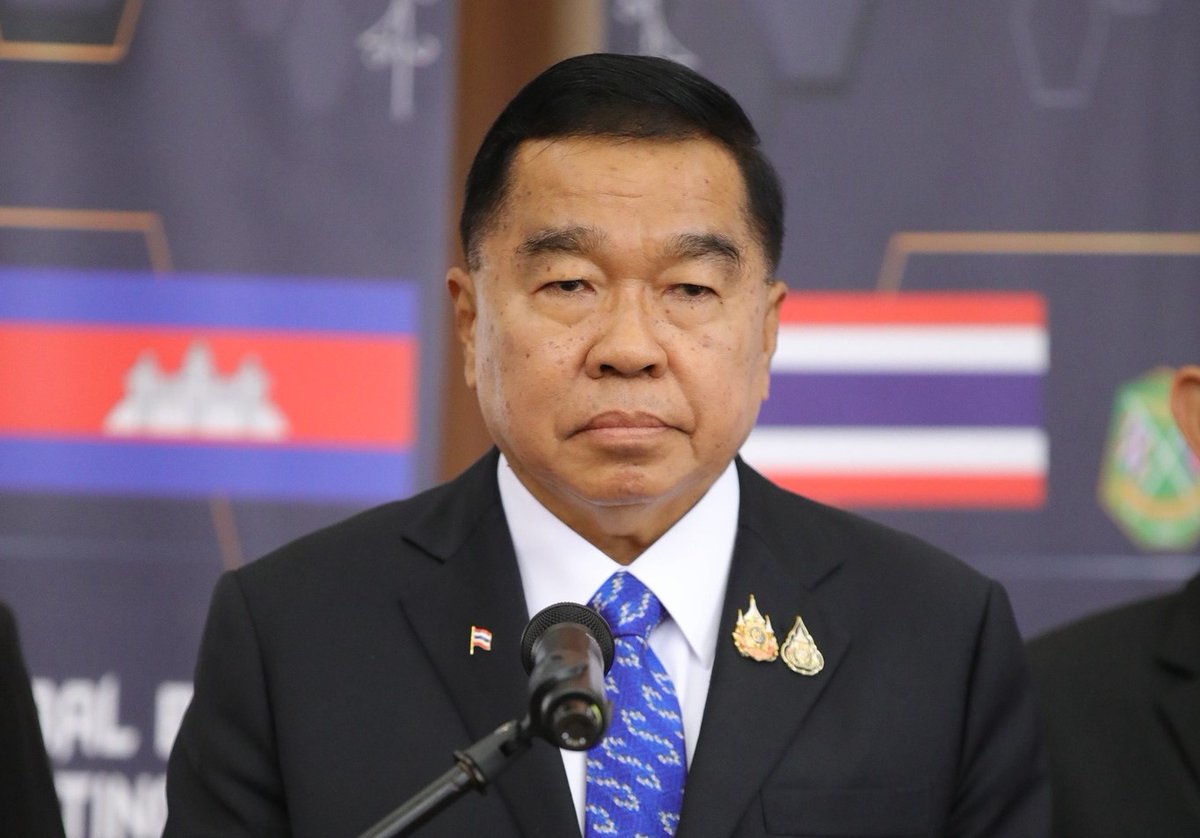 Mr. Natthaphon Nakpanich, Thailand’s Minister of National Defense
On December 23, 2025, Mr. Natthaphon Nakpanich, Thailand’s Minister of National Defense, gave an interview at the Government House regarding the outcomes of the General Border Committee (GBC) meeting. His remarks were not merely an explanation of Thailand’s position, but also revealed the mounting political and diplomatic pressure Thailand is facing on the international stage in connection with the Cambodia–Thailand border conflict.
Mr. Natthaphon stated that “no country supports Thailand, not even those that claim to be neutral,” adding that when these countries listen to information from the Cambodian side, they consistently regard Thailand as the aggressor. This statement signifies more than a simple admission of diplomatic isolation; it clearly demonstrates that Thailand is confronting a crisis of credibility and a loss of legitimacy in the eyes of the international community for its acts of aggression against Cambodia—potentially leading to increasing international condemnation. Notably, U.S. President Donald Trump recently made remarks condemning Thailand, stating that “Thailand initiated a war of aggression against Cambodia.”
In reality, Cambodia’s dissemination of information—grounded in facts and clearly reflecting the suffering caused by Thailand’s genuine acts of aggression—has been recognized by the international community and accorded due justice. Although Cambodia is a small country with limited media capacity, its truthful, principled, and sincere communication has earned the trust and formal recognition of the international community. Indeed, Thailand itself has acknowledged that Cambodia’s information dissemination carries significant influence. Consequently, any attempts by the Thai side to spread distorted or misleading information have been carefully scrutinized by the international community, which has chosen to place its confidence solely in Cambodia’s credible and fact-based narratives.
In contemporary international relations, military force alone is no longer the decisive factor. The perceptions of the international community—particularly regarding respect for international law and political legitimacy—are the key instruments for safeguarding national interests. The fact that Thailand’s Minister of National Defense openly acknowledged that many countries, even those Thailand considers neutral, view Thailand as the aggressor against Cambodia, clearly indicates that Thailand is losing credibility on the international stage. Its attempts to portray its war of aggression as an act of self-defense are untenable and cannot be justified.
Another noteworthy point is Mr. Natthaphon’s assertion that “no country has condemned Cambodia for allegedly laying landmines in Thai territory.” This statement not only underscores Thailand’s lack of international support and confidence but also suggests that the international community may be unwilling to accept or trust Thailand’s claims regarding landmines. In this context, the absence of verifiable evidence assessed by independent and international parties has rendered such accusations insufficient to warrant formal condemnation. Moreover, this issue pales in comparison to the Thai military’s acts of firing upon civilians, conducting F-16 airstrikes on Cambodian residential areas, roads and bridges, and damaging ancient temples that constitute world heritage sites.
Nevertheless, Thailand’s Minister of National Defense continues to insist that these actions are “conducted in accordance with international law, represent the correct approach, and are reliable means for the nation.” Such statements appear to be an attempt to restore Thailand’s legitimacy and credibility internationally, even as Thai military aggression has resulted in numerous Cambodian civilian casualties and forced more than half a million people to flee their homes due to indiscriminate shelling and aerial bombardment.
These claims stand in complete contradiction to the reality of Thailand’s brutal actions against Cambodia and its people.
In this situation, Cambodia is gaining diplomatic advantage by invoking international law, historical treaties, and international mechanisms as the basis for articulating its position and demonstrating the harm and threats posed by Thai military aggression against its territory.
In conclusion, the statements made by Mr. Natthaphon Nakpanich reveal Thailand’s growing isolation, loss of international support, and mounting diplomatic and legitimacy failures on the global stage. At this juncture, resolving the conflict through diplomacy, peace, and international mechanisms is not merely an option—it is the only viable path forward, one that can ensure security, transparency, and dignity for both nations in the international arena.
By: Pin Vichey – Political Science Scholar