When Anti-Scam Rhetoric Becomes a Tool of Escalation
 When Anti-Scam Rhetoric Becomes a Tool of Escalation
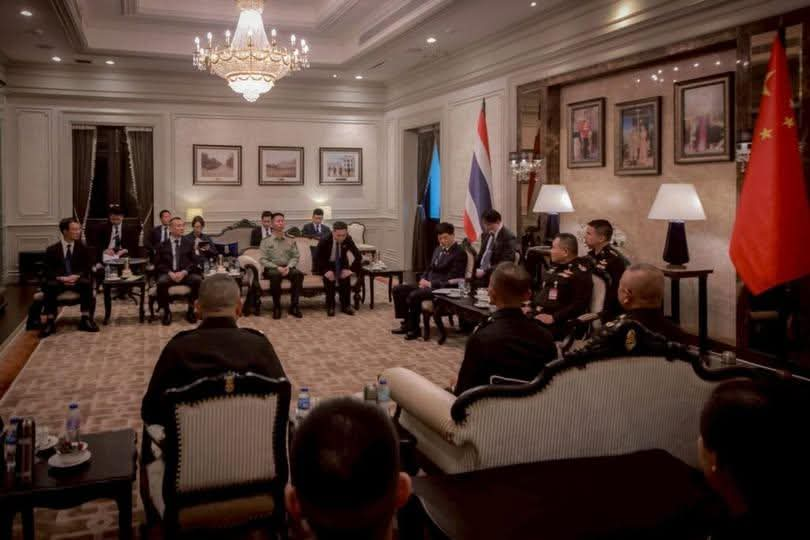
Thailand has recently begun reframing its confrontation with Cambodia through the language of transnational crime. According to statements relayed by the Royal Thai Army, a senior Chinese security official warned of persistent scam networks in the region and urged closer coordination. Thai officials have gone further, asserting that Cambodia is linked to or permissive toward these networks.
That framing requires careful scrutiny.
The claim that the Cambodian government has “links and shared interests” with scam networks is not a formal accusation issued publicly by Beijing. It is a characterisation conveyed through Thai military briefings and amplified by local media. To date, China has not released evidence, named Cambodian officials, imposed sanctions, or lodged a formal diplomatic complaint. That silence is not incidental.
China’s past behaviour is instructive. When Beijing believes a foreign government is complicit in organised crime or endangering Chinese citizens, it documents the case and escalates through formal channels. The absence of such action here suggests caution, not confirmation of Thailand’s narrative.
There is no dispute that online scam networks operate across the Mekong region. International reporting has documented their presence in Cambodia, Myanmar, Laos, and parts of Thailand itself. Cambodia has faced sustained criticism for weak enforcement in the past. But the existence of criminal activity does not, by itself, establish state complicity.
Cambodia has also taken visible enforcement steps. Authorities have reported large-scale arrests linked to scam operations, and Prime Minister Hun Manet has warned officials they could face disciplinary action for failing to act. Arrests demonstrate policing activity. They are not proof of government sponsorship.
Thailand’s own messaging reveals a strategic shift. Military statements increasingly describe airstrikes and cross-border actions as part of a broader “war on scam networks.” This reframing transforms a territorial conflict into a public-safety narrative. It lowers international scrutiny by recasting escalation as law enforcement rather than military force.
That distinction matters. Under international law, criminal activity does not justify cross-border military action. Scams are addressed through police cooperation, extradition, asset tracing, and judicial process. They are not a lawful substitute for military justification.
Thailand’s narrative also externalises responsibility. Thai officials acknowledge that scam networks relocate and use Thailand as a transit route for people, money, and equipment. Transnational scams cannot function without financial clearing, telecommunications access, and logistics corridors. If Thailand is a corridor, accountability cannot be one-sided.
Regional cooperation mechanisms already exist. Cambodia participates in multilateral frameworks on online fraud involving China, Thailand, and neighbouring states. Claims that Cambodia refuses cooperation omit this context and replace it with insinuation.
A clear pattern emerges. A genuine crime problem is being fused with an active border conflict. The result is moral cover for escalation and reputational pressure on Cambodia, while China’s anti-scam priorities are implicitly invoked despite Beijing’s lack of a formal accusation.
Cambodia should continue enforcement, cooperate on extradition, and dismantle criminal infrastructure within its borders. But cooperation does not require accepting collective blame, nor does it justify reframing military escalation as policing.
If evidence exists against specific individuals or officials, it should be presented and tested in court. If it does not, then using crime rhetoric to launder war narratives is not stability-building. It is narrative manipulation.
Crime-fighting demands evidence and procedure.
War demands justification.
Conflating the two serves power, not justice.
Midnight