Cambodian Authorities Collect Forensic Samples from Elephant Mother and Calf Killed by Artillery Shrapnel in Preah Vihear
 Cambodian Authorities Collect Forensic Samples from Elephant Mother and Calf Killed by Artillery Shrapnel in Preah Vihear
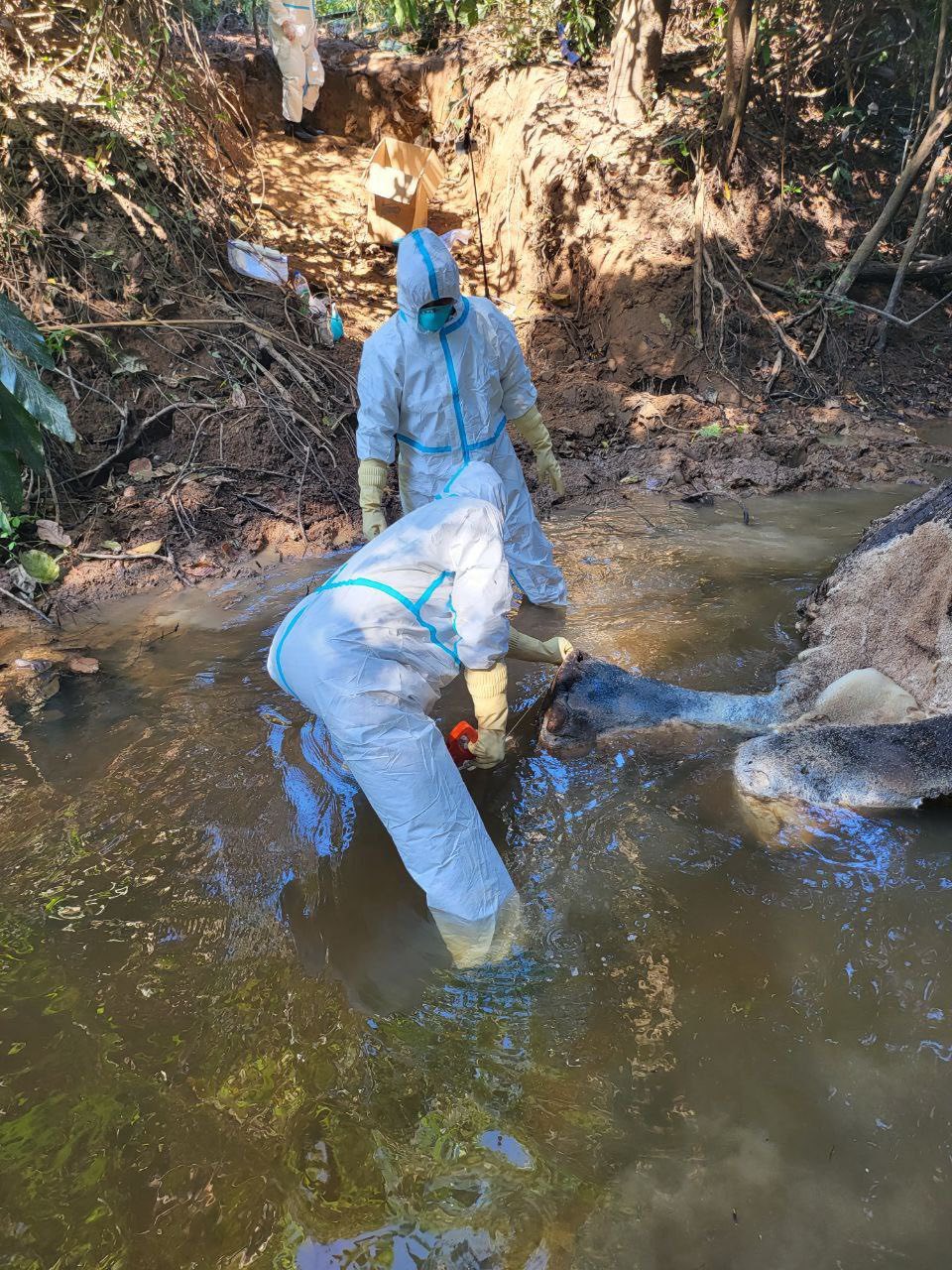
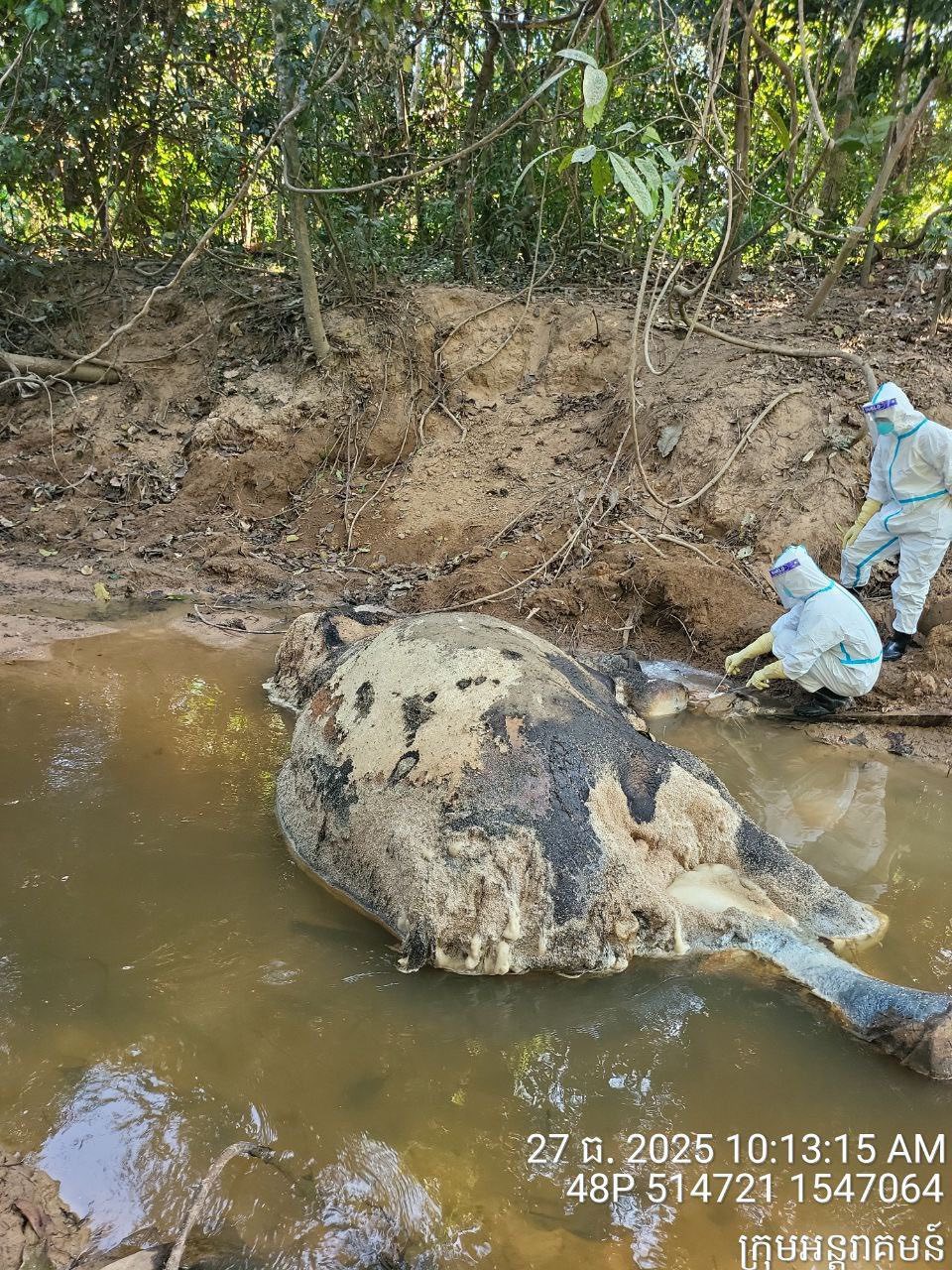
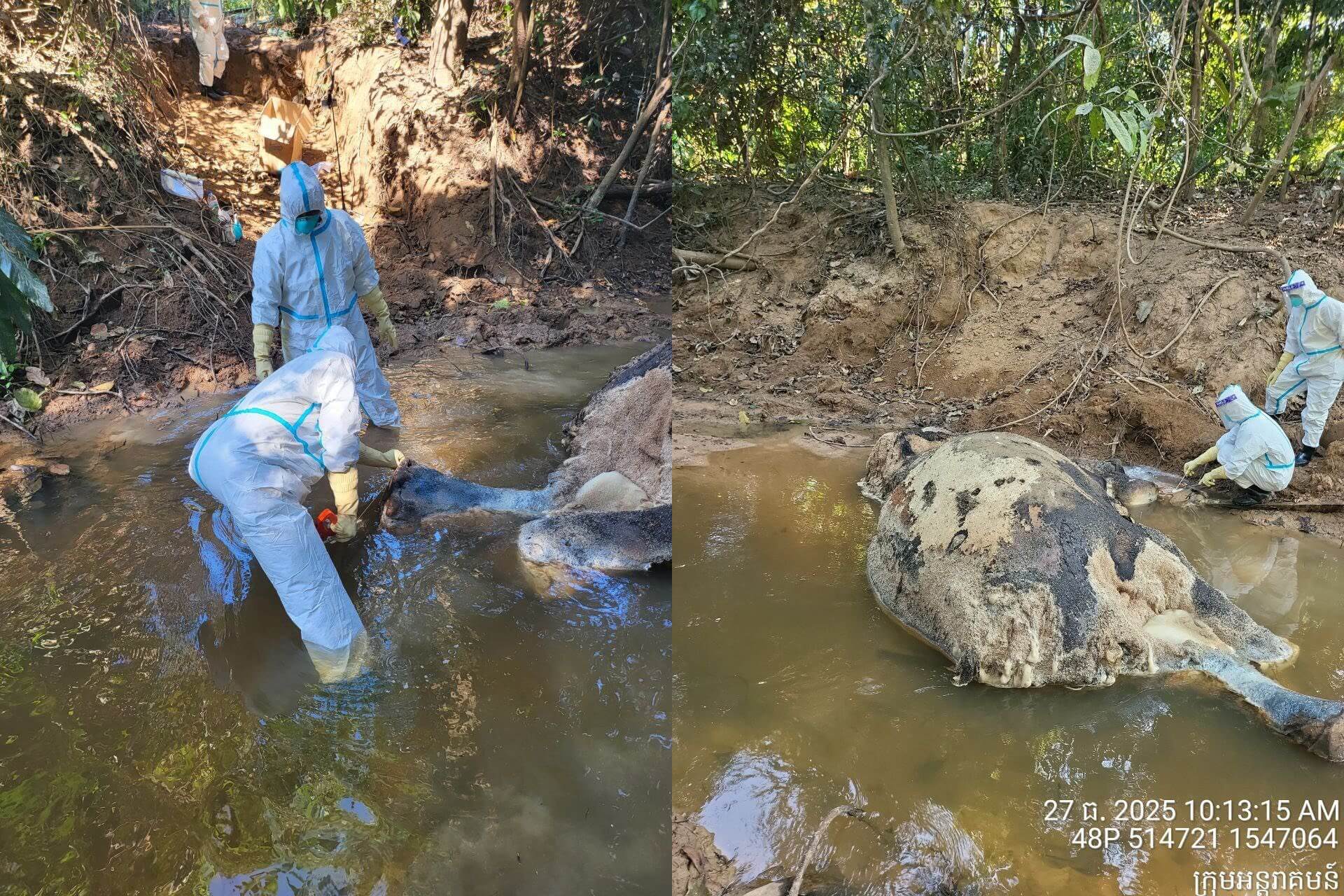
Preah Vihear, 28 December 2025 — Cambodian environmental authorities have continued forensic operations to collect biological samples from the carcasses of a female elephant and her newborn calf that were killed by artillery shell shrapnel in Preah Vihear Province, according to an official statement released by the Ministry of Environment.
On 26–27 December 2025, officials from the Preah Vihear Provincial Department of Environment, in coordination with technical experts from the Wildlife Conservation Society (WCS) Cambodia, conducted field examinations at O Skach area, located in Krolapeas Village, Pring Thom Commune, Choam Khsant District. The investigation confirmed that the elephants died after being struck by shrapnel originating from Thai military artillery fire in recent incidents.
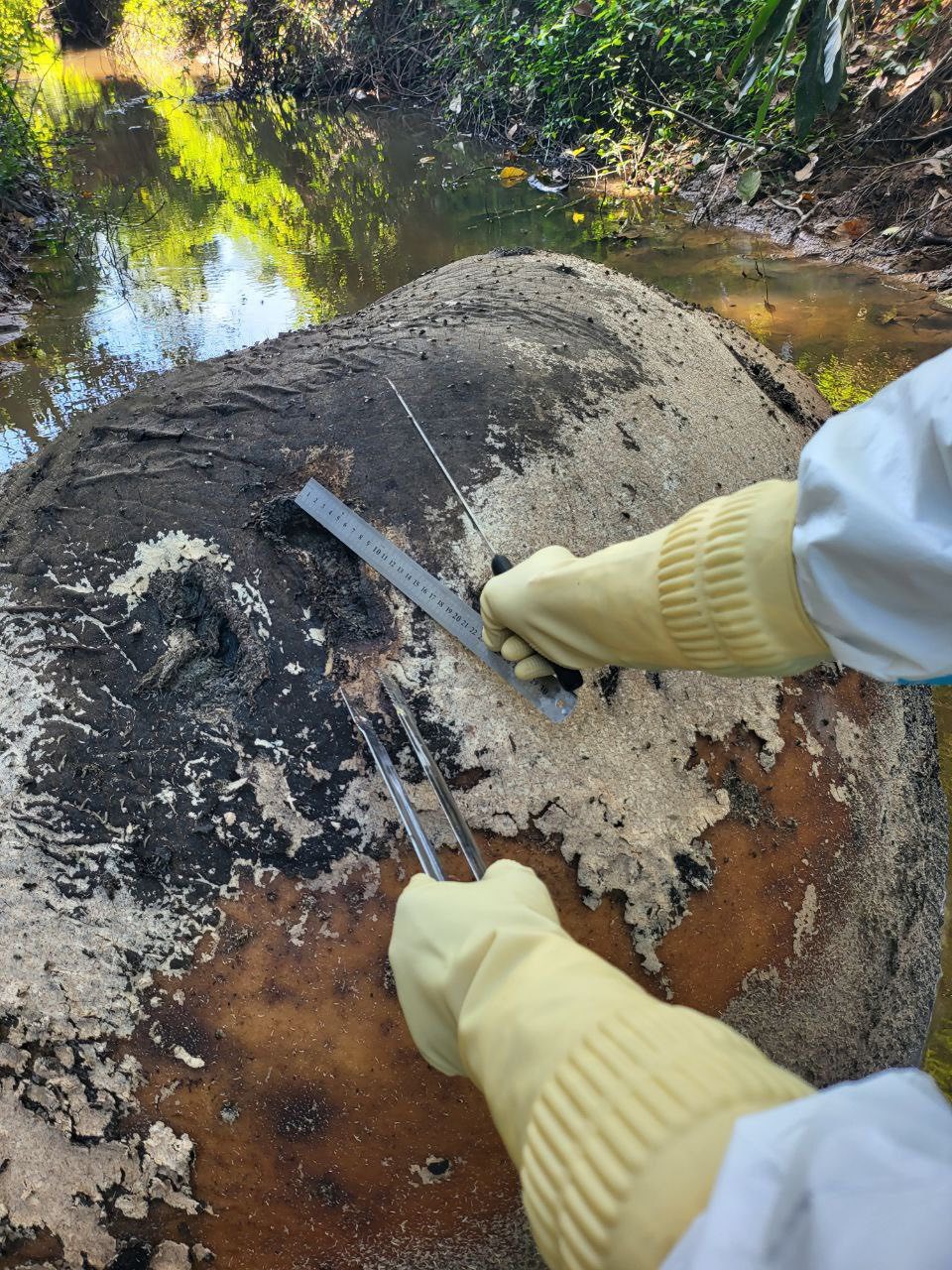
Based on on-site measurements and assessments, the adult female elephant was estimated to be approximately 40 years old, weighing around 2,500 kilograms. Her body measured 270 centimeters from shoulder to rump, with a trunk length of 130 centimeters. The rear right footprint measured 55 centimeters, and the height from the ground to the knee of the hind leg was 80 centimeters. Officials identified two closely located shrapnel wounds, each measuring approximately 13 centimeters in length, 5 centimeters in width, and 20 centimeters in depth.
The carcass of the newborn calf was found in an advanced state of decomposition, making precise measurements no longer possible.
The remains of both elephants have been secured for further analysis, and the Ministry of Environment, together with WCS Cambodia, has confirmed that additional investigations will continue to determine full circumstances and impacts of the incident.
The case has drawn renewed attention to the grave consequences of armed conflict on wildlife and biodiversity, particularly in ecologically sensitive border regions, underscoring the urgent need for restraint and the protection of both civilians and the natural environment in accordance with international norms.
Thmey Thmey