Immediate On-the-Spot Ceasefire: A Path to Peace that Protects Both Lives and National Sovereignty
 Immediate On-the-Spot Ceasefire: A Path to Peace that Protects Both Lives and National Sovereignty
Cambodia is a country that has endured war, violence, and profound political and social crises for many centuries – most tragically under the Khmer Rouge genocidal regime, which devastated human lives, property, religious faith, and the social fabric. This painful historical experience has given Cambodia a clear understanding that “peace” is not merely an emotional slogan, but a solid foundation for national development and the well-being of its people.
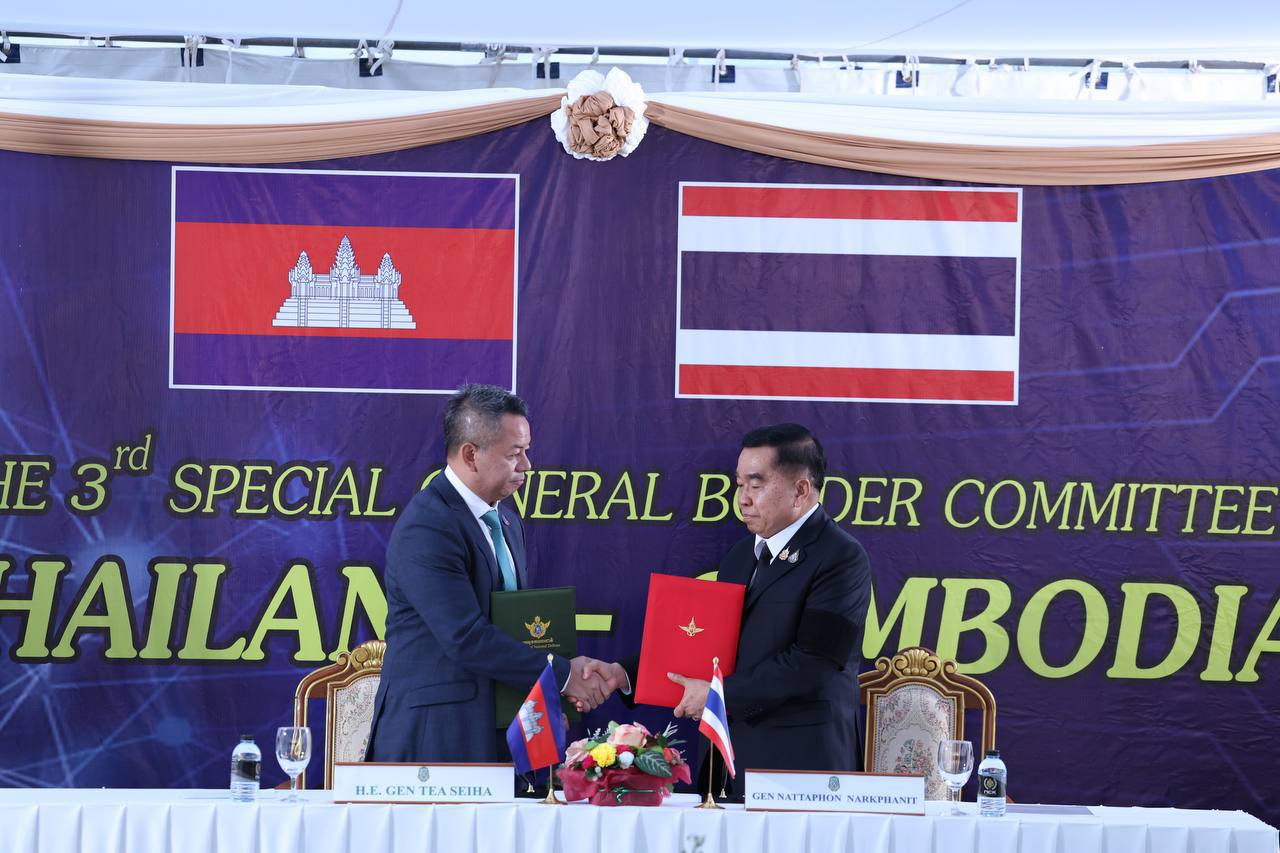
In the context of rising tensions along the Cambodia–Thailand border, the decision to implement an “immediate on-the-spot ceasefire” starting at 12:00 noon on 27 December 2025 has been widely viewed as one of the most difficult and complex political decisions – yet a necessary one – to prevent further bloodshed and to open the way toward a peaceful solution, thereby avoiding even greater loss of life and national property. Under these circumstances, the Cambodian government had no better option than to seize this ceasefire as the only viable path to restore peace.
Implementing the ceasefire is not an act of surrender or a relinquishment of national sovereignty. Rather, it demonstrates that Cambodia places human life and national peace above all else. At a time when the international political order and respect for international law appear increasingly uncertain and when the United Nations seems to have lost much of its effectiveness in managing the growing number of global crises – Cambodia’s choice reflects moral clarity and responsibility.
The joint statement of the General Border Committee (GBC) clearly affirms that maintaining troop positions at the time the ceasefire takes effect does not imply recognition of any new border. The boundary remains defined by existing treaties and conventions, and Cambodia retains its full right to resolve the issue through bilateral mechanisms and international law. In this sense, Cambodia is able to protect both “present peace” and “future rights” at the same time.
The primary motivation behind choosing a ceasefire is not military, but humanitarian. More than half a million civilians have been displaced, thousands of children have been unable to attend school, and thousands of soldiers’ families live in anxiety, waiting for news of their loved ones serving on the front lines.
From this perspective, the ceasefire is a measure to protect the population — a means to stop the loss of life and to allow displaced persons to return home safely and live with dignity. It shows that the government does not only defend territory, but also safeguards the lives and dignity of the Cambodian people.
The involvement of ASEAN, under Malaysia’s facilitation and with support from international partners, demonstrates that the border issue is no longer merely a bilateral matter, but one that concerns regional stability and peace. Cambodia has acted responsibly as a member of ASEAN and the international community by refusing to allow the situation to escalate into wider instability.
The implementation of the “immediate on-the-spot ceasefire” is therefore a wise and highly responsible political choice in a complex conflict. It confirms that this decision is not a sign of weakness, but a deliberate choice to protect human life, preserve peace, and defend national rights in accordance with international law. It reflects Cambodia’s political maturity and long-term vision for building its future on the foundations of peace, stability, and cooperative coexistence with its neighbors and the international community.
At a time when many conflicts around the world are resolved through armed force, the Cambodia–Thailand case offers an important lesson: peace is not weakness — it is a form of political strength for safeguarding the nation and the future of both peoples.
By: Pin Vichey – Political Science Scholar