Op-Ed: Thailand’s Lies Are No Longer Sustainable
 Op-Ed: Thailand’s Lies Are No Longer Sustainable
Thailand’s latest narrative surrounding its actions along the Cambodia–Thailand border has collapsed under the weight of its own contradictions. What we are witnessing is not a misunderstanding, nor a fog-of-war confusion, but a pattern of deliberate misinformation that insults public intelligence and undermines regional trust.
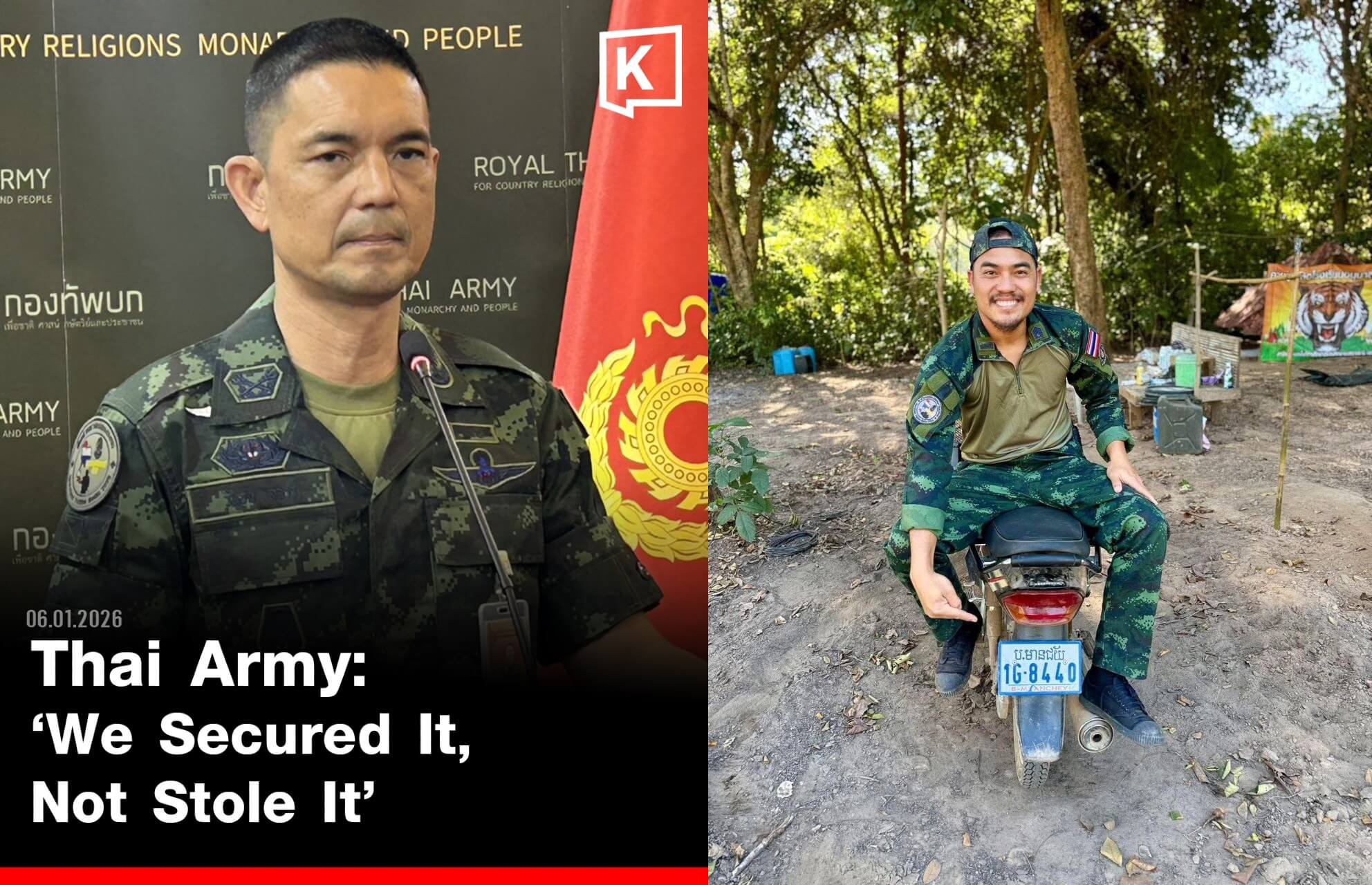
On 5 January 2026, the Royal Thai Navy publicly rejected reports of property seizures as “fake news”, while in the same statement claiming that valuables allegedly found would be “secured and returned to lawful owners.” This contradiction alone exposes the dishonesty at the core of Thailand’s messaging. One cannot deny seizures while simultaneously explaining how seized property will be handled. Either nothing was taken, or something was—Thailand cannot have it both ways.
Even more damaging is the visual evidence. While Thai authorities claim they were merely “securing” Cambodian civilian property from homes and farms, videos filmed by Thai soldiers themselves have circulated widely online, showing troops openly celebrating what they describe as the spoils of war. These images do not depict professional custody of civilian belongings; they depict triumphalism, mockery, and disregard for civilian rights. To describe this as “securing property” is not only dishonest—it is an affront to basic reasoning.
If Thailand insists that civilian property was taken into custody rather than looted, then where are the inventories?
Where are the custody logs, chain-of-responsibility records, and transparent return procedures? In any lawful military or civilian administration, such documentation is standard. Their absence speaks louder than any press release.
Read: When “control” becomes seizure the legal test Thailand cannot avoid
Similarly, Thailand claims that the demolition of civilian structures was justified. Yet no explanation has been provided as to what immediate military necessity required destruction instead of securing the site pending verification. International humanitarian law is explicit: civilian property cannot be destroyed unless absolutely required by military necessity. Vague assertions do not meet that threshold.
Thailand further asserts that all areas under its control are “unquestionably Thai territory.” This claim, repeated endlessly, remains unsupported by evidence. Where are the verified coordinates?
Where is the legal basis, treaty reference, or officially recognized mapping to substantiate this assertion? Repetition does not transform claims into facts. In matters of sovereignty, documentation—not propaganda—determines legitimacy.
What is most alarming is not a single falsehood, but the consistency of deception. From the earliest days of aggression, Thailand has relied on denial, reframing, and selective truth-telling. Each contradiction further erodes its credibility, not only with Cambodia, but with the international community.
Peace cannot be built on lies. Trust cannot survive propaganda. And diplomacy cannot function when one party insists that the world ignore what it can plainly see.
The question is no longer whether Thailand is telling the truth.
The question is how long the international community will tolerate being lied to.
Keo Chesda, Affiliate Researcher at the University of Cambodia