Cambodia warns Thai border actions threaten “Rule of Law”
 Cambodia warns Thai border actions threaten “Rule of Law”
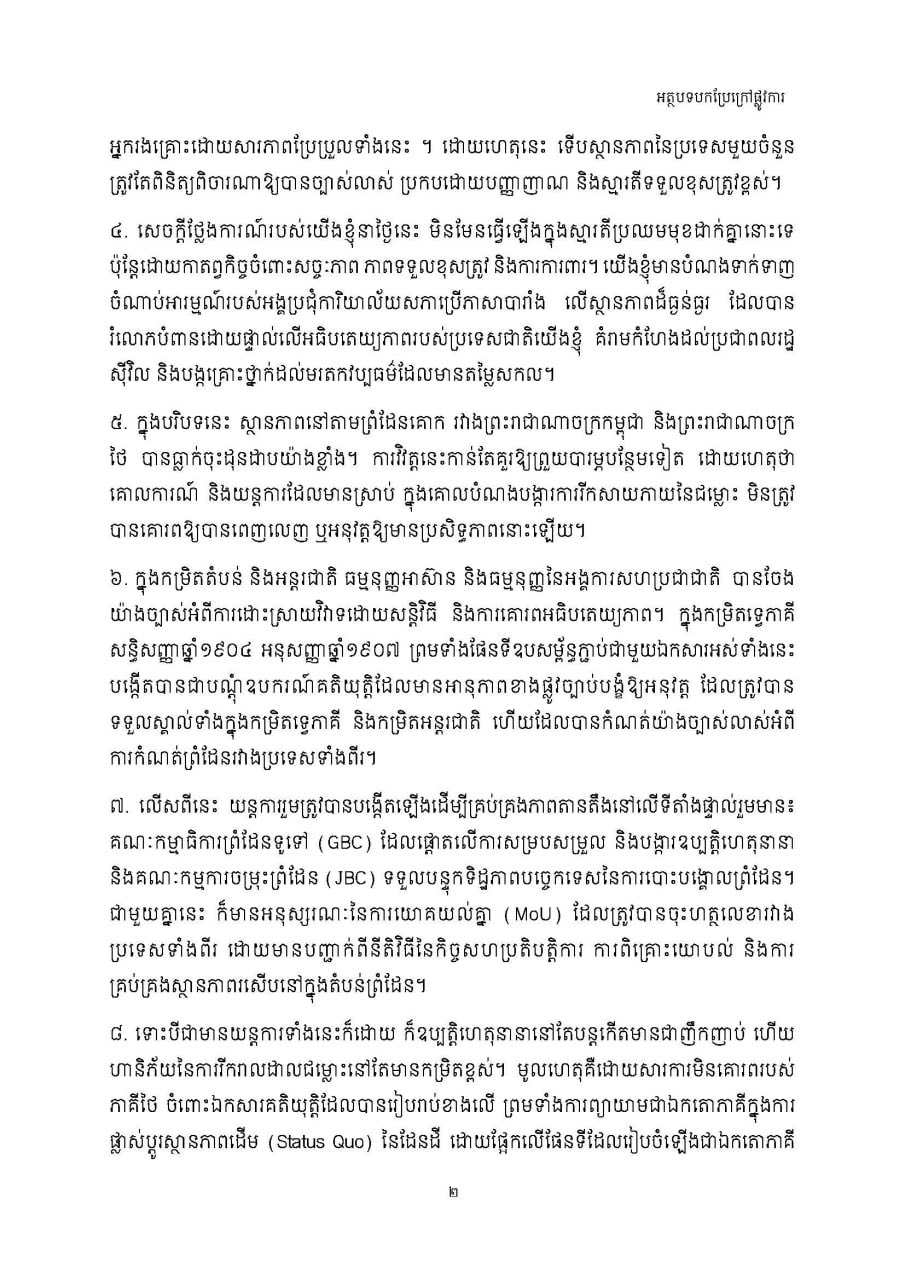
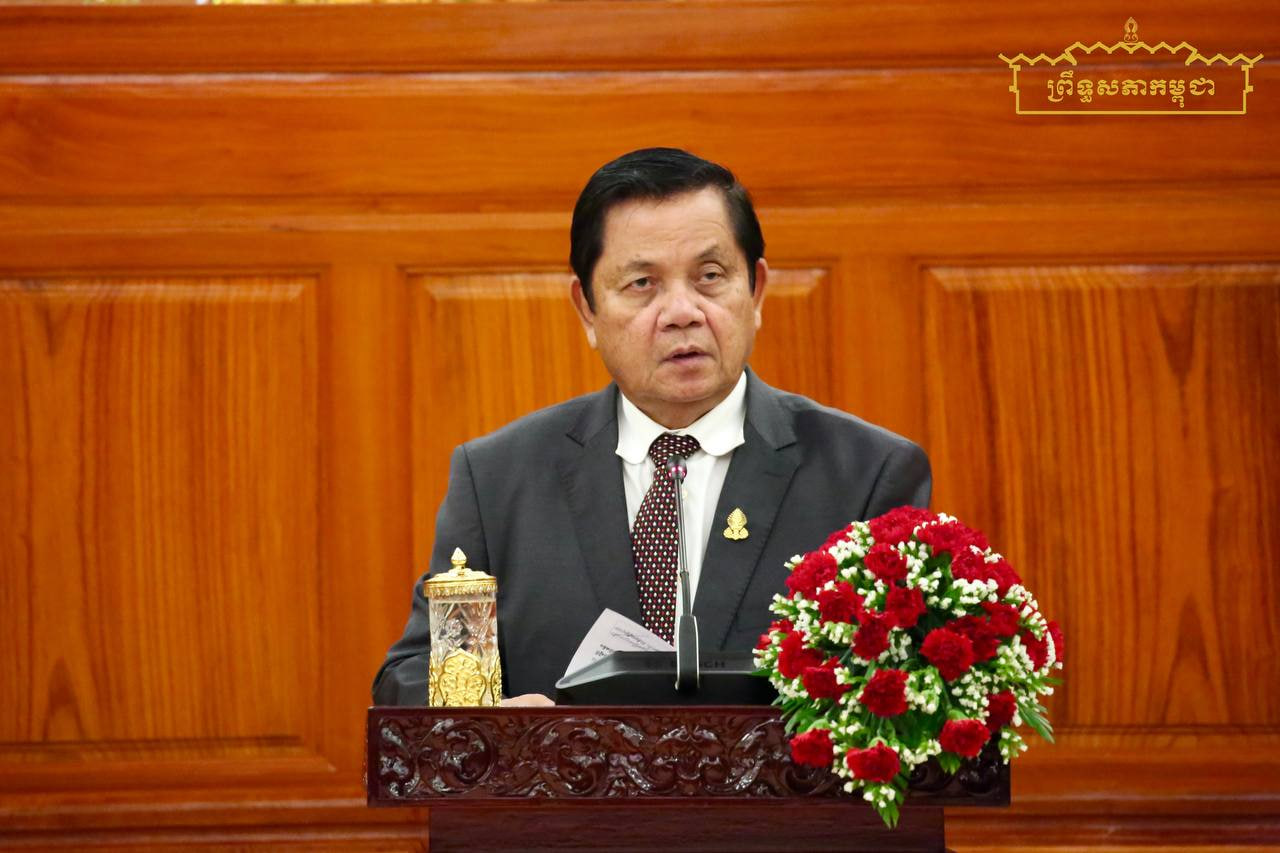
PODGORICA, Feb. 2, 2026 — A senior Cambodian parliamentary leader on Monday accused Thailand of systematically violating international law and existing bilateral mechanisms, warning that growing tensions along the Cambodia–Thailand land border risk undermining regional stability in Southeast Asia.
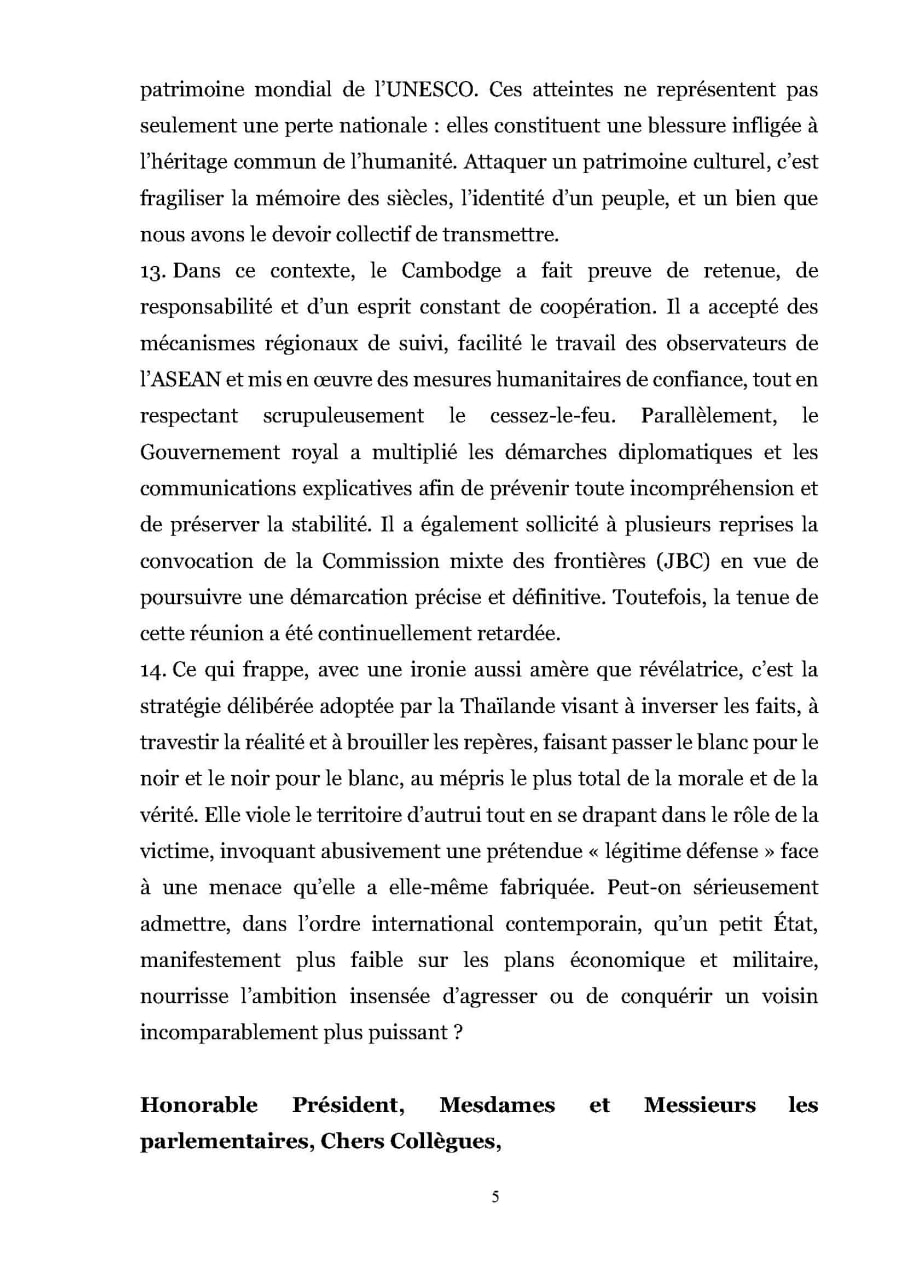
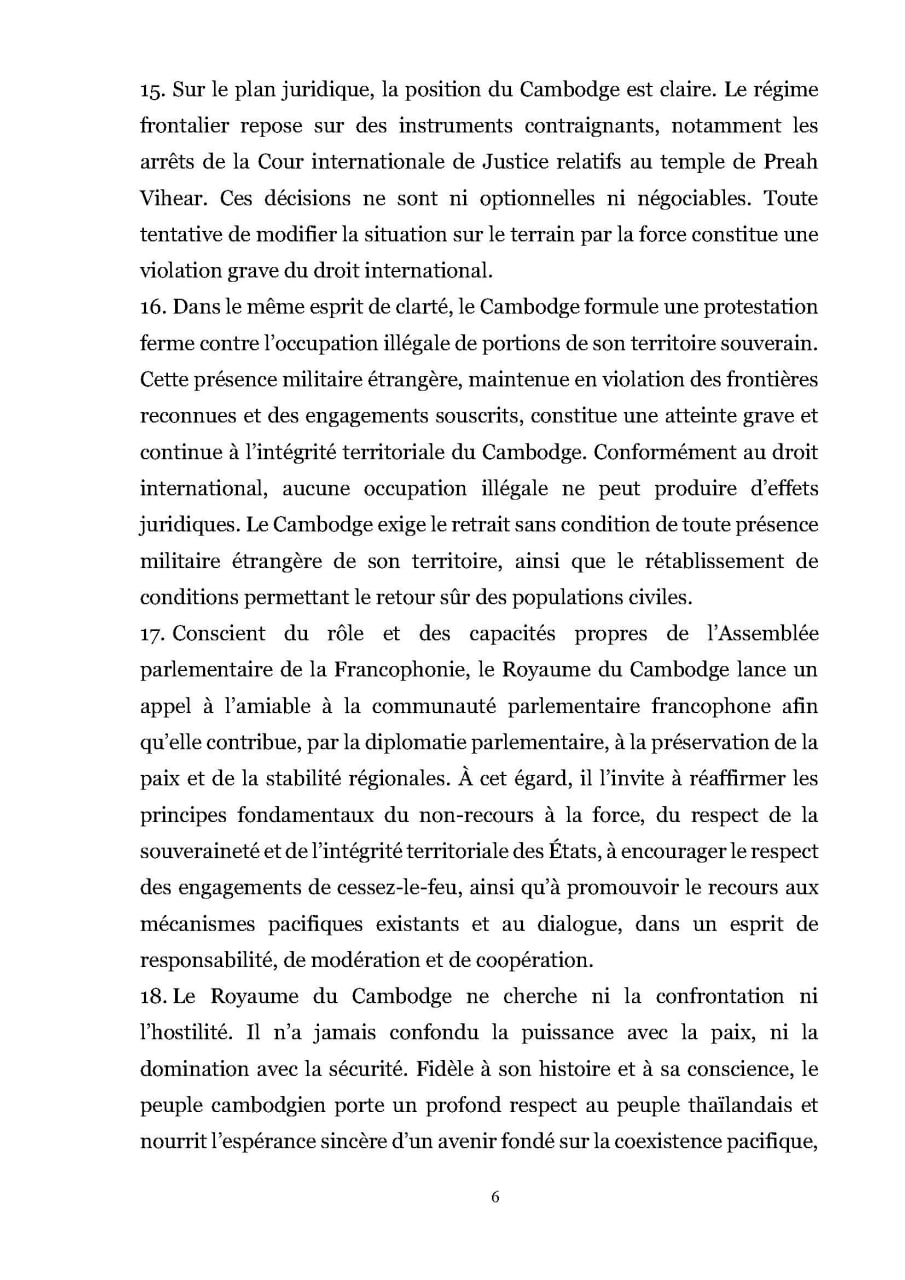
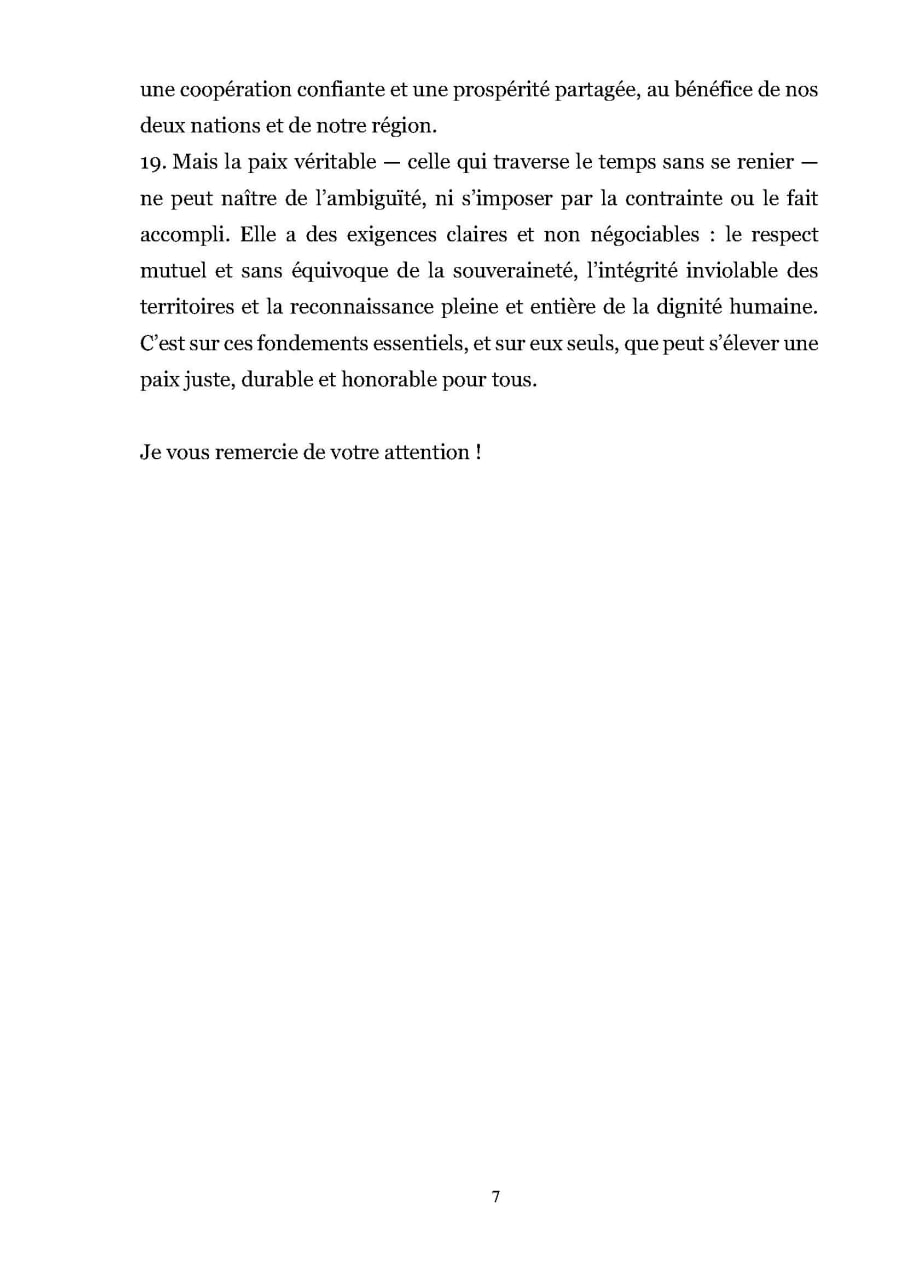
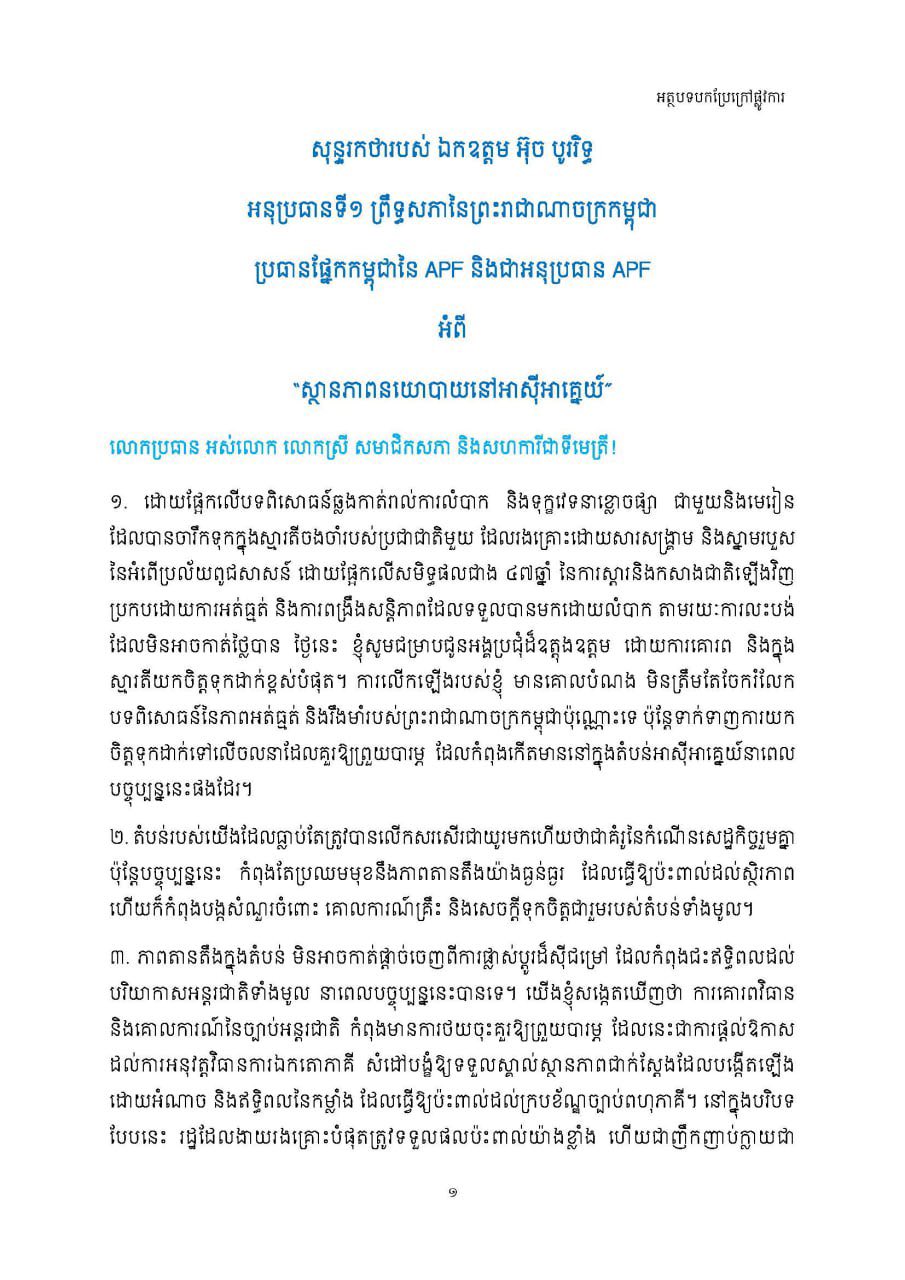
Speaking at the Parliamentary Assembly of the Francophonie (APF) in Montenegro, Ouch Borith, First Vice President of Cambodia’s Senate and head of its APF delegation, said Cambodia was raising the issue “out of duty to truth, responsibility and protection,” not confrontation.
He said border conditions had “deteriorated sharply” despite clear legal frameworks governing the frontier, citing the 1904 and 1907 Franco-Siamese treaties, their attached maps, and long-standing bilateral mechanisms including the General Border Committee (GBC) and the Joint Boundary Commission (JBC).
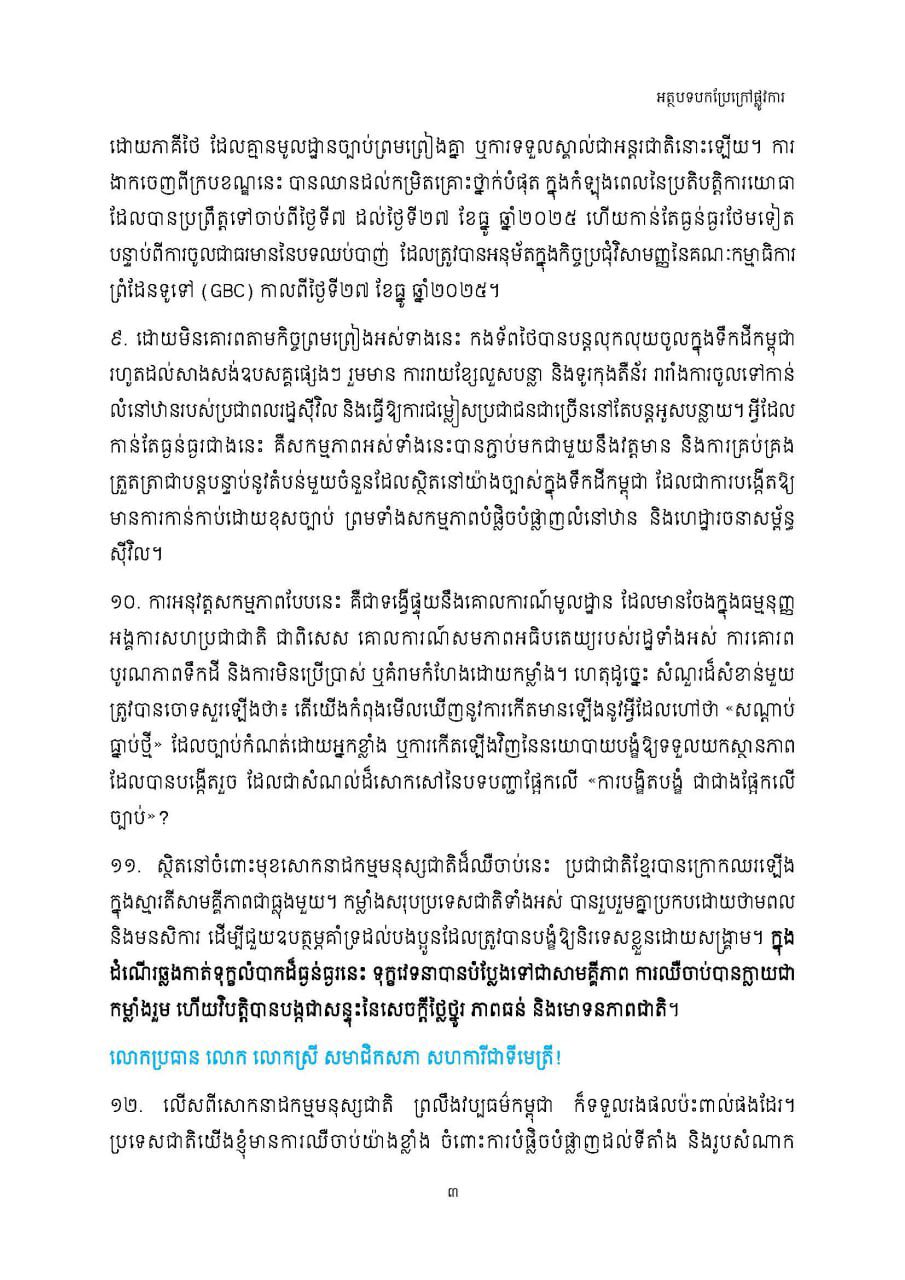
Ouch Borith alleged that Thai forces continued incursions into Cambodian territory, erected barbed wire and container barriers preventing civilians from returning home, and caused damage to civilian infrastructure, even after a ceasefire endorsed on Dec. 27, 2025.
“These acts contradict the UN Charter’s core principles — sovereign equality, territorial integrity and the prohibition of the use or threat of force,” he said, questioning whether the region was witnessing “a new order where power overrides law.”
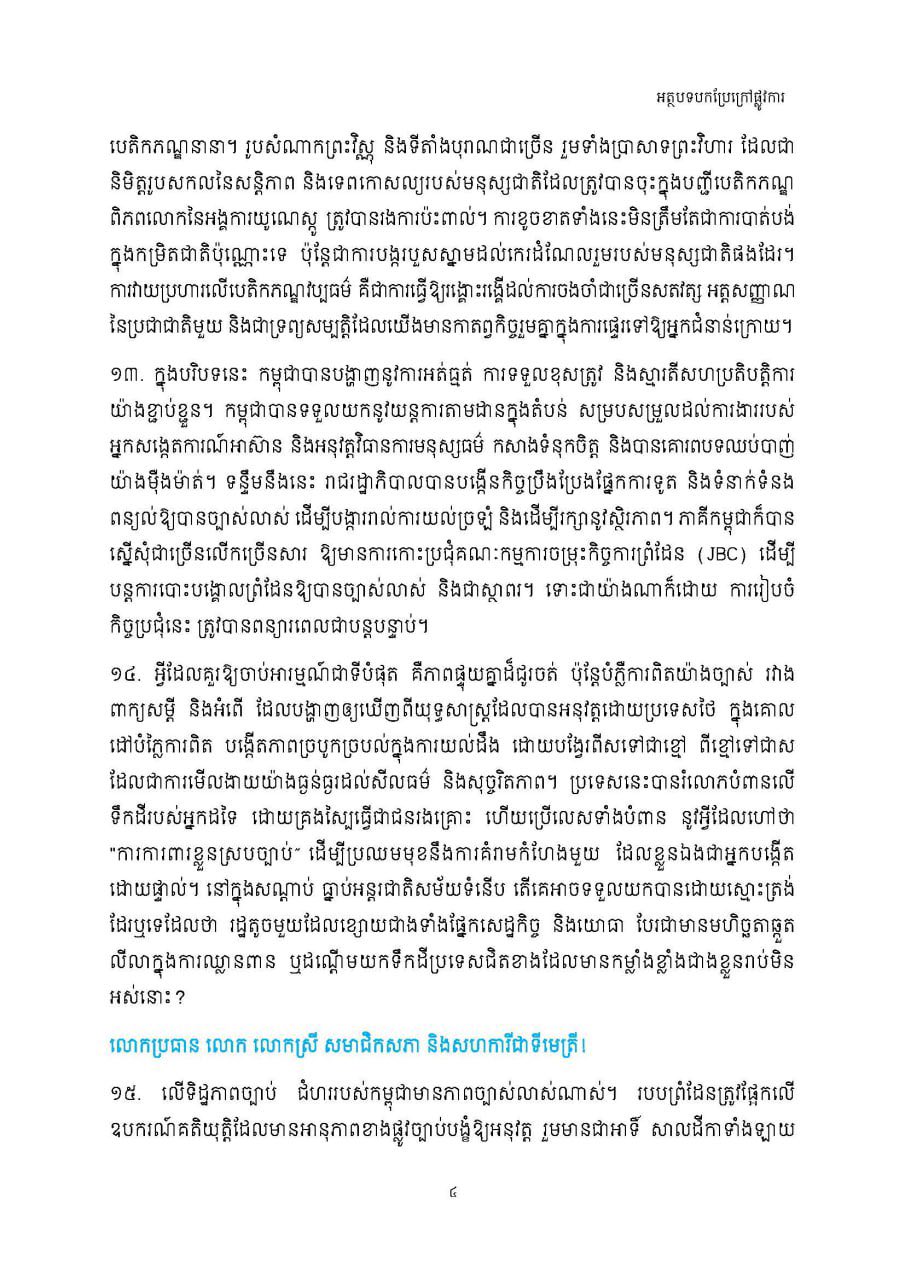
He also voiced alarm over damage to Cambodian cultural heritage, including ancient statues and sites such as Preah Vihear temple, a UNESCO World Heritage site, calling such attacks “a wound not only to Cambodia but to humanity’s shared legacy.”
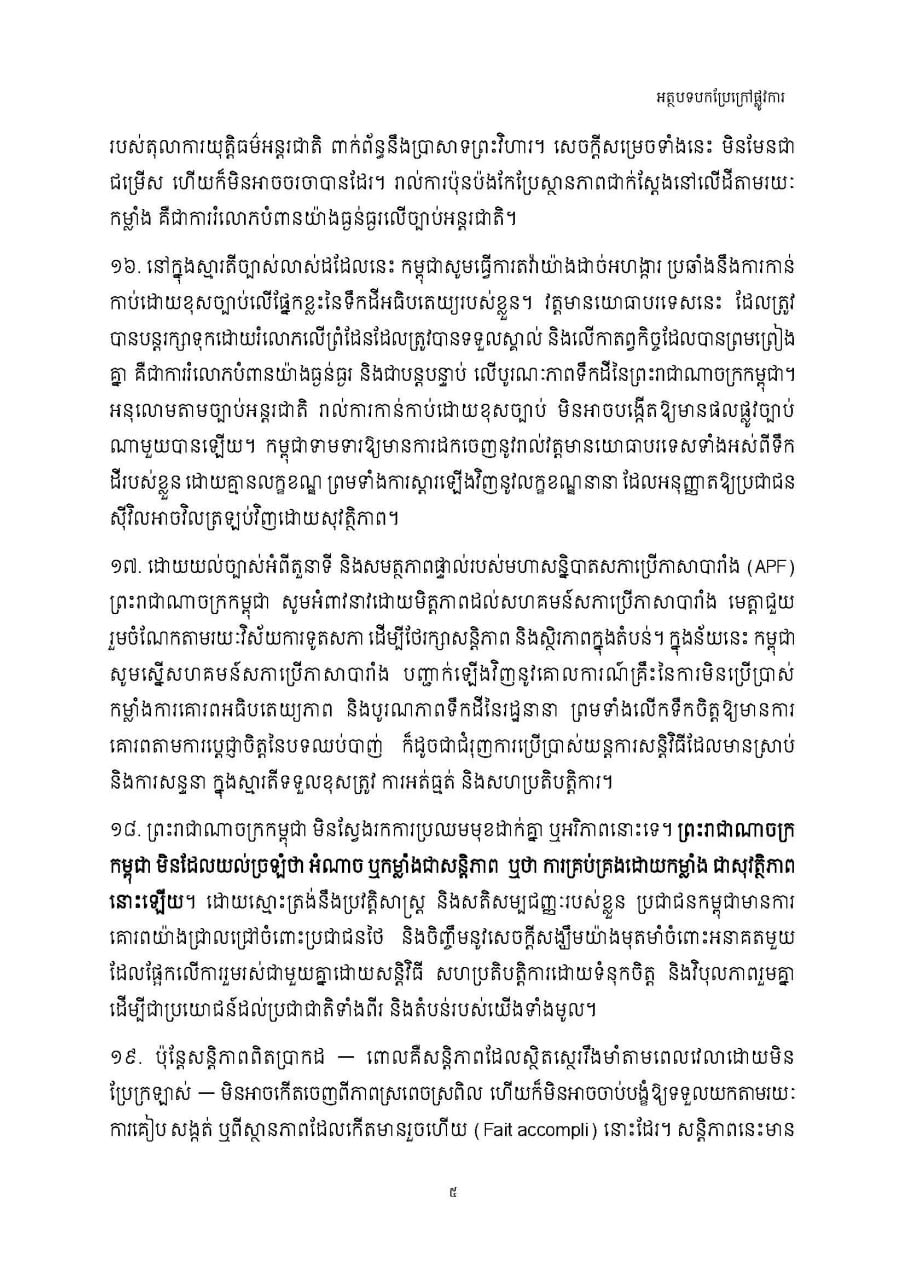
Cambodia, he said, has respected the ceasefire, cooperated with ASEAN observers, implemented humanitarian measures and repeatedly sought JBC meetings to resume border demarcation, but those efforts have been repeatedly delayed.
Ouch Borith urged strict adherence to international law and peaceful dispute resolution, warning that unilateral attempts to alter the status quo risk wider instability across Southeast Asia.