Cambodia Stands Firm on Sovereignty, Unequivocally Rejects Thailand’s Unilateral Actions on Its Territory
 Cambodia Stands Firm on Sovereignty, Unequivocally Rejects Thailand’s Unilateral Actions on Its Territory
In today’s international politics, confrontation between one country and another is no longer defined solely by military capability, but also by the ability to utilize international law and diplomacy as tools to safeguard national sovereignty. In this context, the Royal Government of Cambodia’s response to unilateral actions by the Thai armed forces is not merely a routine reaction, but a strategic approach with a clear objective: to protect territorial integrity and maintain regional stability.
Cambodia’s firm and continuous protests demonstrate that it does not allow any “fait accompli” on the ground to be used as a basis to mislead the international community or to establish legal claims over Cambodian territory. This represents a clear rejection of attempts by Thailand to create new facts on the ground and force Cambodia to accept them. Cambodia has repeatedly emphasized in its protest notes that the construction of posts, roads, or trenches cannot create legal rights over Cambodian territory under international law.
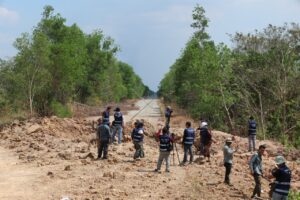
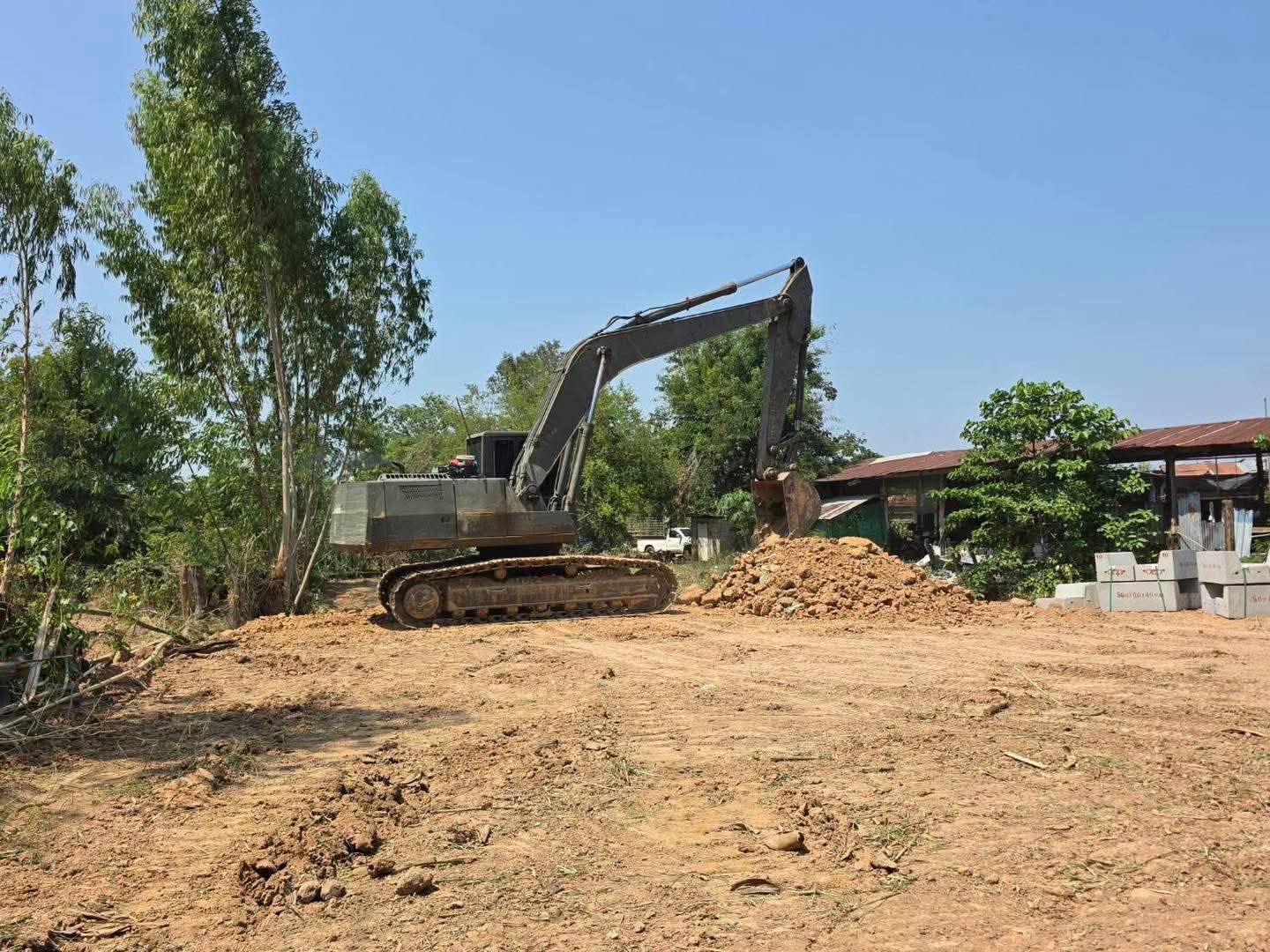
In reality, Thailand’s unilateral actions have been consistently protested and rejected by Cambodia, highlighting a clear intention by Thai forces to alter the status quo along the Cambodia–Thailand border. According to a statement by Cambodia’s Ministry of Foreign Affairs on April 18, 2026, Thai troops have further reinforced their illegal occupation at multiple locations. In Preah Vihear province, Thai armed forces constructed observation posts near the Preah Vihear Temple area in Sra Em commune, Choam Ksan district. In Oddar Meanchey province, activities have occurred in several areas, including road construction near border pillar No. 2 in Anlong Veng district, activities in Ta Trav area of Trapeang Prasat district, and trench digging at the Chong Chom international checkpoint in Banteay Ampil district. Additionally, in Kon Kriel commune of Samraong City, there have been constructions of posts and land clearing at Chub Derm Khnor, as well as the building of footpaths and trenches in the Thmar Daun area. Meanwhile, in Pursat province, Thai forces have continued land clearing activities in the O Plouk Domrey area in Thmar Da commune, Veal Veng district.
Cambodia’s detailed documentation of these activities is not merely to present the current situation, but to demonstrate the systematic creation of new facts on the ground by Thailand, which could seriously affect future border demarcation processes. Therefore, Cambodia’s protests are crucial as legal records and as long-term protection of national rights.
At the same time, Cambodia has clearly reaffirmed the core principles of international law: non-use of force, respect for sovereignty, and peaceful dispute resolution, as enshrined in the United Nations Charter, the ASEAN Charter, and the Treaty of Amity and Cooperation (TAC). Violations of these principles mean that the issue is no longer purely bilateral, but could evolve into a broader concern affecting regional peace and stability.
Cambodia’s rejection of Thailand’s claim that these actions are acts of self-defense is also legally well-grounded. If it were truly self-defense, why construct roads into Cambodian territory? Why demolish civilian homes and infrastructure, replacing them with Thai flags or monuments? Under international law, the right to self-defense cannot be used to justify actions that alter the status quo or establish new occupation. Thus, Cambodia’s position forms a strong legal and political foundation for potential proceedings at international courts.
From a strategic perspective, Cambodia is applying the principle of “diplomacy as a weapon,” using continuous protests and appeals as key tools to deter violations. This approach allows Cambodia to maintain both internal stability and international legitimacy, while avoiding renewed military confrontation.
In conclusion, the Royal Government of Cambodia’s response to Thailand’s unilateral actions reflects a strategy grounded in international law and diplomacy rather than force. Cambodia has made it clear that actions on the ground cannot serve as a basis for legal claims or territorial change, and that its continuous protests are essential measures to safeguard sovereignty and territorial integrity in the long term.
Furthermore, Cambodia’s adherence to the core principles of international law and its call for peaceful dispute resolution demonstrate that it is not only defending its national interests, but also contributing to regional peace and stability. This confirms that for a small state like Cambodia, true strength lies not in weapons, but in legitimacy, patience, and a clear diplomatic strategy.
If Thailand’s unilateral actions continue, they will not only heighten bilateral tensions but could also undermine regional peace. Therefore, the only sustainable solution is a return to negotiations, respect for international law, and a shared commitment to peaceful border resolution.
Cambodia has firmly asserted that borders cannot be determined unilaterally or by military force, but must be established through law and valid agreements. This is not only about defending national sovereignty, but also about upholding justice and peace for the entire region.
By: Pin Vichey – Political Science Scholar