A Mirror Revealing Who Honors Their Commitments and Who Is Walking Away from the Path of Peace
 A Mirror Revealing Who Honors Their Commitments and Who Is Walking Away from the Path of Peace
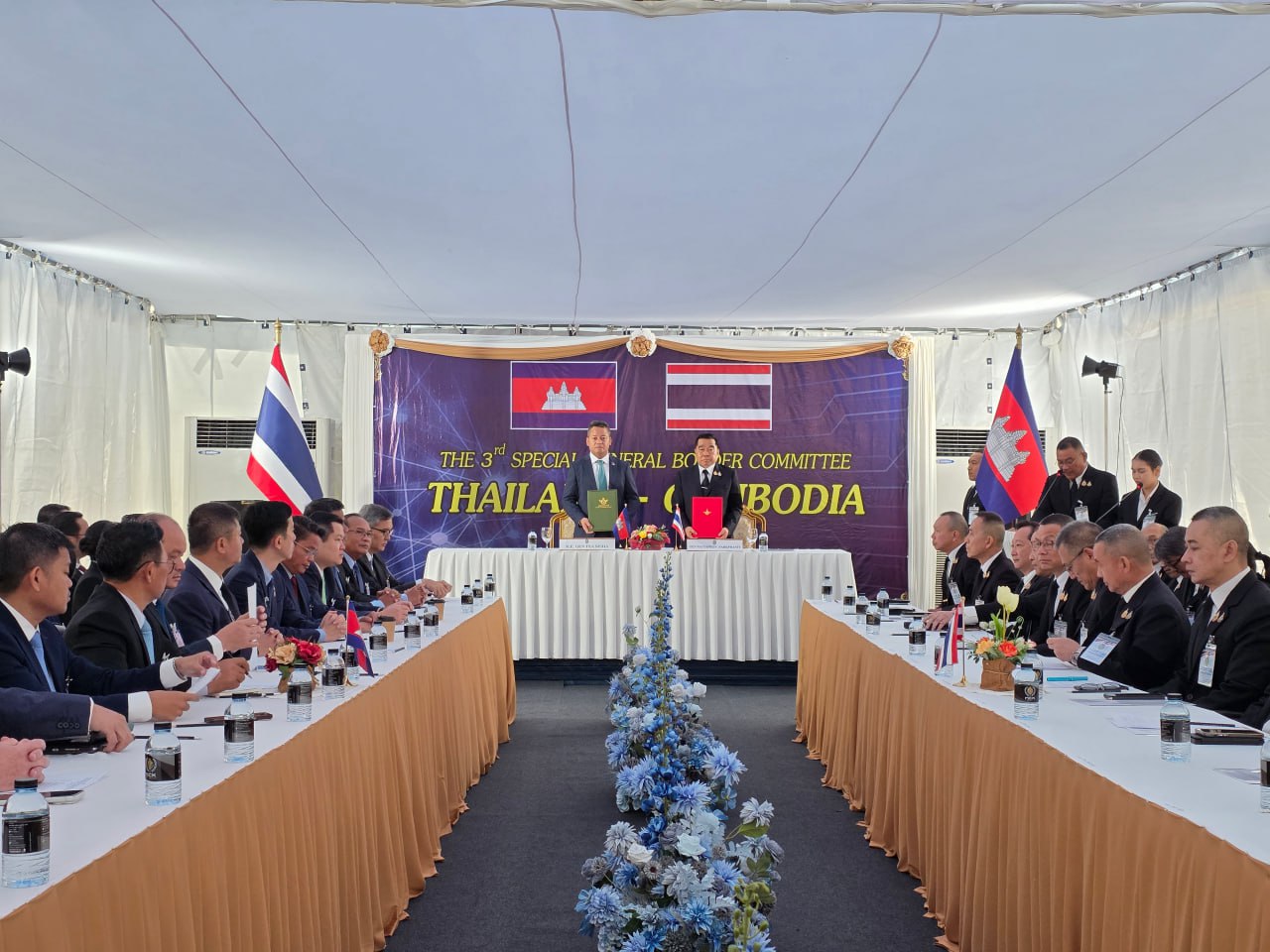
In highly sensitive border issues, agreements or joint statements are not merely diplomatic messages. They are political commitments and mutual pledges that require both parties (Cambodia and Thailand) to respect and implement them in good faith and in a trustworthy manner. Therefore, the Joint Statement of 27 December 2025 between Cambodia and Thailand should not be viewed as an ordinary document. Rather, it has become a historically significant roadmap for preserving peace and resolving border issues peacefully and in accordance with the Charter of the United Nations.
Point 3 of the Joint Statement sets out three fundamental principles. First, neither party shall undertake any action that affects border demarcation and the international boundary. Second, the Joint Boundary Commission (JBC) shall serve as the core mechanism for surveying and demarcating the border. Third, both parties must ensure security and prioritize the well-being of people living in border areas.
When examining Cambodia’s actions over the past period, it can be observed that Cambodia has sought to remain consistent with the spirit of this Joint Statement. Cambodia has repeatedly sent diplomatic notes and called for the use of the JBC mechanism, which is the official bilateral mechanism for resolving border issues. Cambodia has also insisted that force should not be used, that no new facts on the ground (fait accompli) should be created, and that solutions should continue to be pursued on the basis of international law and existing agreements.
This demonstrates that Cambodia wishes to see border issues resolved peacefully and through mechanisms that both parties agreed upon in the past, rather than through military pressure or the creation of new circumstances that would further complicate the dispute. In light of Cambodia’s expressed intentions and ongoing actions, an important question must therefore be posed to the Thai side: Are the actions that Thailand has been carrying out illegally on Cambodian territory after the ceasefire truly consistent with Point 3 of the Joint Statement of 27 December 2025?
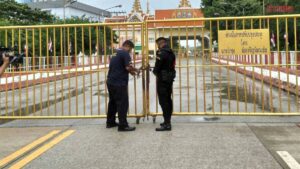
Up to this point, it has been observed that Thailand has been actively undertaking actions along the Cambodian border, including the placement of shipping containers, the installation of barbed wire, the destruction of Cambodian civilian infrastructure, the digging of trenches, the reinforcement of troops and modern military equipment along the border, the construction of permanent structures on Cambodian territory, and the intensification of activities threatening Cambodian civilians and military personnel in areas where the two sides are facing one another. These unilateral actions appear to be aimed at creating “new facts on the ground.” Can such actions be considered contrary to the spirit of Point 3 of the Joint Statement, which clearly stipulates that no actions should affect border demarcation and the international boundary?
Likewise, if the JBC mechanism is ignored, disregarded, or delayed for political reasons or because of extreme nationalism, this would mean that one party is departing from the path that both sides had mutually agreed upon. The Joint Statement does not provide or grant either party the right to resolve border issues unilaterally.
Another point that both parties should not overlook is the protection of people living along the border areas. The Joint Statement places a very high priority on civilians residing in areas vulnerable to the effects of conflict. Therefore, any action that creates fear, heightens tensions, or leaves people living in a state of uncertainty may be regarded as inconsistent with, or contrary to, the obligations that both parties have mutually undertaken.
In general, if one evaluates the substance of the Joint Statement of 27 December 2025, Cambodia appears to be firmly adhering to its principles, particularly with regard to respecting the JBC mechanism and pursuing the peaceful resolution of disputes. By contrast, any actions by Thailand that are unilateral in nature, create new facts on the ground, or fail to respect the JBC mechanism raise questions as to whether Thailand is truly respecting the spirit of the Joint Statement that it signed.
Ultimately, border disputes cannot be resolved through the use of force or by creating new facts on the ground. A lasting solution can only bear fruit if Thailand respects its commitments and implements the Joint Statement in good faith, as befits a civilized nation deserving of respect. In this sense, the Joint Statement of 27 December 2025 is becoming a mirror that reflects an important reality: which party is respecting the spirit of the agreement, and which party is violating it and departing from the path of this historic agreement.
By Pin Vichey
Political Science Scholar