AOT Says Thailand Ready to Withdraw Troops From O’Smach Once Border Line Is Defined
 AOT Says Thailand Ready to Withdraw Troops From O’Smach Once Border Line Is Defined
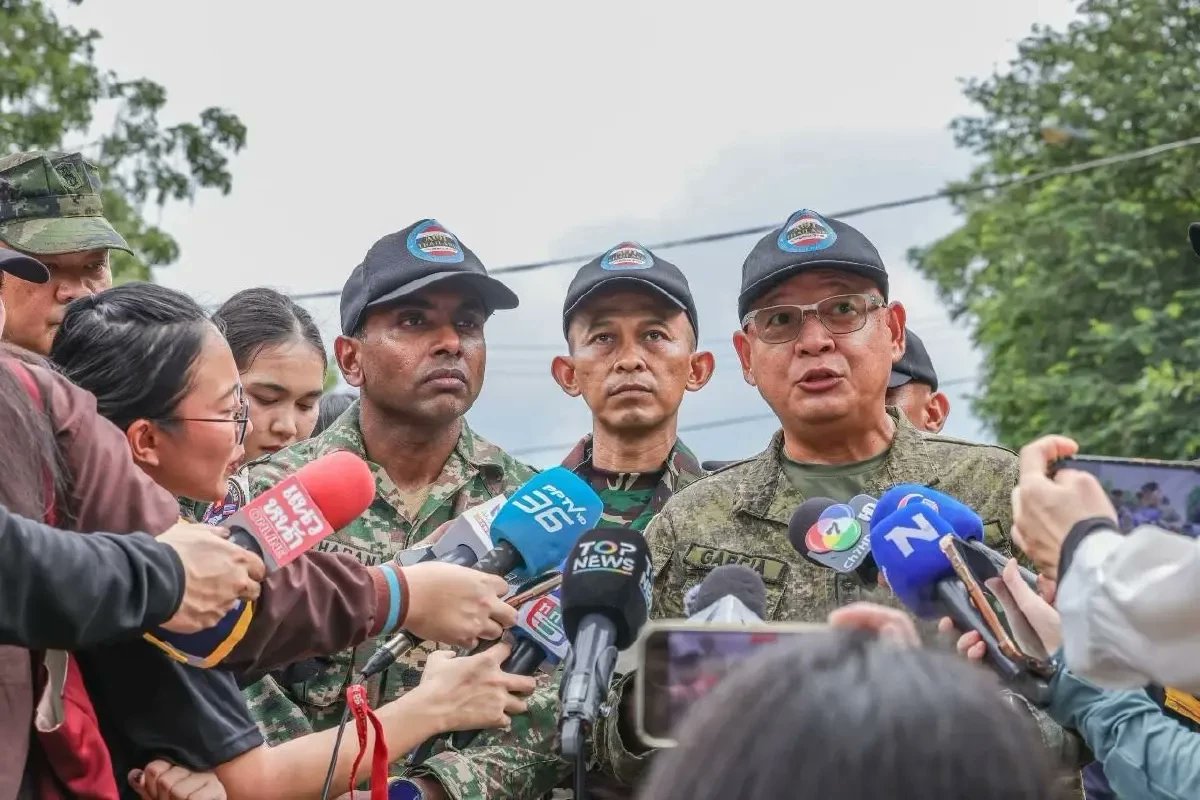
BANGKOK, Sept. 9, 2026 — Thailand would be prepared to withdraw its troops from the O’Smach area once a clearly defined border line is formally established, according to Col Roderick T Garcia, the Philippine military officer leading the ASEAN Observer Team (AOT) in Thailand.
Garcia made the remarks after conducting a field visit to the O’Smach area on Monday, September 7, where he said what he saw on the ground differed significantly from information he had received before the visit.
The AOT chief stressed, however, that the team had not yet reached any conclusions about the competing accounts surrounding the area.
Garcia said observations collected during the field visit would be compiled into a report for his superiors. The evidence and information presented by both Cambodia and Thailand would require further assessment and analysis before the team could draw conclusions.
He noted that much of his understanding before the visit had come from social media, media reports and other news coverage. Seeing O’Smach first-hand gave him a different perspective on the situation.
The ASEAN observer was speaking after the AOT and media were taken to the O’Smach-Chong Chom area on the Thai side of the border. Thai authorities presented their account of developments in the area and showed structures they described as being linked to scam operations.
Thailand Signals Possible Withdrawal
On the ceasefire, Garcia said his observations indicated that both Cambodia and Thailand continued to adhere to their respective commitments under the agreements they had signed.
He specifically referred to Thailand’s public position that it did not intend to permanently occupy the area, but considered maintaining control necessary for security purposes.
According to Garcia, Thailand had also indicated that it would be ready to withdraw its forces once a clearly defined border line had been established.
The border issue, he said, would need to be addressed through the Cambodia-Thailand Joint Boundary Commission (JBC), with further discussions required between the two sides.
The JBC is the bilateral mechanism tasked with addressing questions concerning the survey and demarcation of the Cambodia-Thailand land boundary. Cambodia has also repeatedly called for the JBC to resume its work in accordance with existing bilateral agreements.
Garcia’s remarks therefore place the question of troop withdrawal within the broader process of formal border demarcation rather than treating the current military positions as a permanent boundary.
AOT Maintains Neutral Observation Role
The Philippine officer’s comments also underline the observer team’s limited role: to observe, verify and report rather than determine competing territorial claims.
Garcia said the information gathered during the O’Smach visit would be subjected to further assessment before conclusions could be made.
That distinction is particularly significant as Cambodia and Thailand continue to present different accounts of the situation along the border.
Thailand has said its forces are maintaining control of the area for security reasons and that its current deployment is not intended to establish a new international boundary.
Cambodia, meanwhile, has maintained that Thai military positions and related construction in O’Smach constitute violations of Cambodian sovereignty and has called for the JBC to resume border survey and demarcation work.
For now, Garcia said both sides continued to observe the ceasefire arrangements, while the AOT would continue assessing information gathered on the ground.
The observer team’s findings could provide an important independent assessment as Cambodia and Thailand seek to maintain the ceasefire and address unresolved border issues through bilateral mechanisms.