ASEAN exits 2025 bruised but not broken
 ASEAN exits 2025 bruised but not broken
The year 2025 was never going to be easy for ASEAN. The region braced for greater geoeconomic pressures, rising unilateralism, internal conflicts and supply chain disruptions. ASEAN ended the year bruised though still faring better than other regions.
The biggest shock to the economy was Trump’s reciprocal tariffs. Some of ASEAN’s poorest members have been hardest hit. Given the United States is ASEAN’s largest export market and key for many labour-intensive industries, the social and economic impact can be significant.
The region responded appropriately with firm but non-confrontative statements at both the leadership and ministerial levels, expressing concern but openness to constructive dialogue while reaffirming commitment to closer regional integration, rules-based multilateralism and partnership diversification.
On the surface, Malaysia’s 2025 ASEAN Chairmanship ticked the deliverable boxes. The 47th ASEAN Summit saw the highest attendance of world leaders, including strong emerging powers Brazil and South Africa. Championed by the Chair, the ASEAN–Gulf Cooperation Council–China Summit symbolised the region’s continued openness and effort to diversify partnerships.
ASEAN also adopted its new 20-year vision, ASEAN 2045: Our Shared Future, and the accompanying strategic plans in May 2025. Another key achievement was the accession of Timor-Leste as the 11th member of ASEAN, 14 long years after its application.
The macroeconomic numbers supported the positive narrative. The region’s 2025 economic outlook was revised upward from 4.3 to 4.5 per cent, reflecting strong third quarter performance by Indonesia, Malaysia, Singapore and Vietnam. To an extent, this growth performance was driven by the frontloading of exports against anticipated tariff hikes.
Technical achievements range from the conclusion of negotiations for the upgraded ASEAN Trade in Goods Agreement as well as the upgrading of the ASEAN–China Free Trade Agreement. ASEAN also initiated the fifth Regional Comprehensive Economic Partnership (RCEP) Summit, the first leaders’ gathering following its signing in 2020. The ASEAN Digital Economy Framework Agreement was substantially concluded but left unfinished. While the technical work is progressing, ASEAN is facing structural challenges to its institutions and ways of working.
With geostrategic competition intensifying, the sustainability of ASEAN’s longstanding nonaligned position is in question. Member states are pursuing bilateral deals with the United States while scrambling to diversify external partnerships. At the same time, flagrant violations of international rules-based order are increasingly rampant, posing challenges to the foundation and principles of ASEAN cooperation. Failure to define ASEAN’s position, strategy and value in this context will undermine ASEAN centrality and relevance. ASEAN needs to transform itself from a dialogue platform into an effective coordination and strategic response platform.
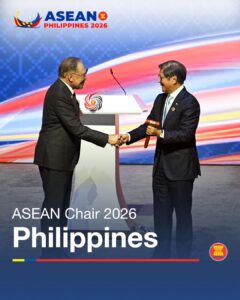
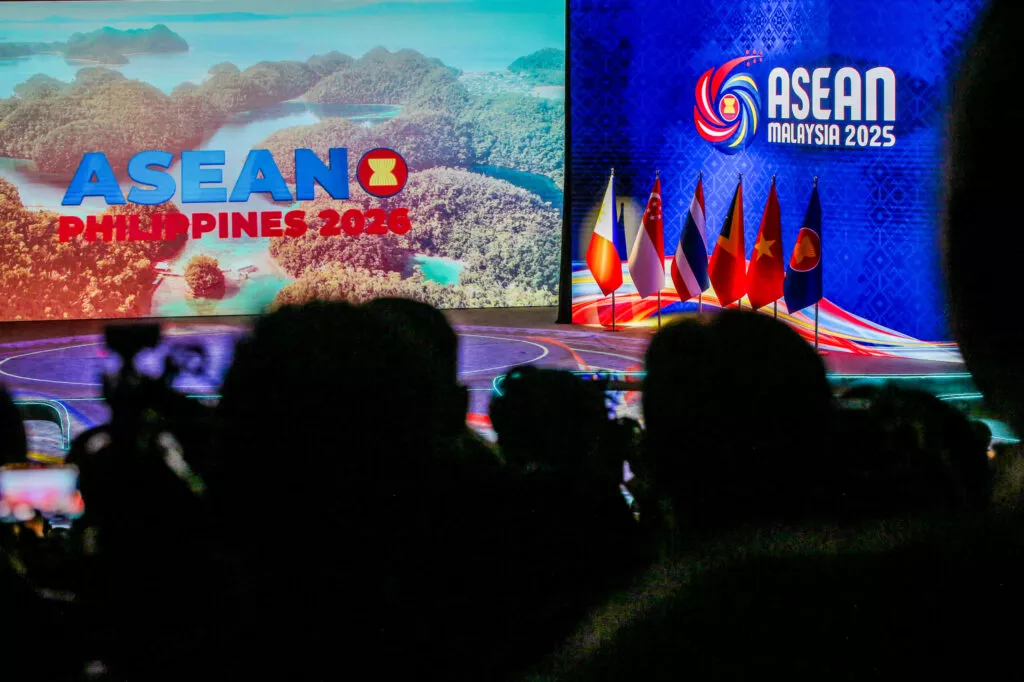
As the Philippines takes up the 2026 ASEAN chairship in the first year of the ASEAN 2045 vision and strategic plans, this is the time to be bold. The Trump tariff shock has subsided, but uncertainties remain. The region needs to navigate an increasingly securitised world economy.
The South China Sea will be high on the Chair’s agenda. Failure to conclude or make meaningful progress on the Code of Conduct is not an option for the Chair. The Philippines should also promote broader maritime security and cooperation to widen buy-in from the rest of ASEAN. There is opportunity to leverage the ASEAN Outlook on the Indo-Pacific given alignment with its key strategies.
The Philippines should advance conversations around economic security. ASEAN will already be deliberating strategic trade measures and while this is a key aspect, it is not the entirety of economic security. ASEAN also needs a meaningful cross-pillar conversation on the intersection between economic and security beyond strategic trade measures.
Core to this endeavour is the work by the ASEAN Geoeconomics Task Force. Established in April 2025 after the announcement of Trump’s tariffs, the ASEAN Geoeconomics Task Force has deliberated on a regional strategy in response to the immediate impact of tariffs and to achieve medium and long-term resilience. This resulted in the inaugural ASEAN Geoeconomics Report 2025. Officials have been tasked to discuss the follow-up to the recommendations in the report as ministers welcomed the idea of institutionalising an annual Joint Foreign and Economic Ministers’ Meeting.
As Chair, the Philippines play a key role in determining how ASEAN geoeconomics work will continue in 2026. Attempts to confine conversations within existing mechanisms risk reinforcing ASEAN’s siloed pillar-based approach that no longer reflects political economy realities. A high-level task force, drawing from both economic and political security tracks and supported by Track 1.5 inputs, offers a credible pathway.
Other economic agenda items include ensuring the conclusion of the ASEAN Digital Economy Framework Agreement and ASEAN–Canada free trade agreement negotiations, signing the upgraded ASEAN Trade in Goods Agreement and following up on the fifth RCEP Summit decisions including preparation for the RCEP General Review. Initiatives on micro-, small and medium-sized enterprise capacity-building and the creative economy — both longstanding priorities of the Philippines — will feature as deliverables, as well as revamping regional industrial cooperation.
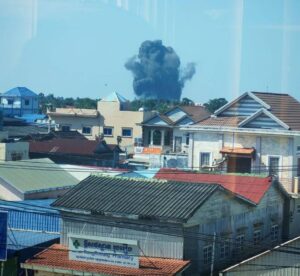
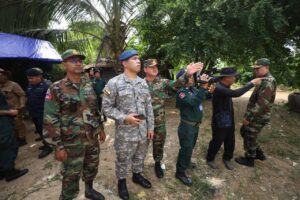
ASEAN’s economic agenda may be affected by non-economic happenings, from the Myanmar conflict and Cambodia-Thailand border dispute, to escalation of external conflicts that disrupt critical supply chains or further challenge the rules-based multilateralism that the region has long supported.
The region’s long-term economic potential remains bright. But ASEAN credibility will rest on how it can transcend beyond reacting to external events to proactively and effectively safeguarding resilience against economic coercion and amid global uncertainties. This is where leadership will make a difference.
Julia Tijaja is Associate Senior Fellow at the ASEAN Studies Centre, ISEAS–Yusof Ishak Institute, Singapore.
East Asia Forum