
Cambodia Boosts Data-Driven Policymaking to Tackle Labour Challenges
 Cambodia Boosts Data-Driven Policymaking to Tackle Labour Challenges
PHNOM PENH, April 3, 2026 — Cambodia is strengthening its capacity for evidence-based policymaking to tackle evolving labour market challenges, in a move aimed at boosting competitiveness and supporting long-term economic growth, the International Labour Organization (ILO) said.
A four-day training programme held in Siem Reap from March 30 to April 2 brought together around 40 policymakers and representatives from government, employers and workers to enhance their ability to design data-driven labour policies.
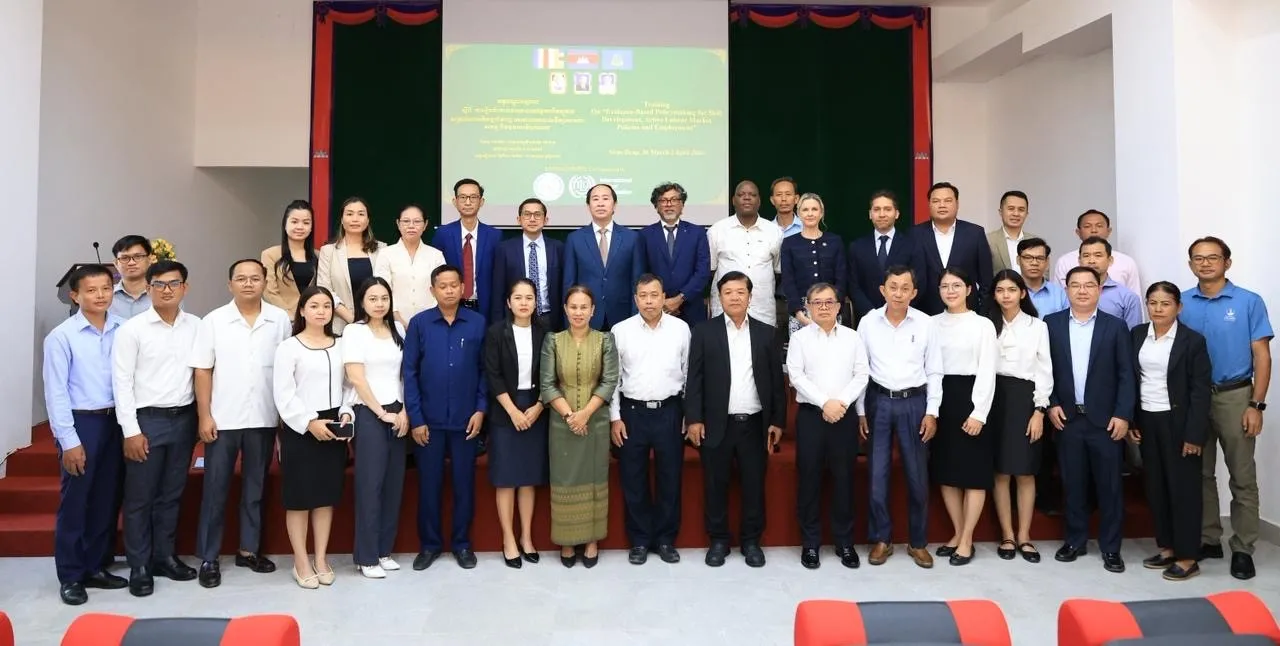
The initiative, implemented in collaboration with Cambodia’s Ministry of Labour and Vocational Training, focuses on improving the use of labour market data to address issues such as skills mismatches, employment transitions and workforce development.
Officials said the programme is part of broader efforts to modernise policymaking and ensure that Cambodia’s labour market remains responsive to rapid economic changes, including technological transformation and increasing regional competition.
Participants were trained to analyse labour market trends, formulate policy solutions and translate evidence into actionable strategies aimed at promoting decent work and inclusive growth.
Despite strong economic progress, Cambodia continues to face challenges including skills gaps, high levels of informal employment and pressures linked to the return of large numbers of migrant workers, highlighting the need for more precise and data-driven policies.
The initiative also aligns with Cambodia’s broader development vision, as the country prepares for its expected graduation from Least Developed Country (LDC) status by 2029 and aims to become an upper-middle-income economy by 2030.
The ILO said strengthening evidence-based policymaking will be key to ensuring sustainable job creation, improved productivity and resilience in Cambodia’s rapidly evolving labour market.
ILO