Cambodia Enters a New Global Geopolitical Equation
 Cambodia Enters a New Global Geopolitical Equation
At a time when the sound of weapons and tensions along the Cambodia–Thailand border appear to have eased—when clashes have fallen silent following the ceasefire at the end of 2025—the reality on the ground tells a different story. Acts of encroachment, destruction, and the occupation of certain locations by Thai forces on Cambodian sovereign territory continue to disrupt regional security. This is occurring even as Cambodia is quietly advancing along a different path on the international stage.
This is no longer a conventional military battlefield; it is a political and diplomatic arena in which Cambodia must decide where it stands amid an increasingly competitive global order shaped by rival powers.
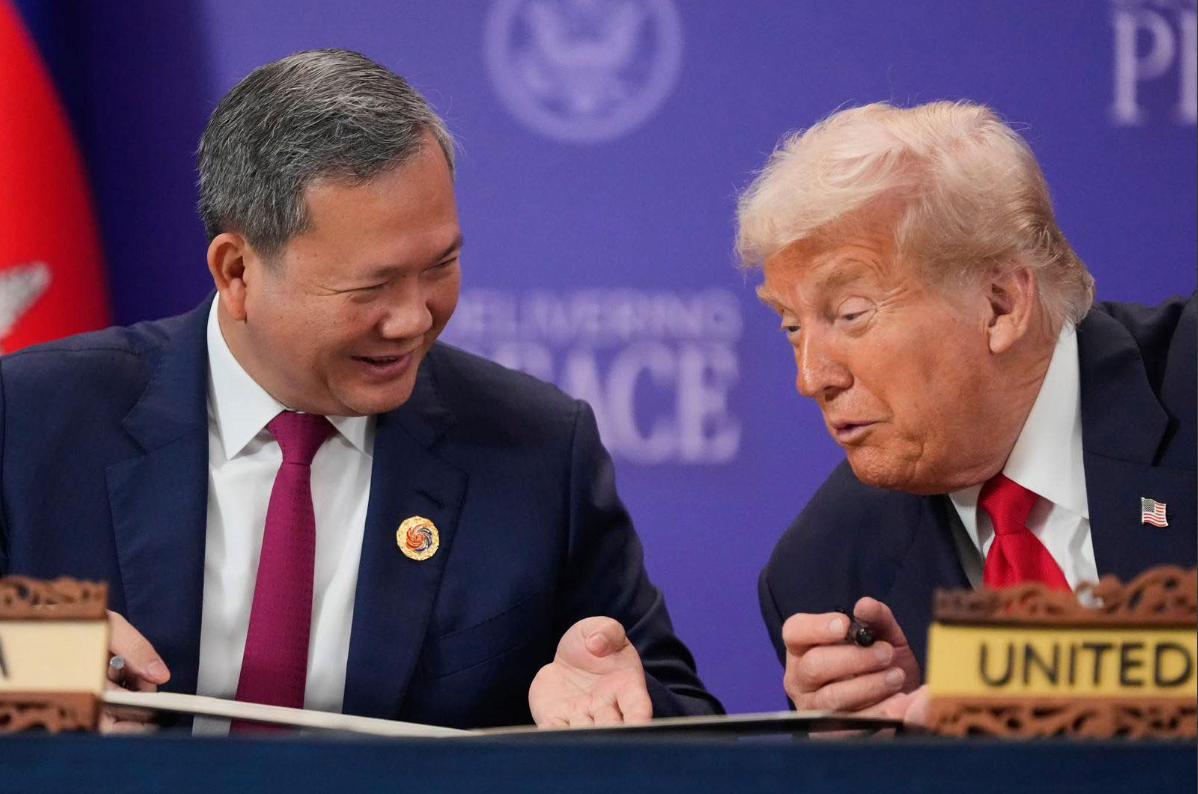
Within this context, Cambodia’s decision to join the Board of Peace, newly initiated by the United States, is far from an ordinary choice. It represents a carefully calculated strategic move with profound political and historical significance.
The Cambodia–Thailand border dispute is no longer merely a bilateral issue. It is gradually being drawn into a new geopolitical equation marked by competition among major global powers. In this equation, Cambodia is shifting from defending its territory solely through physical border presence toward building influence on the international stage—leveraging international law, diplomacy, and peace as strategic tools. Its decision to participate actively in international security mechanisms reflects this clear strategic direction.
The border dispute did not arise simply from lines drawn on a map. It is the product of the interplay between nationalism, domestic political dynamics, and regional strategic calculations. Borders are increasingly being used as political instruments—tools to consolidate domestic political support or to send strategic signals to external powers.
In this new geopolitical landscape, international forums have become critical battlefields for small states like Cambodia. History has shown that victories achieved through law and diplomacy can be far more enduring than those secured through military force.
Active participation in the Board of Peace and other international mechanisms offers Cambodia a way to enhance legitimacy, attract international support, and reduce the risk of border disputes escalating into armed conflict.
Cambodia’s decision to join the U.S.-initiated Board of Peace carries meaning beyond mere participation in another international forum. It signals Cambodia’s intention to position itself as a proponent of peace and international law, to transform border disputes from military confrontations into political and diplomatic issues, and to recalibrate its diplomatic balance amid competing global powers. Through this move, Cambodia is also sending a clear message to all stakeholders: defending sovereignty does not necessarily require resorting to armed force.
The new global geopolitical environment no longer allows small countries to remain passive. Cambodia must adopt strategies that safeguard sovereignty, avoid becoming a battleground for rival powers, and ensure peace as a foundation for national development. In this context, peace is not a sign of surrender—it is a strategic choice grounded in careful calculation.
From national borders to international forums, Cambodia is entering a new geopolitical equation that demands strategic thinking beyond past paradigms. Its participation in the Board of Peace demonstrates a deliberate choice of peace, law, and diplomacy as the means to protect sovereignty and secure the nation’s future. At a time when global power competition is intensifying, strategically pursued peace may well be the greatest victory a small country like Cambodia can achieve.
By: Pin Vichey
Political Science Scholar