Cambodia looks ahead after a turbulent 2025
 Cambodia looks ahead after a turbulent 2025
The year 2025 was a difficult one for Cambodia, marked by leadership transition, tariff shocks, online scams and a border conflict with Thailand that had serious political, economic and security repercussions.
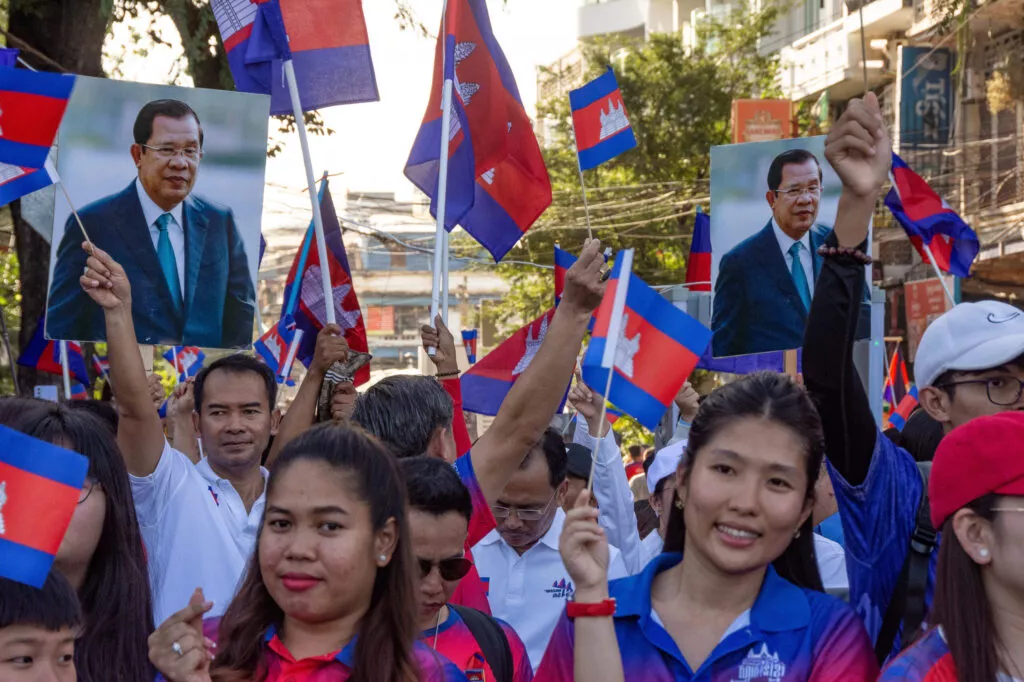
Politically, Cambodia remains in a period of succession. Prime Minister Hun Manet’s 2023 ascent to the premiership marked the beginning — not the end — of a power transfer within the ruling Cambodian People’s Party (CPP). Throughout this transition, the CPP has remained cautious about any potential threat to its power from domestic and overseas dissents, even with no credible challengers.
Two legislative changes in 2025 reflect the party’s anxieties about this transition. The first strengthened penalties for denying Khmer Rouge atrocities, which have been politicised by opposition leader Sam Rainsy, while the second amended the Nationality Law to allow revocation of citizenship for individuals found guilty of conspiring with foreign nations. Human rights groups view these measures as tools to stifle dissent.
Manet’s priorities include consolidating control over Cambodia’s party-state apparatus, orchestrating public reforms. Given the towering political presence of Hun Sen, Manet must also balance upholding his father’s legacy with implementing his own governing vision.
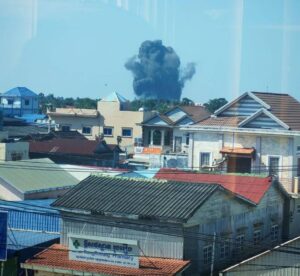
The border conflict with Thailand has further complicated the domestic political landscape, prompting heated debate about military casualties and Cambodia’s defence capabilities. Despite decades of reforms and growing defence spending, the Royal Cambodian Armed Forces still lack a lethal air force. Whether Thailand’s ability to conduct airstrikes deep inside Cambodia owes mainly to the latter’s calculated restraint or the poor operational efficacy of its Chinese-supplied weaponry, including KS-1C air defence systems, is another serious question, with implications for Cambodia’s military doctrine and defence procurement strategy.
As the dispute drags into 2026, the Cambodian public will scrutinise how Manet plans to reclaim Cambodian territories seized by Thailand following the December 2025 clashes. Any perceived territorial loss could stoke misgivings about his leadership.
It remains unclear how top CPP elites — especially those with business interests along the Cambodian–Thai border — have reacted to Manet’s handling of the border crisis. If tensions persist, internal pressure may mount on the Prime Minister to restore border stability. Manet’s ability to maintain elite unity amid the crisis will shape his leadership role inside the CPP for years to come.
US President Donald Trump’s ‘Liberation Day’ tariffs also delivered a structural shock to Cambodia. Though Phnom Penh negotiated a reduction from 49 to 19 per cent, the Asian Development Bank warns that Cambodia remains vulnerable to future US tariff increases. The International Monetary Fund’s latest estimates put Cambodia’s GDP growth at 4.8 per cent in 2025, down from 6 per cent in 2024, citing border tensions, global trade uncertainty and a tourism sector still reeling from COVID-19. Cambodia’s GDP growth is expected to decline further to 4.3 per cent in 2026 before bouncing back to 5.1 per cent the following year.
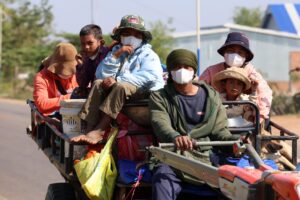
Meanwhile, tensions with Thailand have forced nearly one million Cambodian workers to return home since May 2025, disrupting remittances and straining domestic labour markets and social services. With Thailand diversifying its labour supply away from Cambodia, many workers are unlikely to return, creating long-term pressure on an already stressed labour market.
Cyberscams have become Cambodia’s most pressing non-traditional security threat, damaging its international image and undermining foreign investment, tourism and domestic security. The US Department of Justice’s indictment of Chen Zhi, chairman of Prince Holding Group, underlines the scale and entrenched nature of Cambodia’s online scam industry and has intensified global pressure. Chen Zhi’s recent extradition to China signals Cambodia’s tactical concession amid relentless international pressure. His arrest is a promising start, but Cambodia needs to do more to genuinely and systematically dismantle scam networks deeply entrenched in its political economy.
Amid the border row, Bangkok has framed its airstrikes against Cambodian civilian infrastructure as attacks on scam operations, blurring the line between anti-crime measures and military escalation.
Cambodia’s information campaign during the conflict has been undermined by the absence of a credible independent English-language media ecosystem and perceptions of complacency towards scam networks. These hindrances have left Cambodia at an informational disadvantage compared to Thailand in shaping global public opinion.
The border row has also raised questions about Cambodia’s foreign policy towards China. Since the mid-2000s, Cambodia has grown closer to China on core issues, including the South China Sea, Taiwan and the Belt and Road Initiative, leveraging Chinese influence to strengthen economic development and regime security and to counterbalance Thailand and Vietnam. But China’s neutrality since the renewed border dispute has generated doubts and even frustrations about Beijing’s reliability as an ‘ironclad’ friend.
If Cambodia cannot lean on China to restrain Thailand, it may need to reassess its alignment strategy and work harder to diversify its security partnerships. Ironically, under Trump, the United States has played a more visible — if transactional and temporary — role in moderating Thailand’s aggression through tariff threats.
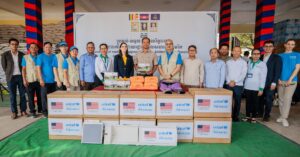
Not all is lost for Cambodia, as border tensions have bolstered national unity and offered an opportunity to reinvigorate Cambodia–US ties. Despite US tariffs, Cambodia’s export industry performed strongly in 2025. With goodwill rising after Trump’s interventions in the dispute, Phnom Penh has an opening to reset defence relations, which have been deteriorating since 2017. The docking of USS Cincinnati at Cambodia’s Ream Naval Base marks the first visit by a US warship to the Chinese-renovated base and indicates warming ties.
In 2026, Cambodia’s policy priorities will be to contain the border conflict with Thailand and recover from the economic damages it has caused, curb cyberscams and strengthen national defence through military conscription. Cambodia’s foreign policies towards China and the United States may undergo further recalibration, rebalancing between and beyond the two great powers. How effectively Phnom Penh manages these domestic and external pressures will shape the next phase of Cambodia’s political succession and foreign policy trajectory.
Chansambath Bong is PhD candidate and Australia Awards scholar at the Strategic and Defence Studies Centre, The Australian National University.
East Asia Forum