Cambodia Rejects Thai Claims That Heritage Sites Were Used for Military Purposes
 Cambodia Rejects Thai Claims That Heritage Sites Were Used for Military Purposes
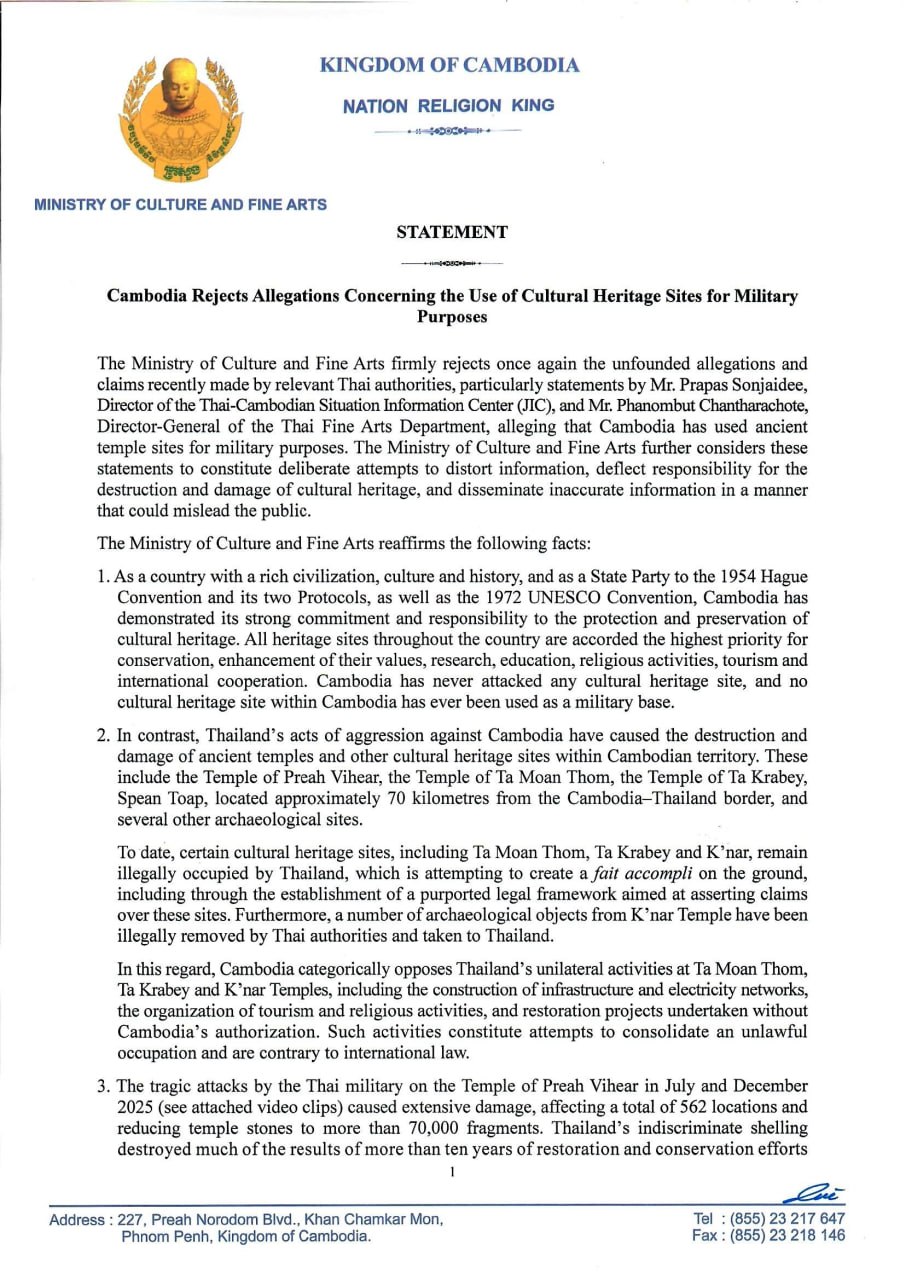
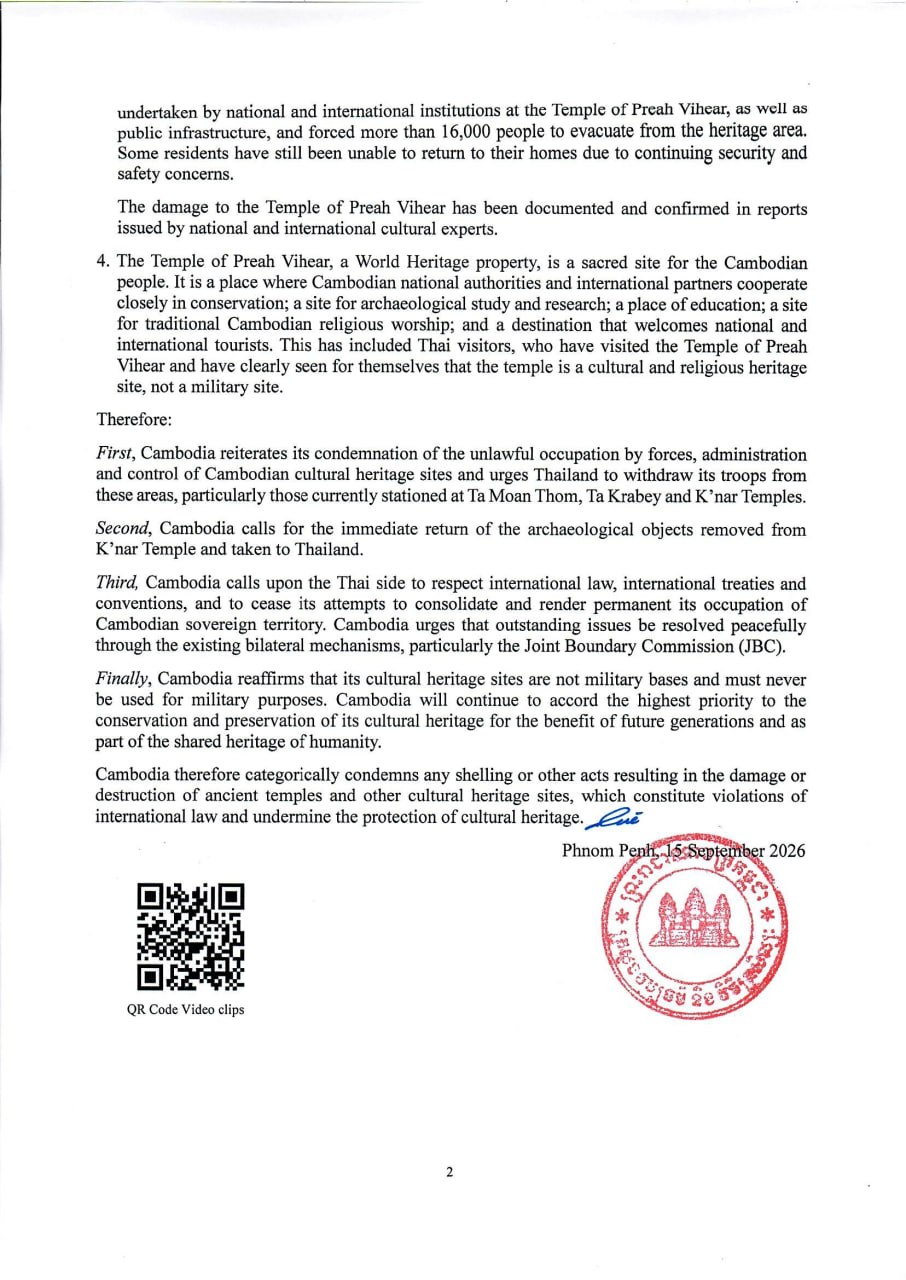
PHNOM PENH, Sept. 15, 2026 — Cambodia has categorically rejected allegations by Thai authorities that Cambodian forces used ancient temples and cultural heritage sites for military purposes, accusing Bangkok of distorting information and attempting to deflect responsibility for damage inflicted on Cambodian heritage during the 2025 conflict.
In a statement issued Tuesday, the Ministry of Culture and Fine Arts said recent claims by Thai officials, including Prapas Sornjaidee, Director of the Thai-Cambodian Situation Information Center, and Phanombut Chantharajote, Director-General of Thailand’s Fine Arts Department, were “unfounded” and could mislead the public.
The Cambodian ministry reaffirmed that Cambodia has never used any cultural heritage site as a military base, stressing that the country’s heritage sites are protected for conservation, research, education, religious activities, tourism and international cooperation.
Cambodia said its position is grounded in its obligations as a state party to the 1954 Hague Convention for the Protection of Cultural Property in the Event of Armed Conflict and the 1972 UNESCO World Heritage Convention.
The ministry said Cambodia has demonstrated a strong commitment to protecting its cultural heritage and has consistently given the preservation of heritage sites the highest priority.
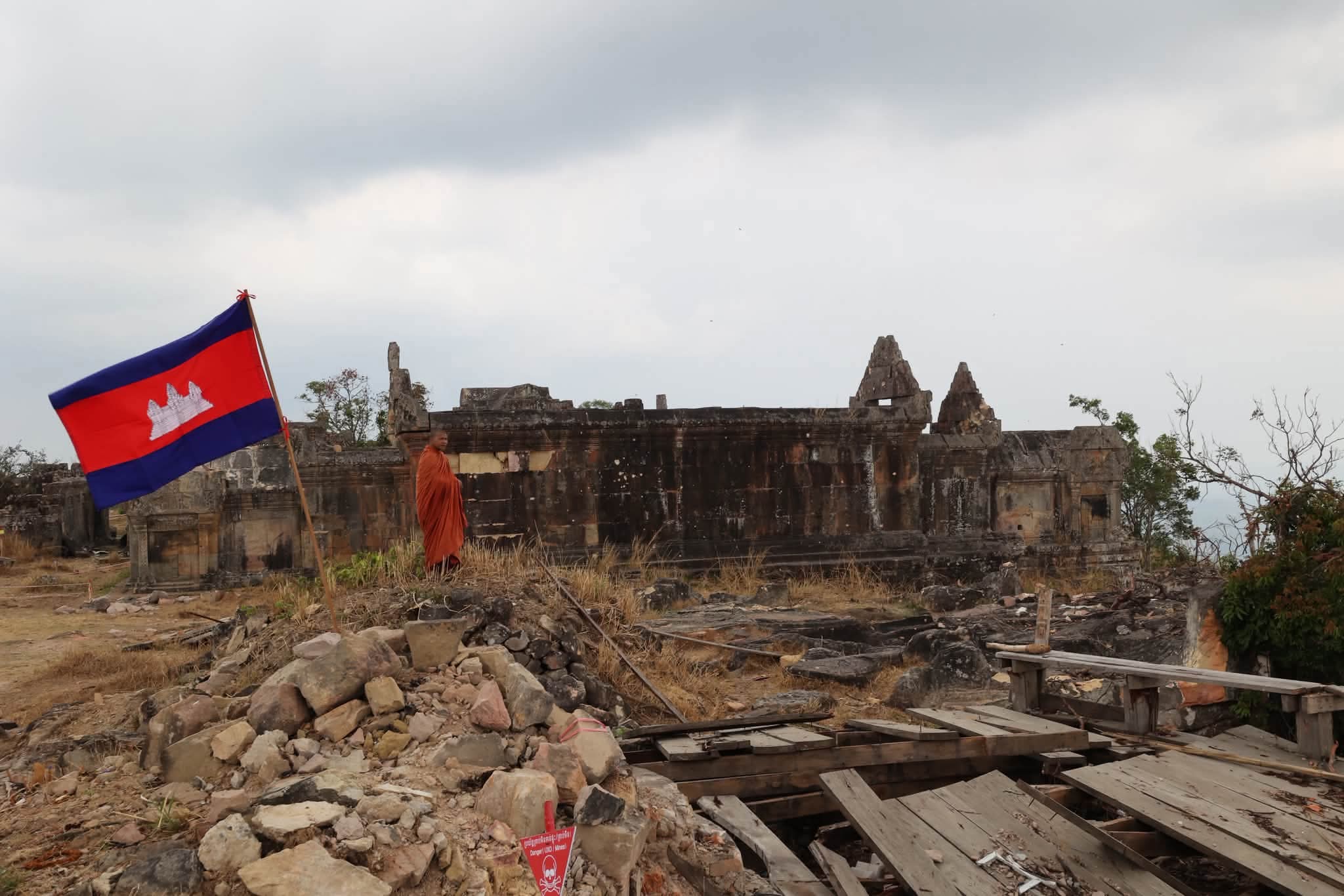
The statement comes after Thai authorities publicly alleged that the area around the Temple of Preah Vihear had been used for military purposes during fighting along the Cambodia-Thailand border.
Thailand has argued that it targeted military threats rather than the heritage site itself and has called for independent examination of evidence concerning the alleged presence of Cambodian troops and weapons around Preah Vihear.
Cambodia, however, strongly rejected that narrative.
The Ministry of Culture and Fine Arts said the Temple of Preah Vihear is a sacred Cambodian site, a UNESCO World Heritage property and a place used for cultural, religious, educational and tourism purposes — including by Thai visitors who, it said, could see for themselves that the site is a cultural and religious heritage location rather than a military base.
Cambodia Points to Damage at Heritage Sites
In its statement, Cambodia contrasted its position with what it described as Thailand’s military actions against Cambodian territory and heritage sites.
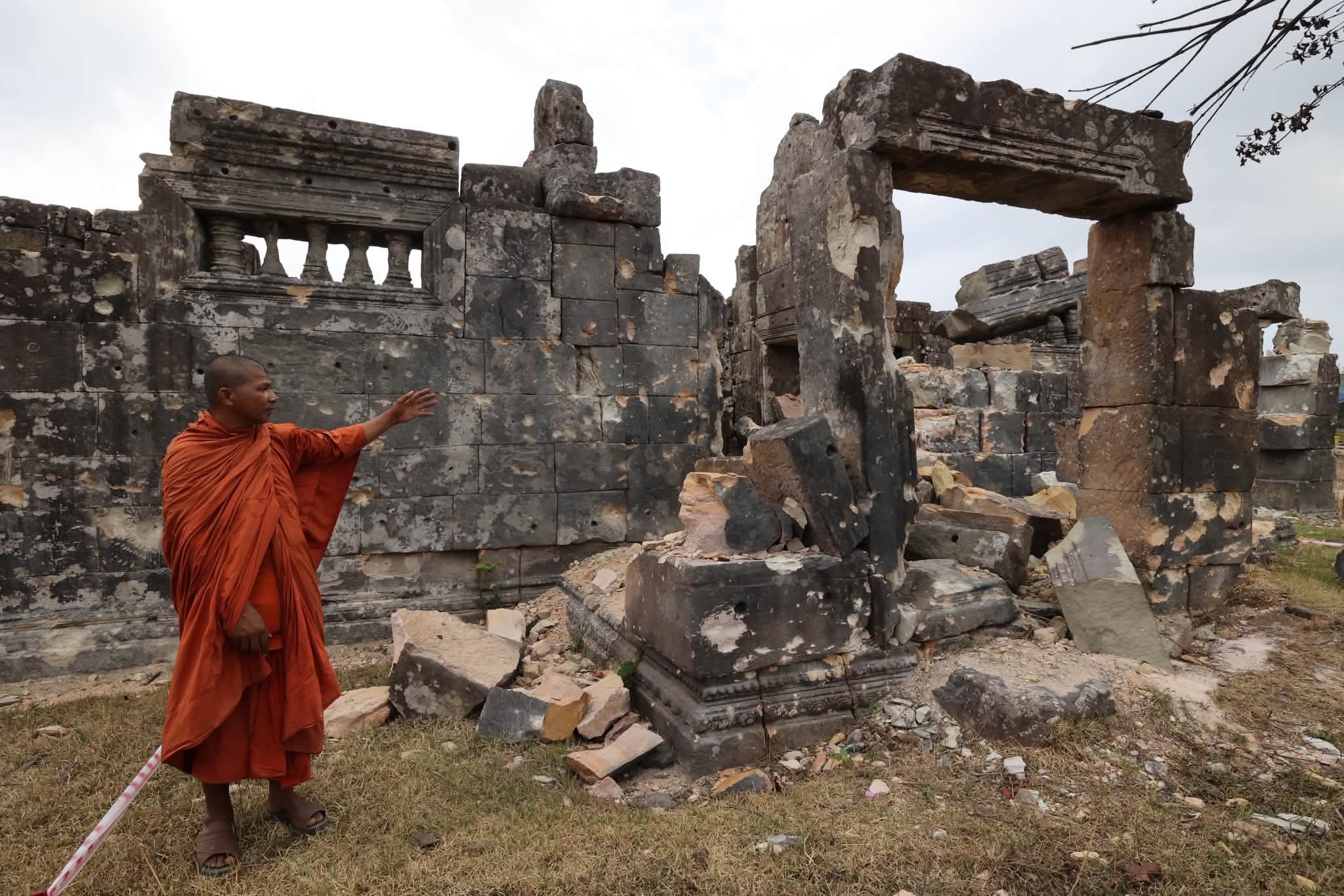
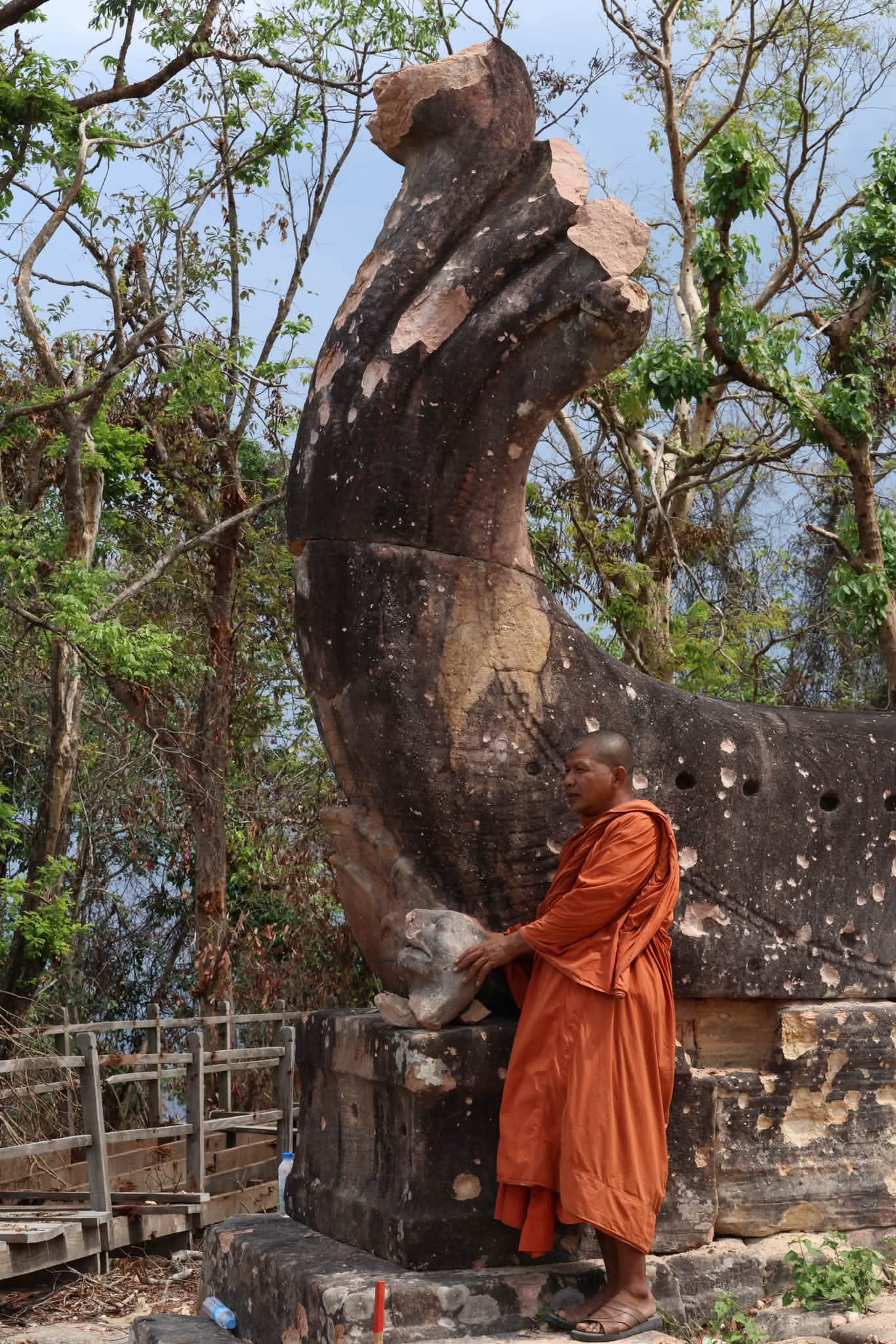
The ministry said Thai military attacks had caused destruction and damage to several ancient temples and archaeological sites, including Preah Vihear, Ta Moan Thom, Ta Krabei and Spean Toap.
It further alleged that Ta Moan Thom, Ta Krabei and K’nar temples remain illegally occupied by Thailand and accused Thai authorities of undertaking infrastructure, electricity and tourism-related activities at the sites without Cambodia’s authorization.
Cambodia said such activities amounted to attempts to consolidate an unlawful occupation and were contrary to international law.
The ministry also called for the return of archaeological objects from K’nar Temple that it said had been removed and taken to Thailand.
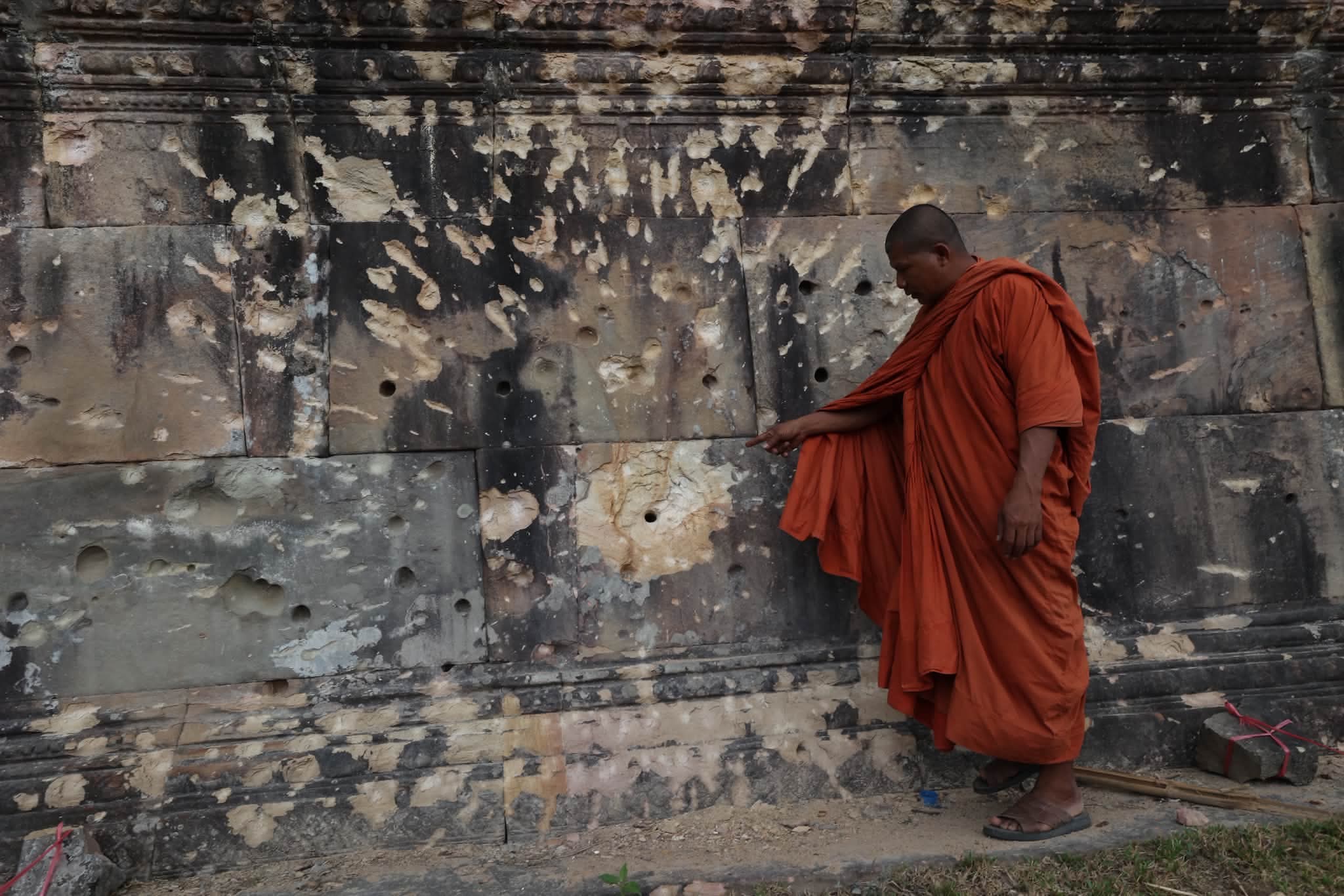
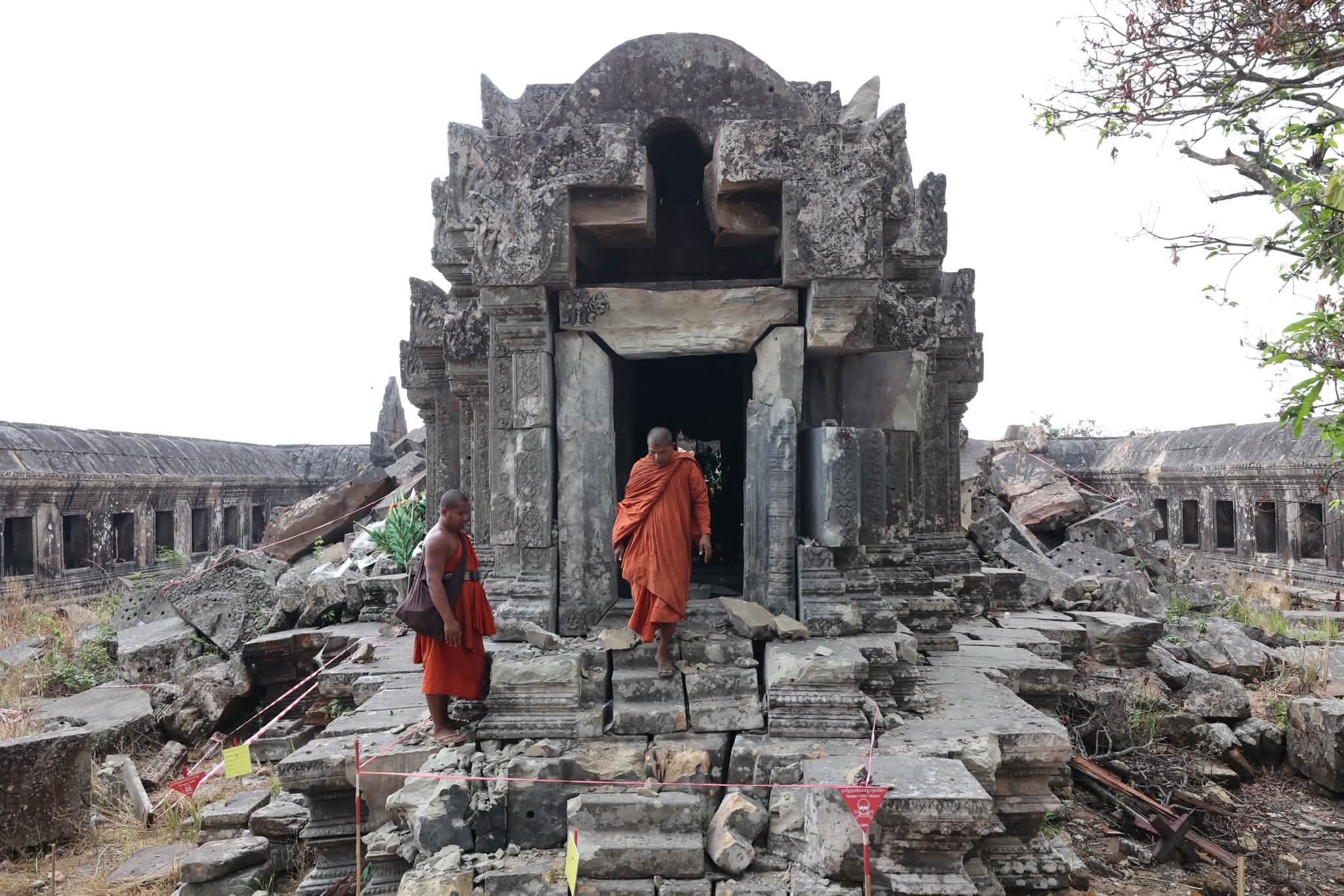
The strongest allegations concern Preah Vihear Temple, which Cambodia says suffered extensive damage during Thai military attacks in July and December 2025.
According to the statement, the attacks affected 562 locations at the temple and reduced the temple structures to more than 70,000 fragments, destroying substantial results of more than a decade of restoration and conservation work carried out by national and international institutions.
The ministry also said the fighting forced more than 16,000 people to evacuate from the heritage area, with some residents still unable to return because of continuing security concerns.
A UNESCO-ICOMOS advisory mission conducted in March 2026 separately documented extensive conflict-related damage to the Preah Vihear property, with the Cambodian side identifying 142 damaged areas from the July 2025 strikes and 420 from the December strikes. The report was published on the UNESCO World Heritage Centre website earlier this month.
Cambodian officials have subsequently highlighted the findings as evidence of the severity of the damage to the World Heritage property.
Cambodia Calls for Withdrawal and Peaceful Resolution
In its latest statement, Cambodia called on Thailand to withdraw its forces from heritage areas, particularly Ta Moan Thom, Ta Krabei and K’nar temples, and demanded the immediate return of archaeological objects allegedly removed from K’nar Temple.
Cambodia also urged Thailand to respect international law, treaties and conventions and to stop what Phnom Penh described as efforts to consolidate and make permanent its occupation of Cambodian territory.
Importantly, the Cambodian ministry called for outstanding issues to be resolved peacefully through existing bilateral mechanisms, particularly the Joint Boundary Commission (JBC).
The ministry reiterated that Cambodian cultural heritage sites are not military bases and must never be used for military purposes.
“Cambodia will continue to accord the highest priority to the conservation and preservation of its cultural heritage for the benefit of future generations and as part of the shared heritage of humanity,” the statement said.
Cambodia also categorically condemned any shelling or other acts that result in damage or destruction to ancient temples and cultural heritage sites, describing such acts as violations of international law and threats to the protection of cultural heritage.
The statement comes amid continuing disagreement between Phnom Penh and Bangkok over responsibility for damage to Preah Vihear and other heritage sites affected by the 2025 border conflict. Thailand has maintained that its military operations were directed at military threats and carried out in accordance with principles including distinction, military necessity and proportionality.
Cambodia’s latest statement therefore places the dispute firmly within the framework of international cultural heritage protection and international law, while calling for the competing claims to be addressed through established mechanisms rather than further confrontation.