
Cambodia–Thailand Border Demarcation: Between Radical Nationalism and a Genuine Political Will for Peace
 Cambodia–Thailand Border Demarcation: Between Radical Nationalism and a Genuine Political Will for Peace
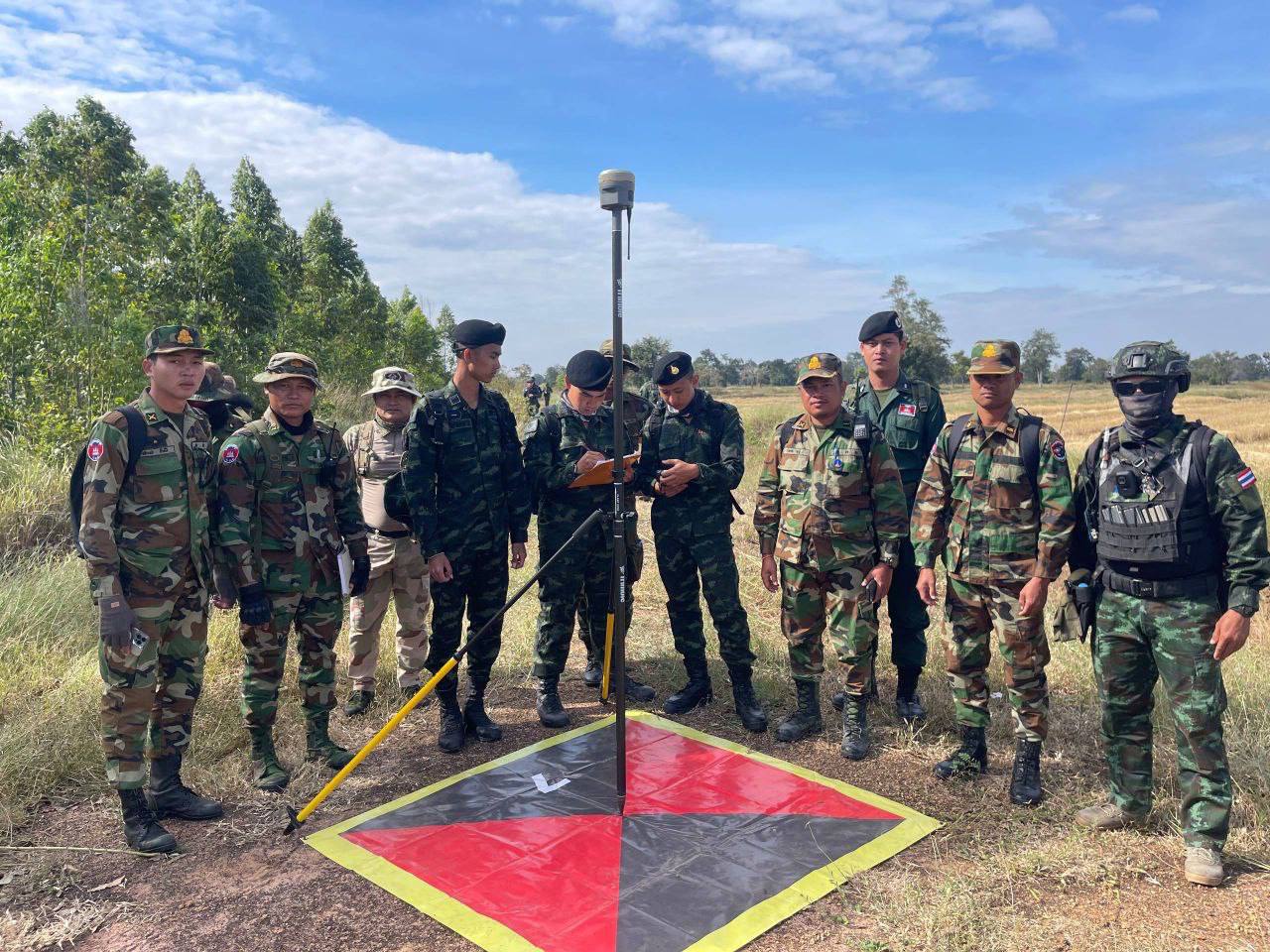
The Cambodia–Thailand border issue has long been a complex political and historical matter, one that has proven difficult to resolve for more than a century. This is because the issue inherently touches national sentiment, security concerns, and the prestige of both nations. Border surveying and demarcation are essential processes that cannot be avoided in order to ensure a clear and stable border line, thereby reducing confrontations between the two countries’ militaries now and in the future.
It is also worth noting that every new government administration must take an oath before His Majesty the King upon assuming office, emphasizing the commitment to defend territorial integrity—an unwavering national principle. Therefore, the involvement of the Royal Government in supporting border demarcation work is a direct implementation of its mandate, and aligns with the aspirations of the Cambodian people throughout the nation.
Meanwhile, opposition groups and some social media users have claimed that Cambodia has lost territory—claims based on unclear sources and driven by extreme nationalist sentiment rather than technical data or credible historical documentation. This situation is also seen in Thailand, where Thai extremist groups have likewise accused their own government of losing territory to Cambodia.
In terms of procedures, border demarcation must rely on maps, treaties, agreements, and international laws, which serve as the most legitimate and crucial basis for resolving such a sensitive issue. In other words, it cannot be conducted through politicized exploitation intended to provoke anger, incite protests, or inflame extreme nationalism.
Border-related technical work is necessary and vital to national security. It must be carried out by professional border experts from both countries in strict accordance with technical standards, treaties, and internationally recognized historical documents. Any disruption to this mechanism—such as the spread of disinformation or manipulation of facts—could potentially spark armed conflict, cost lives, and lead to serious political miscalculations in the history of both nations.
If the temporary border pillar installation progresses successfully, with recognition and support from both governments and citizens of the two countries, then the Cambodia–Thailand border will inevitably reach a full official demarcation. This will transform the border region into a true zone of peace with reduced military tensions, while promoting regional security and economic development, ultimately benefitting the people of both nations. Importantly, no country would be accused of losing or gaining land, nor will there be a “winner” or “loser,” because the process is based entirely on existing legal principles and mechanisms—particularly the principle of the inviolability of borders inherited from the historical Indochina–Siam Border Commission during the French colonial era.
Resolving border issues demands a firm political will, professional expertise, and the prioritization of collective national interests because Cambodia must continue to safeguard sovereignty and territorial integrity while maintaining peace and political stability with the international community and neighboring countries. In the future, the Cambodia–Thailand border must be determined through peace and mutual acceptance—not through extremist sentiment nor military strategies to settle such matters.
By: Pin Vichey – Political Science Scholar