Cambodia’s rising FDI numbers don’t add up to quality growth
 Cambodia’s rising FDI numbers don’t add up to quality growth
Since 2024, Cambodian Prime Minister Hun Manet has intensified efforts to attract foreign direct investment (FDI) to Cambodia. But while the quantity of FDI has increased, Cambodia’s weak institutions and rampant corruption prevent the nation from attracting high-quality investment.
FDI has long been one of the main engines of Cambodia’s economic growth. From 1994 to 2023, over US$45 billion has flowed into the country, fuelling its transformation into one of Asia’s fastest-growing economies. In 2024, Cambodia’s GDP reached US$46.3 billion, thanks to various investment sectors.
In the first nine months of 2025, the Council for the Development of Cambodia approved 546 investment projects worth US$7.8 billion. This is a 47 per cent increase in combined investment capital compared to the same period last year. These projects are expected to generate around 376,000 jobs across industry, infrastructure, agriculture and tourism.
On the surface, Cambodia appears to be successful in attracting investors. Yet behind the impressive numbers lies a more sobering reality — much of this investment is low in quality, heavily concentrated in specific regions and overly dependent on a single partner, China.
Of the US$7.8 billion in investment approved by the Council for the Development of Cambodia in 2025, an overwhelming US$5.3 billion went into industry and manufacturing — including automotive assembly and renewable energy. US$1.9 billion flowed into infrastructure projects. Agriculture and agro-industry attracted just US$405 million and tourism received only US$175 million.
China accounts for 53 per cent of the approved FDI in the first nine months of 2025, followed by domestic investors at 30 per cent, Singapore at 6.9 per cent and Vietnam at 5.2 per cent. Other countries, including the United States, the United Kingdom and Malaysia, contributed less than one per cent each.
The geographical distribution of investment reveals uneven development across Cambodia’s provinces. Kampong Speu and Svay Rieng top the list of provinces receiving new investment, with 125 and 122 projects respectively. They are followed by Phnom Penh, Takeo, Koh Kong, Preah Sihanouk and Kandal. Yet many provinces in the northeast and northwest recorded fewer than 17 projects, with three provinces receiving no investment at all in 2025.
The pattern is clear — investment continues to cluster around special economic zones and provinces with existing infrastructure, while swathes of the country remain excluded.
For the Cambodian government, the headline figures are cause for celebration. More projects, more capital and more jobs all contribute to the narrative of an economy on the rise.
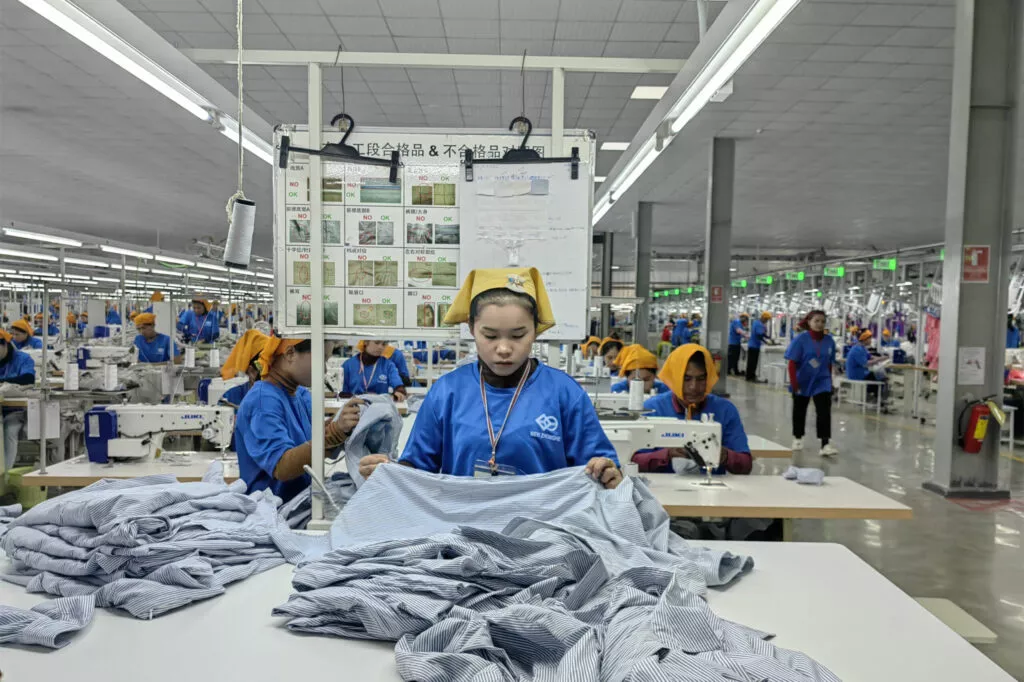
But most of the jobs created offer low wages and weak labour protections. While they provide short-term employment, they rarely offer the training or knowledge transfer needed to move Cambodia up the value chain. Technology remains tightly controlled by foreign investors, with Cambodian workers confined to operational roles rather than managerial, technical or research positions. Without significant skills upgrading and technology transfer, Cambodia risks falling further behind.
Chinese investment has built roads, bridges and factories. But this investment has limited Cambodia’s ability to diversify its partnerships and pursue a more balanced foreign policy. Cambodia has struggled to attract significant flows from Japan, South Korea, the European Union and the United States — investors who typically bring higher standards in governance, technology and sustainability.
Cambodia should learn from China during 1980–2000, under the former leadership of Deng Xiaoping, which opened the door for FDI from Hong Kong, Taiwan, Japan, South Korea, Singapore, the United States and Germany by creating favourable conditions and offering joint ventures. China’s stable policy environment and strong state capacity after large-scale reforms, along with massive investments in energy infrastructure and transport, have reduced production costs, making it an attractive business climate for overseas investors.
Cambodia’s inability to attract higher-quality FDI highlights deeper structural challenges. Investors from Japan, Korea, the United States and the European Union often require strong rule of law, transparent regulations and predictable enforcement of contracts. These are areas where Cambodia continues to lag. Concerns over corruption, weak institutions and opaque decision-making discourage companies that bring advanced technology and stricter governance standards. Cambodia’s heavy alignment with China makes it less attractive to investors who prefer neutrality and long-term predictability. Without addressing these weaknesses, Cambodia will remain dependent on capital that prioritises short-term gains over sustainable growth.
The risks of low-quality investment are already visible. Infrastructure and land concessions linked to foreign projects have been tied to deforestation and displacement, often without a transparent assessment of their social and ecological impact. Provinces that attract investment, such as Phnom Penh, Preah Sihanouk and Svay Rieng, experience rapid growth, while the northeast and northwest remain marginalised. The uneven distribution of investment risks deepening Cambodia’s regional divides.
Cambodia’s FDI story is often told in terms of numbers — billions of dollars, hundreds of projects and hundreds of thousands of jobs. But numbers alone do not capture the quality of growth. The country’s over-reliance on low-skill industries and Chinese capital has left it vulnerable, externally dependent and regionally unequal. The challenge for Cambodia is not attracting more investors but ensuring that the investment it receives truly serves the Cambodian people.
Mom Mit holds a master’s degree from the Department of Strategic and Innovative Development at the Financial University, Moscow.