CHRC Chair Tells Indonesian Minister: Border Conflict Stems from Thailand’s Refusal to Use Internationally Recognized Maps
 CHRC Chair Tells Indonesian Minister: Border Conflict Stems from Thailand’s Refusal to Use Internationally Recognized Maps
CHRC Chair Tells Indonesian Minister: Border Conflict Stems from Thailand’s Refusal to Use Internationally Recognized Maps
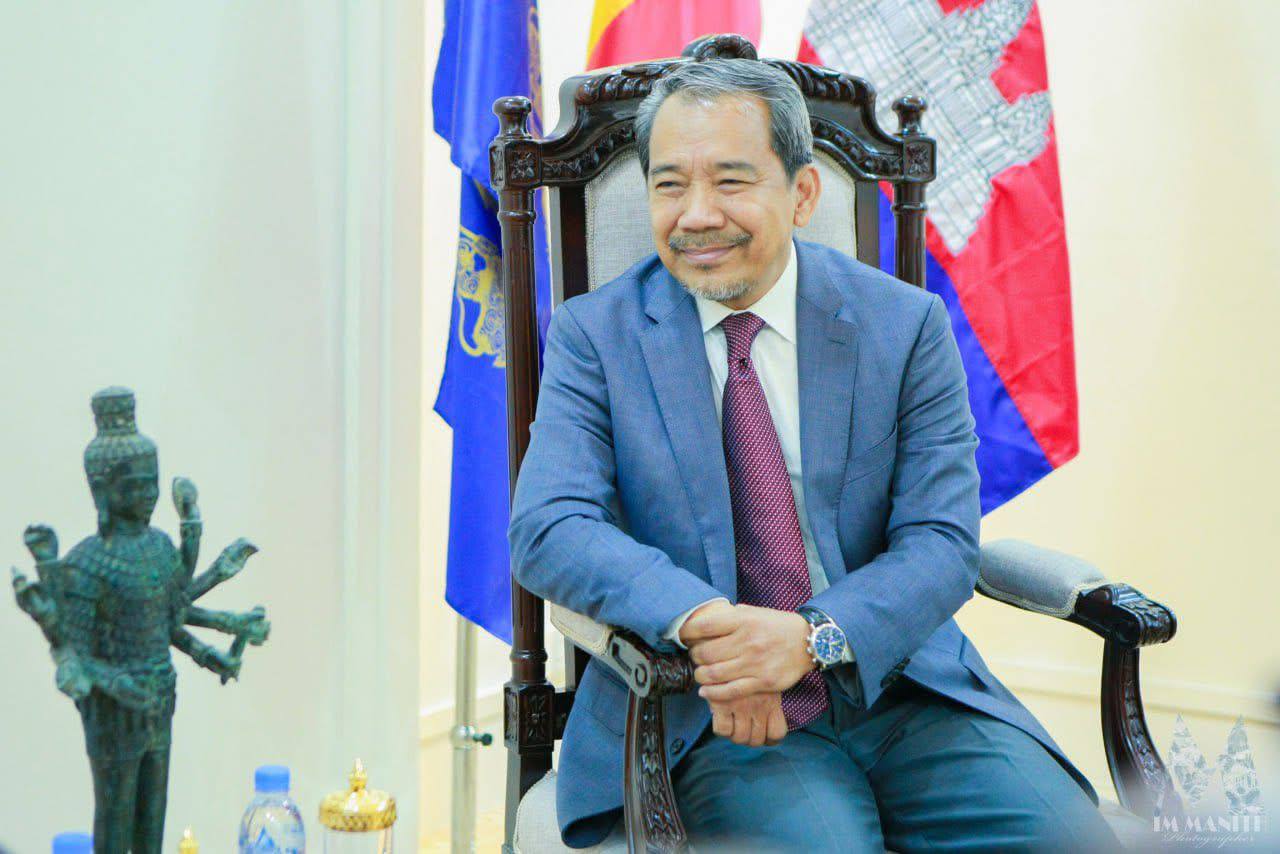
According to the press release issued by the Cambodian Human Rights Committee (CHRC) on 24 November 2025, H.E. Keo Remy, Chair of the CHRC, informed the Indonesian Minister for Human Rights that the ongoing border conflict between Cambodia and Thailand arises directly from Thailand’s refusal to use internationally recognized maps established under the 1904 and 1907 Franco–Siam Treaties. Instead, Thailand continues to rely on unilaterally drawn maps, which contradict the agreed legal framework.
H.E Keo Remy underlined that Cambodia’s strict adherence to the Ceasefire Agreement—jointly agreed on 28 July 2025 in Malaysia—created the conditions that allowed Thai armed forces to illegally cross into Cambodian territory and capture 20 Cambodian soldiers. As of today, 18 Cambodian soldiers remain in Thai custody, being used as political leverage to extract concessions desired by the Thai side.
Furthermore, Thailand has repeatedly used landmine incidents as a pretext to escalate tensions along the Cambodia–Thailand border. On this matter, the CHRC chief explained that Cambodia still has several dozen hectares of minefields left from the civil war period of the 1980s. He posed a critical question:
“Whenever a Thai soldier steps on a landmine, is it on Cambodian soil or on Thailand’s own territory?”
If Thai soldiers are stepping on mines inside Cambodia, this indicates an illegal incursion into Cambodian sovereign territory, where they encounter decades-old mines left from past conflicts. If the mines detonate on Thai soil, then the responsibility lies entirely with Thailand and is unrelated to Cambodia.
His Excellency also stressed that Thailand’s actions are creating divisions within ASEAN and undermining the core foundations of the organization, which is built upon a shared vision, a shared identity, and a shared community. These principles form the essential basis for peaceful coexistence, respect for the rule of law, and regional unity among all ASEAN Member States.