Creating Borders by Force: Violations of International Law and Risks to Regional Peace
 Creating Borders by Force: Violations of International Law and Risks to Regional Peace
It is impossible to create a border line through the use of armed force—by encroaching upon and severing territory from one country in order to annex it and expand one’s own land—while claiming such actions as the “strengthening of sovereignty.” Such behavior constitutes aggression, a blatant trampling of international law through violence, and a destruction of peace by means of war.
When gunfire falls silent under a ceasefire, yet the leadership of a country continues to command its armed forces—or stands behind them—to advance, intrude, and occupy the territory of a neighboring state, this represents not only a failure of military strategy, but also a failure of that state’s adherence to international law and moral principles. This is because such actions cannot be concealed from the eyes of the international community, and in the modern era of advanced media and social networks, it becomes increasingly difficult to deceive the world.
According to numerous statements, international law, and Cambodia’s diplomatic protests issued in the context of the Cambodia–Thailand conflict in 2025 and early 2026, a fundamental question that the world should ask is: why did this conflict arise at all, given that the Cambodia–Thailand border had already been clearly defined in the 1904–1907 Franco–Siamese treaties, based on a precise 1:200,000 scale map? And does this conflict originate from an act of aggression driven by the Thai military’s desire to expand its territory into Cambodia?
The continued acts of aggression by the Thai military after the ceasefire of 27 December 2025 not only violate Cambodia’s sovereignty and territorial integrity, but also constitute multiple violations of international law—beginning with the United Nations Charter, international humanitarian law, and human rights law. These actions pose serious risks to the border demarcation process and to long-term peace in the region.
The signing of a ceasefire agreement and joint bilateral statements between the conflicting parties—witnessed by the ASEAN Chair and especially by the United States and China—should have served as a legitimate instrument to halt violence. However, in this case, it has been repeatedly undermined by the continued deployment of forces, occupation of territory, and the wanton destruction of civilian infrastructure by Thai troops after the ceasefire was supposed to take effect. Such aggressive conduct demonstrates the transformation of a ceasefire—an instrument of peace—into a tool for exercising military power instead.
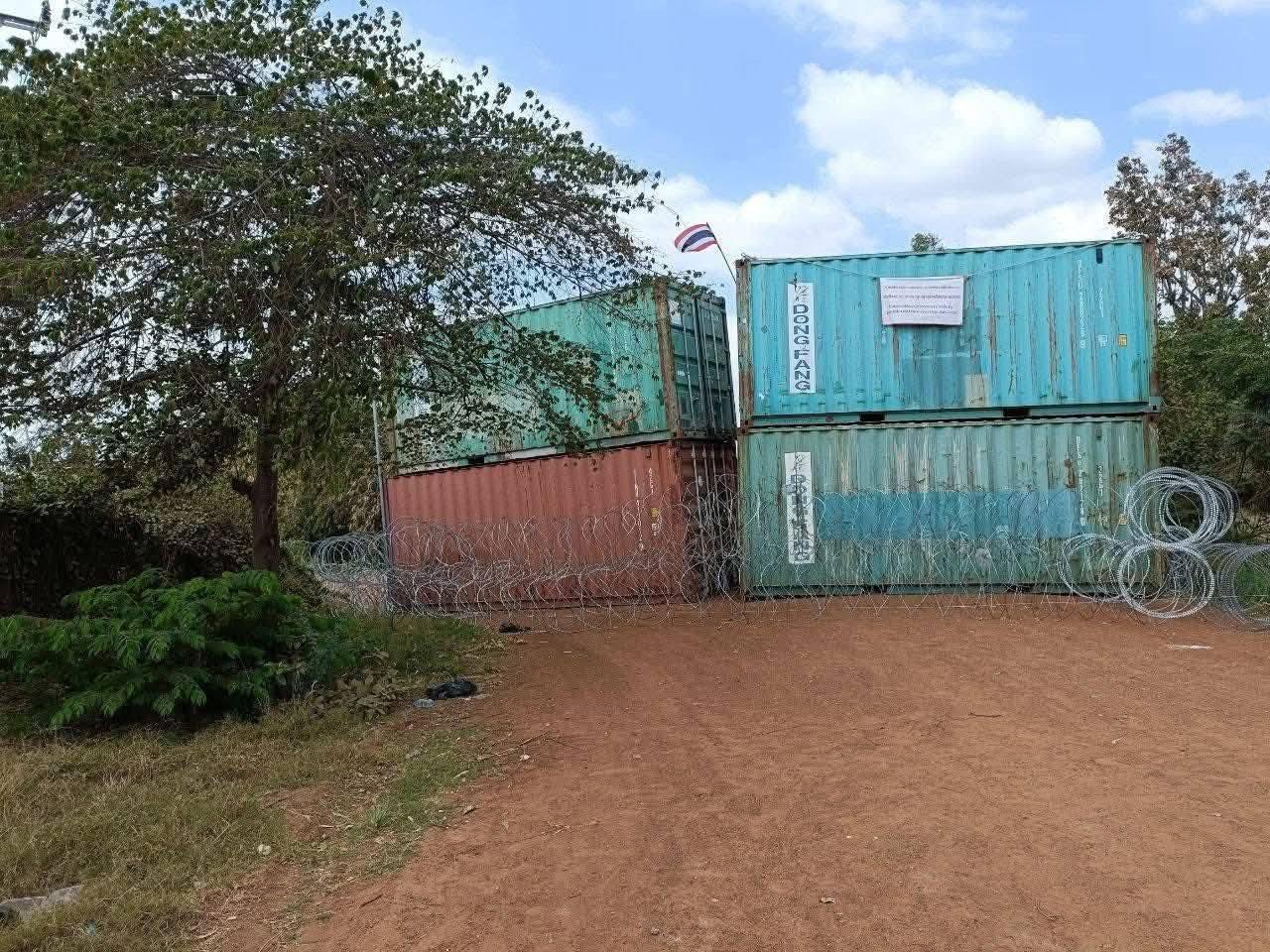
Acts such as land clearing, the installation of barbed wire, the placement of containers, the burning and destruction of property, territorial occupation by force, the destruction of civilian assets, the looting of villagers’ property, and the prevention of displaced persons from returning to their homes are no longer merely bilateral issues. They have become international concerns, as they affect fundamental principles including: the prohibition of the use of force (UN Charter Article 2(4)), the protection of civilians (Geneva Conventions), and the right to housing of civilian populations. International law clearly affirms that territory acquired through force can never become the lawful property of any state.
The stationing of troops, construction of bunkers, planting of national flags, and creation of physical structures on the ground constitute a strategy of “creating facts on the ground” to undermine the meaning of maps, treaties, and the border demarcation process between the two countries. This reflects a contest between military power and the authority of international law. If the law fails, then peace and the global order will inevitably fail as well.
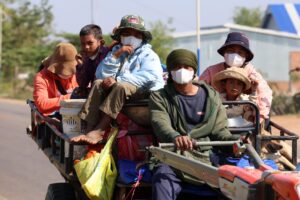
At present, hundreds of thousands of Cambodian civilians have been displaced, losing their homes, land, and security. This is not merely a one-sided impact, but a regional and international crisis.
Modern warfare does not only attack land; it also assaults society, the economy, and trust in the rule of law.
The current Cambodia–Thailand conflict is therefore not a question of “who occupies land and who loses land,” but rather “who possesses stronger legal documentation.” Cambodia has chosen international law, peaceful means, and diplomatic mechanisms. Thailand, if it continues to rely on force, will not only lose legal legitimacy but may also forfeit international trust and its moral standing as a state. Thailand should also stop deceiving its own population, because the authoritative maps clearly defining the unchanged Cambodia–Thailand border are deposited at the United Nations, ensuring the integrity and correctness of border demarcation and official boundary marking. Thus, if Thailand continues its aggression against Cambodia, it will inevitably face “humiliation and loss of face” in the future. A quiet withdrawal and the cessation of aggression may be the wiser option—if Thailand can awaken from politically motivated justifications.
Ending expansionist ambitions against Cambodia remains a choice available to Thailand. Some Thai analysts have already warned their own government about the strategic miscalculations of aggressive actions that could result in major international errors. Thailand cannot play the role of a great power based on military force while its legal weaknesses are tightening around its neck.
It should also be noted that peace can never be born from bullets. It must arise from respect for borders, respect for the law, and respect for human rights. In the end, the country that truly wins is not the one that occupies a piece of land, but the one that secures legitimacy, moral integrity, and the support of the global community.
By: Pin Vichey – Political Science Scholar