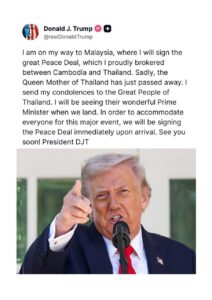
Instrumentalization of Border Disputes: A Smoke-and-Mirrors Strategy for Political Influence and the Construction of a ‘Peace Victory’
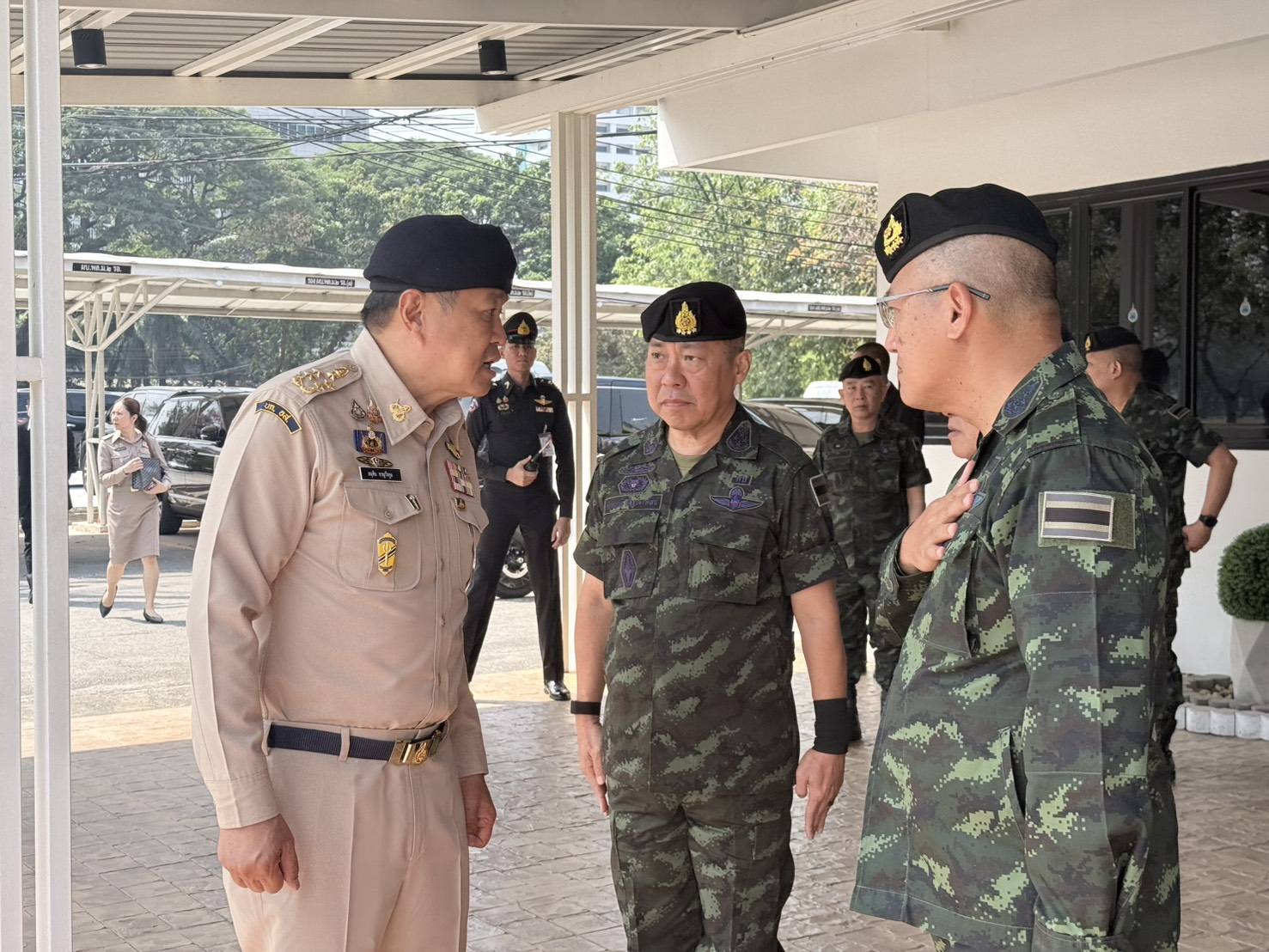 Instrumentalization of Border Disputes: A Smoke-and-Mirrors Strategy for Political Influence and the Construction of a ‘Peace Victory’
At a time when Thai leaders continue to proclaim their commitment to peace and the peaceful resolution of disputes, the actual actions on the ground along the border, as well as domestic political rhetoric within Thailand, reveal a direction that is starkly contradictory. The escalation of tensions, the elevation of border issues into a platform for extreme nationalism, and displays of military assertiveness have raised a critical question: Is the true objective of Thailand and the Thai military peace, or rather a political victory aimed at short-term electoral gains?
The current Cambodia–Thailand border dispute is not, in essence, a genuine territorial issue. Instead, it is being transformed by certain opportunistic Thai leaders into a political instrument for managing domestic political crises and for seeking popularity. This is done by inflating political capital through the construction of a deceptive image of “national defense,” presented to the Thai public and to the international community alike.
On the domestic political front, Thailand remains under prolonged pressure from chronic instability, power fragmentation, competition for popularity, and an inability to forge national political unity. In such a context, creating or intensifying conflict with a neighboring country has become a familiar tactic repeatedly used by Thailand to divert public attention away from internal problems and to stir up simplistic nationalist sentiment. This strategy comes at the cost of human lives—primarily soldiers (referring to Surin Khmer and Upper Khmer), who are not ethnic Thais by origin, but who have been cultivated and deployed to fight, effectively serving as actors in a staged political drama designed to attract popularity and secure votes for ambitions to ascend to the prime minister’s seat in the upcoming term.
Turning border issues into a political stage not only helps generate temporary public support, but also provides certain Thai leaders with opportunities to portray themselves as nationalists defending sovereignty. This image is crafted to win approval from the public as well as from powerful elite institutions within Thailand.
However, the core problem lies in the inconsistency between political rhetoric and actual behavior. While Thailand claims to respect international law and peace, its actions—namely the use of military pressure and the deliberate creation of tension along the Cambodia–Thailand border—have rendered such claims hollow. As a result, these assertions increasingly resemble mere political slogans lacking credibility on the international stage, drawing repeated condemnation and gradually portraying Thailand as an aggressor against Cambodia, a smaller country that seeks peace.
Moreover, attempting to preserve international image by speaking of peace while acting in direct contradiction on the ground is a serious miscalculation by Thai leaders. Such behavior risks long-term damage, not only to the country’s reputation but also to the trust of international partners.
In reality, the Cambodia–Thailand border dispute clearly demonstrates that Thailand is prioritizing a “political victory” over a genuine “peace victory”—the very peace that people around the world truly desire.
Using conflict as a tool to manage internal problems and construct political images may bring short-term benefits, but history has already shown that Thailand’s aggressive actions against Cambodia represent a deeply shameful and reprehensible chapter. In the future, this history may become a source of embarrassment and moral condemnation for the Thai people themselves. Such an approach cannot create lasting peace nor ensure long-term regional stability.
By: Pin Vichey – Political Science Scholar