Is Thailand Pursuing Territorial Aggression Against Cambodia, or Combating Online Scams?
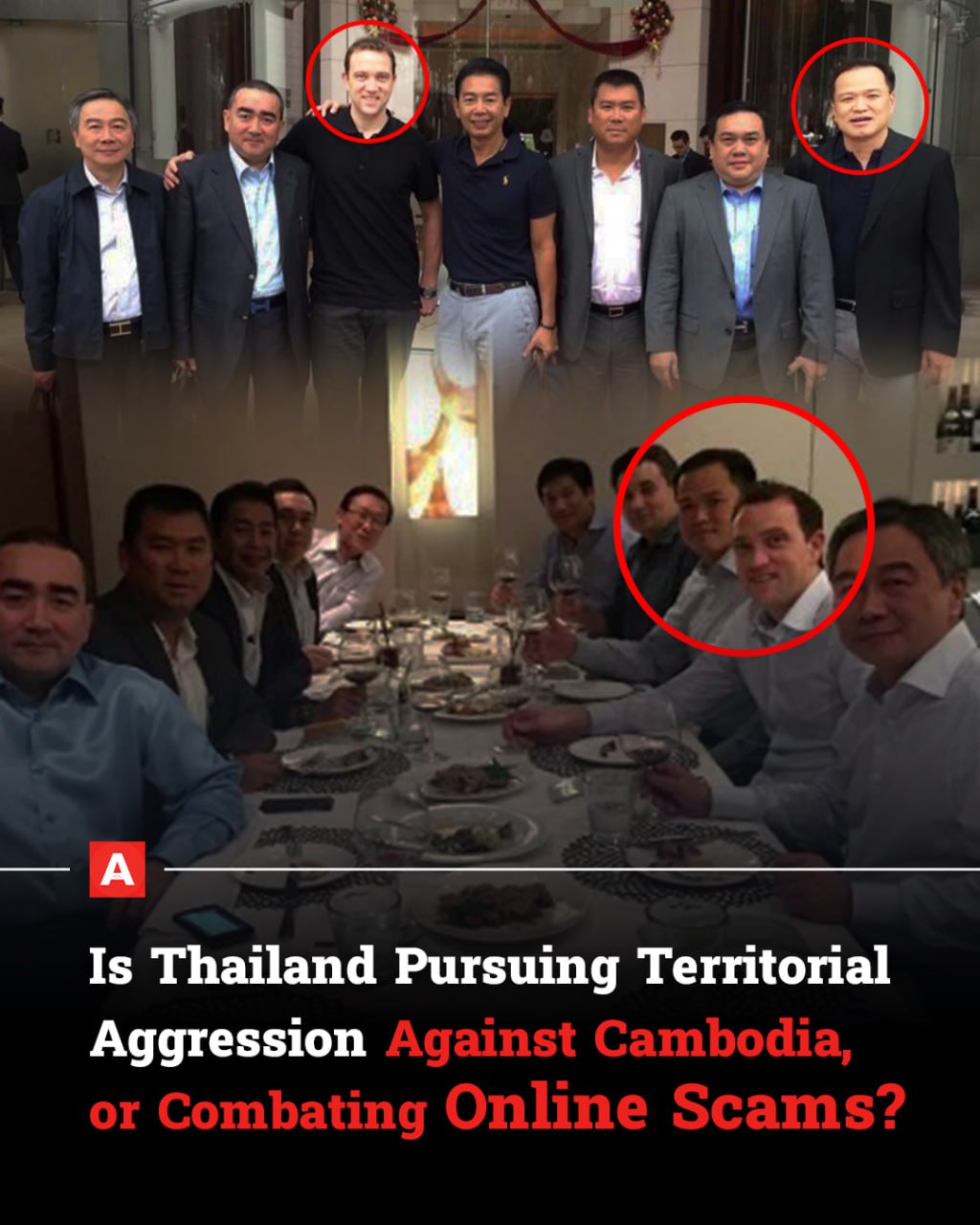
In an era where transnational crime is rapidly increasing, the term “online scam” has become a key concept in the security vocabulary of many countries. However, linking this type of crime to threats or military actions along borders often raises a crucial question for the international community: Can online scam crimes be used as a pretext for the use of military force and the violation of a neighboring country’s sovereignty?
International law clearly answers: No, it cannot.
In this context, statements by Thailand’s foreign minister expressing an intention to raise the issue of online scams at the United Nations (UN) in order to confront Cambodia’s Prime Minister, Hun Manet, clearly reveal an attempt to associate online scam issues with military activities. This is not a misunderstanding, but rather a deliberate political maneuver to transform a civil transnational crime into an alleged act of military aggression.
In reality, online scam crimes are not the problem of any single country alone. They are a global issue, occurring across major regions of the world—Asia, Europe, the Americas, and Africa. As Cambodia’s Senior Minister Keo Remy has emphasized, such problems must be addressed through legal measures and international cooperation, including collaboration between cross-border law enforcement agencies and judicial authorities, information sharing, investigative techniques, and the implementation of international and regional agreements.
From a legal standpoint, online scams are classified as civil or criminal offenses, not as military acts or threats to national security that could provide legal justification for any country to use military force.
Under the Charter of the United Nations, Article 2(4) clearly stipulates that all states are prohibited from threatening or using force against the territorial integrity, sovereignty, or political independence of another state. There are only two circumstances under which the use of force may be permitted:
- The inherent right of self-defense in the event of an actual armed attack, and
- Explicit authorization by the United Nations Security Council.
Clearly, online scam crimes fall under neither of these conditions and therefore cannot be used as a pretext for military action or border violations by any country.
The transformation of a civil criminal issue into a political war narrative, and the linking of online scams with border disputes, reflects a highly dangerous political strategy. Such an approach risks undermining the fundamental principles of international law, creating confusion within the international community, and opening the door to the use of force without legitimate legal grounds.
If the international community were to accept such a practice, the principles of peace and the international order established after World War II would be severely undermined.
For the ASEAN region, this case could also set a dangerous precedent, whereby minor disputes are internationalized and militarized. The consequences may include damage to regional peace and stability, a decline in mutual trust among neighboring countries, and challenges to ASEAN’s role in resolving disputes through peaceful means.
In conclusion, combating online scams is a matter of transnational civil crime that must be addressed through legal mechanisms and international cooperation—not a justification for the use of military force or violations of a neighboring country’s sovereignty. Linking this issue to border disputes or military actions constitutes a politicization of crime into a form of political warfare, which runs counter to international law and the principles of the United Nations. For the ASEAN region, such an approach represents a dangerous model that could jeopardize peace, stability, and trust among neighboring states.
Therefore, clearly distinguishing between “online scam crimes” and “military aggression” is essential to safeguarding territorial integrity and preserving the international order through peaceful means.
By: Pin Vichey – Political Science Scholar