Malaysia Welcomes Cambodia–Thailand Ceasefire, Urges Faithful Implementation to Protect Civilians
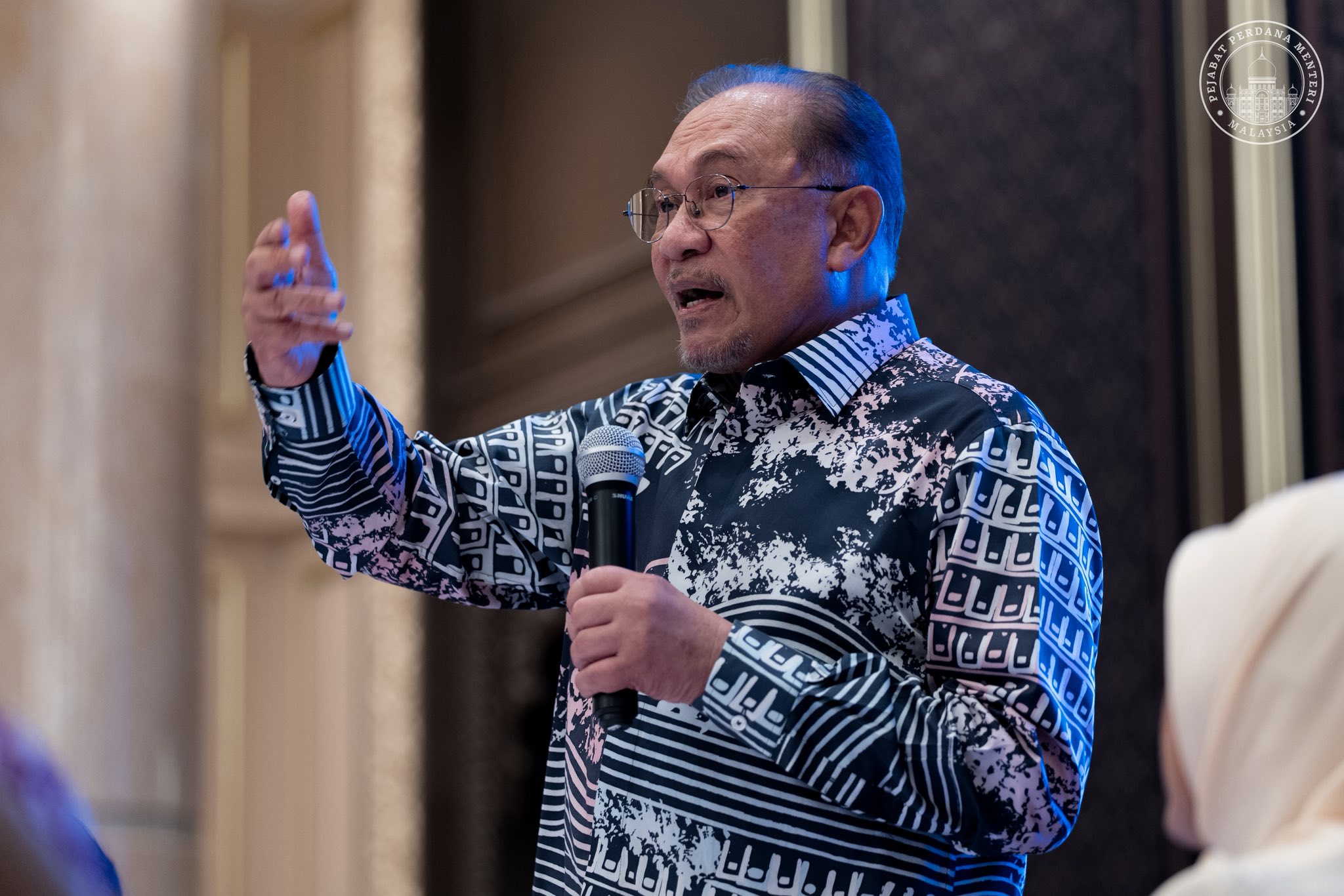 Dato' Seri Anwar Ibrahim
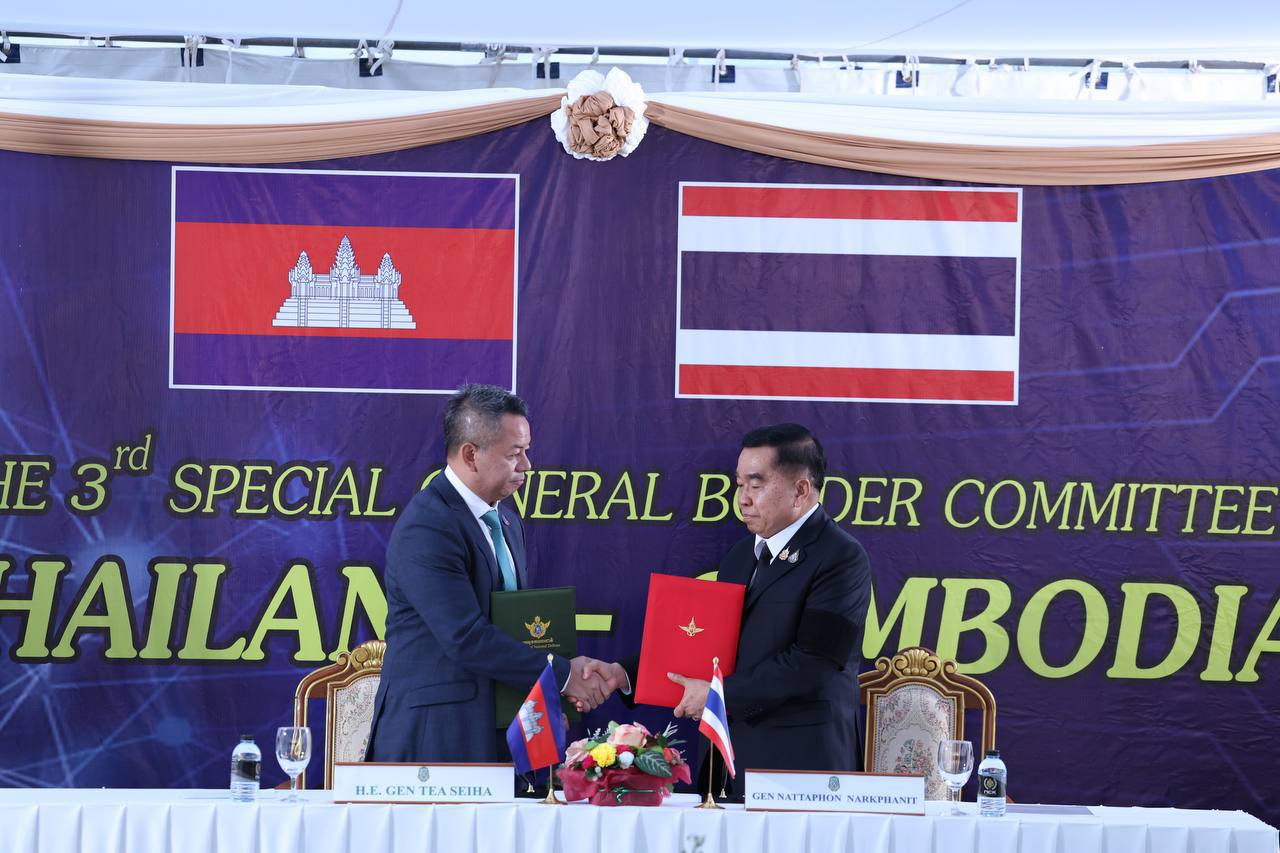
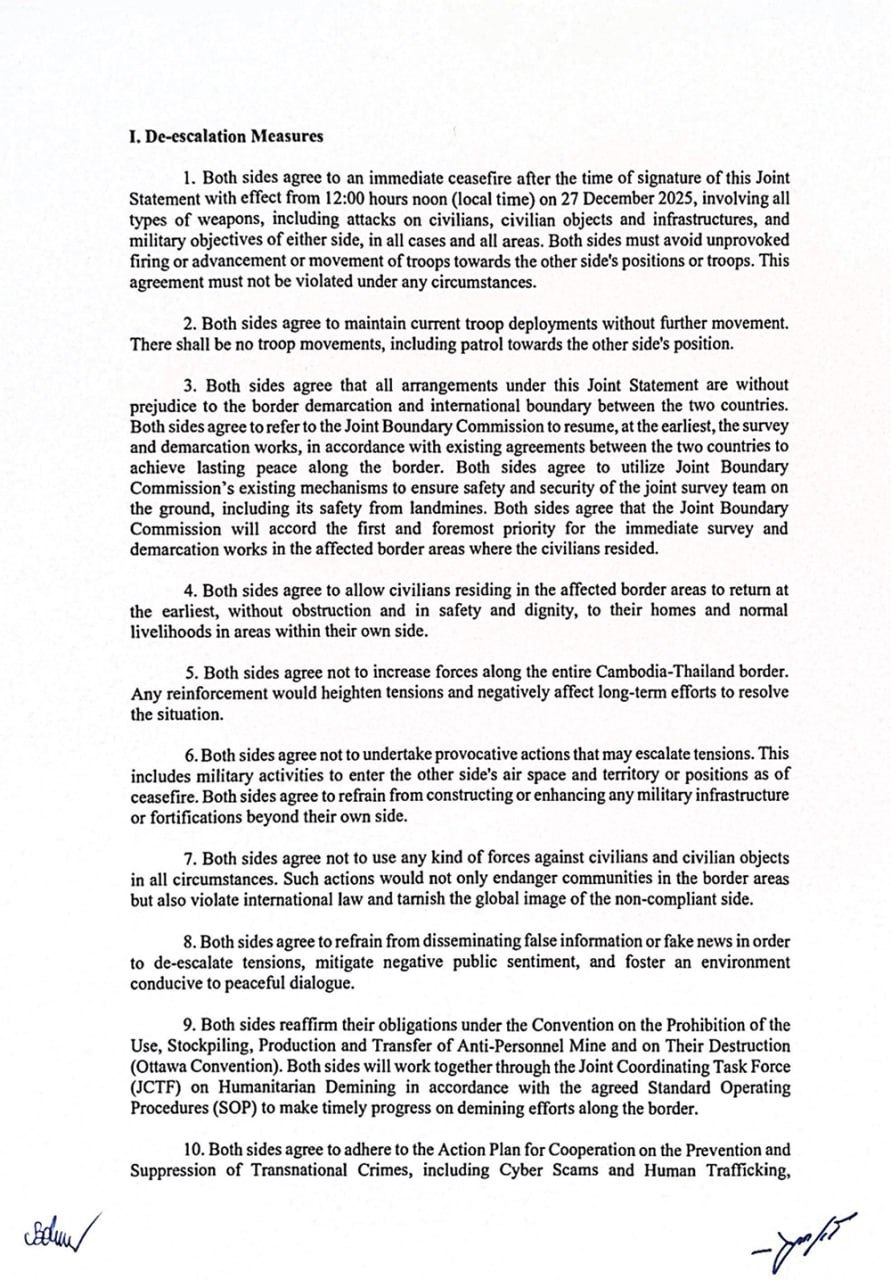
Kuala Lumpur — 27 December 2025 — Malaysian Prime Minister Datuk Seri Anwar Ibrahim has welcomed the ceasefire agreement between Cambodia and Thailand, which came into effect at 12:00 p.m. (UTC+7), describing it as a necessary and responsible step taken in the paramount interest of civilian protection.
In a statement posted on his official social media platform, Prime Minister Anwar Ibrahim highlighted that the decision by both parties to halt hostilities and hold forces in their current positions reflects a shared recognition of the urgent need for restraint, de-escalation, and stability amid heightened tensions along the Cambodia–Thailand border.
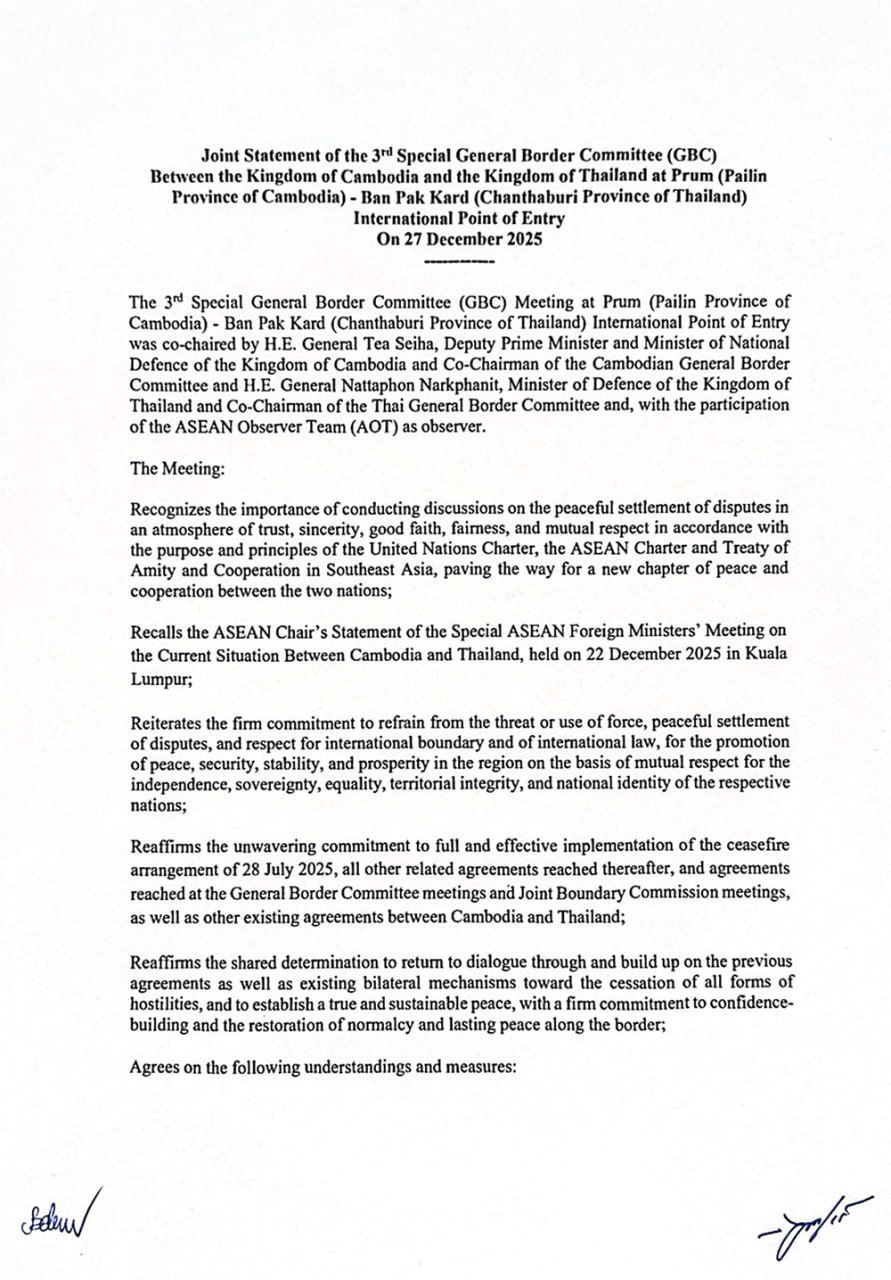
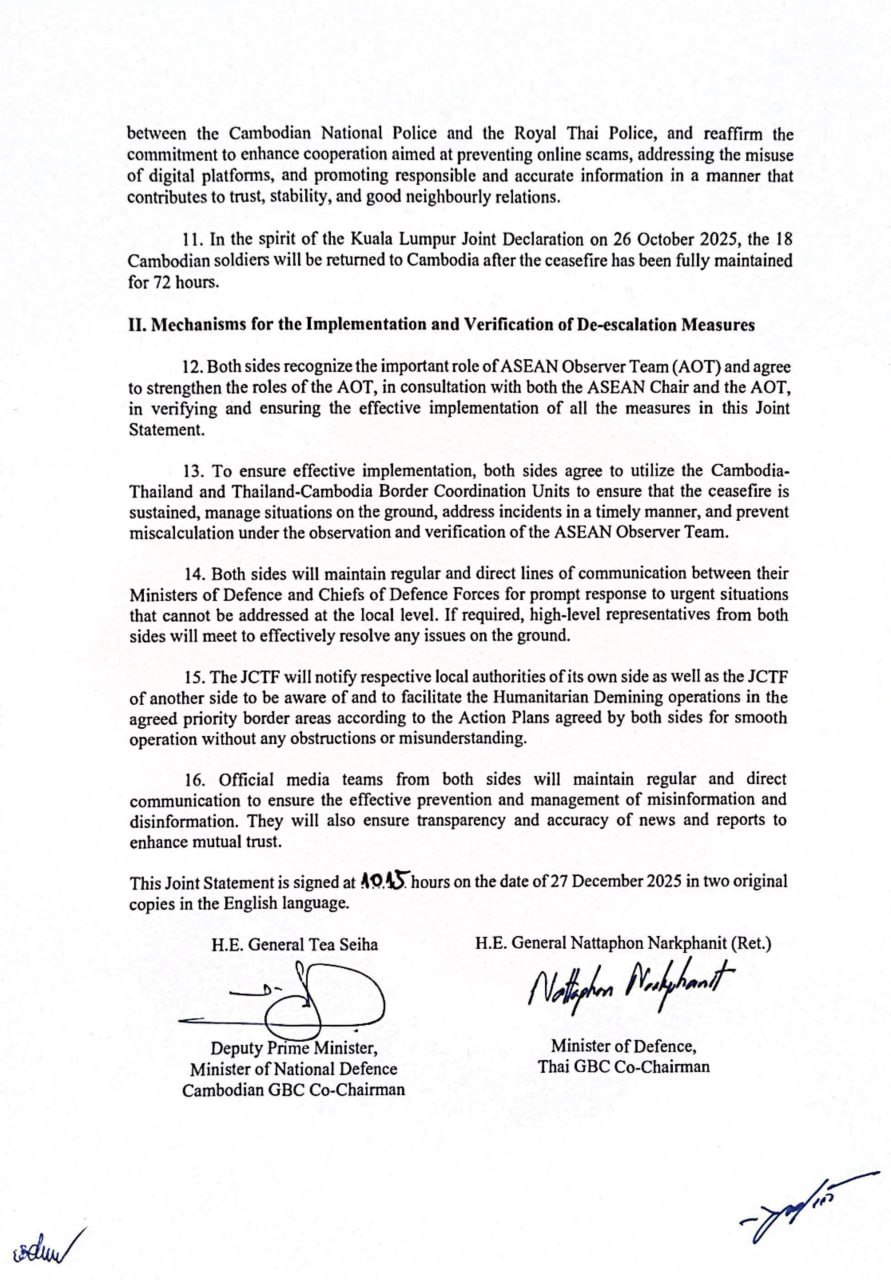
He underscored that the Joint Statement adopted by both sides sets out practical and constructive measures, including verification by the ASEAN Observer Team (AO) and direct lines of communication between defence authorities, which together form a credible foundation for sustaining the ceasefire and preventing miscalculation.
Prime Minister Anwar further expressed hope that both Cambodia and Thailand will implement these undertakings faithfully and in good faith, noting that their successful execution is essential to restoring confidence and advancing durable peace.
As Malaysia prepares to hand over the ASEAN Chair to the Philippines at midnight on 1 January 2026, Prime Minister Anwar affirmed that Malaysia will continue to support all efforts to ensure compliance with the ceasefire commitments, emphasizing that the situation bears directly on ASEAN’s credibility, prestige, and role as a region of peace, stability, and cooperation.
The statement reflects ASEAN’s continued engagement in facilitating de-escalation and reinforcing peaceful solutions through regional mechanisms and collective responsibility.