Phnom Penh Rejects Thai Territorial Claims, Seeks Peaceful Resolution
 Phnom Penh Rejects Thai Territorial Claims, Seeks Peaceful Resolution
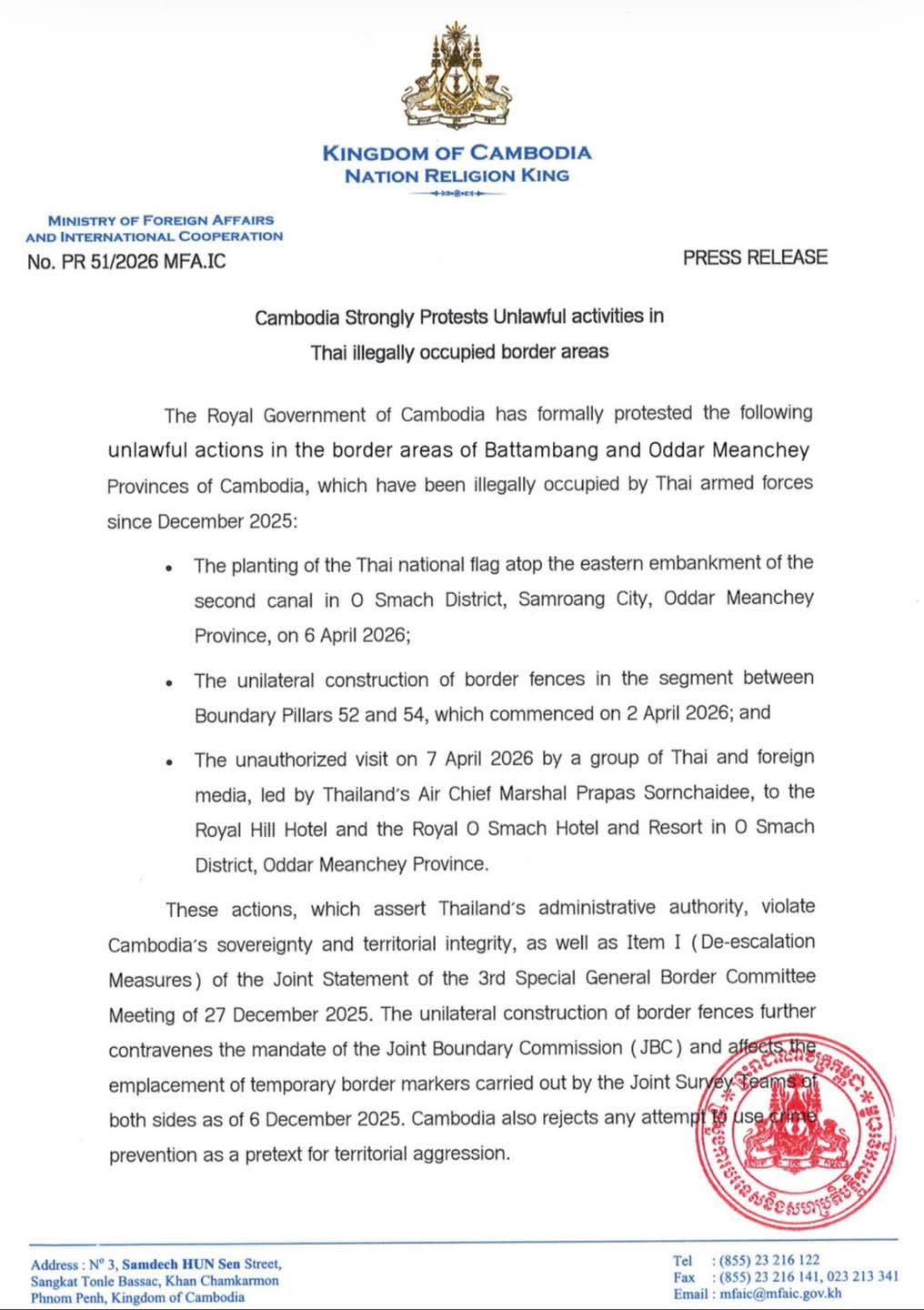
PHNOM PENH, April 10, 2026 — Cambodia has formally protested what it described as unlawful actions by Thailand in disputed border areas, accusing Thai forces of violating its sovereignty and calling for an immediate halt to the activities.
In a statement issued by the Ministry of Foreign Affairs and International Cooperation of Cambodia, Phnom Penh said the incidents occurred in parts of Battambang and Oddar Meanchey provinces, which it claims have been “illegally occupied” by Thai armed forces since December 2025.
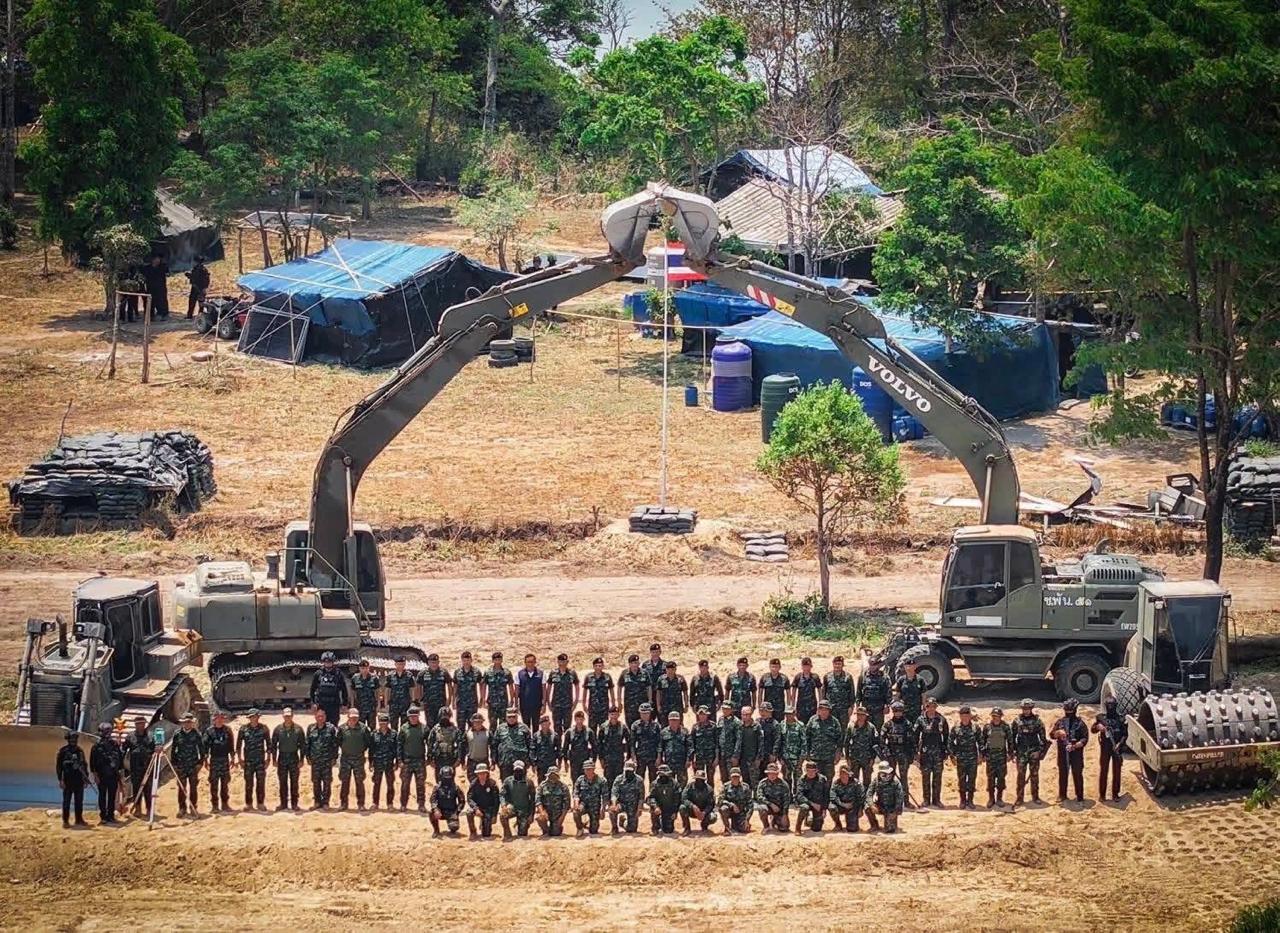
The Cambodian government cited several recent actions, including the raising of the Thai national flag in O Smach district, the unilateral construction of border fences between agreed boundary markers, and an unauthorized visit by Thai officials and foreign media to the area.
“These actions… violate Cambodia’s sovereignty and territorial integrity,” the statement said, adding that they also contravene existing bilateral agreements and mechanisms, including the work of the Joint Boundary Commission (JBC).
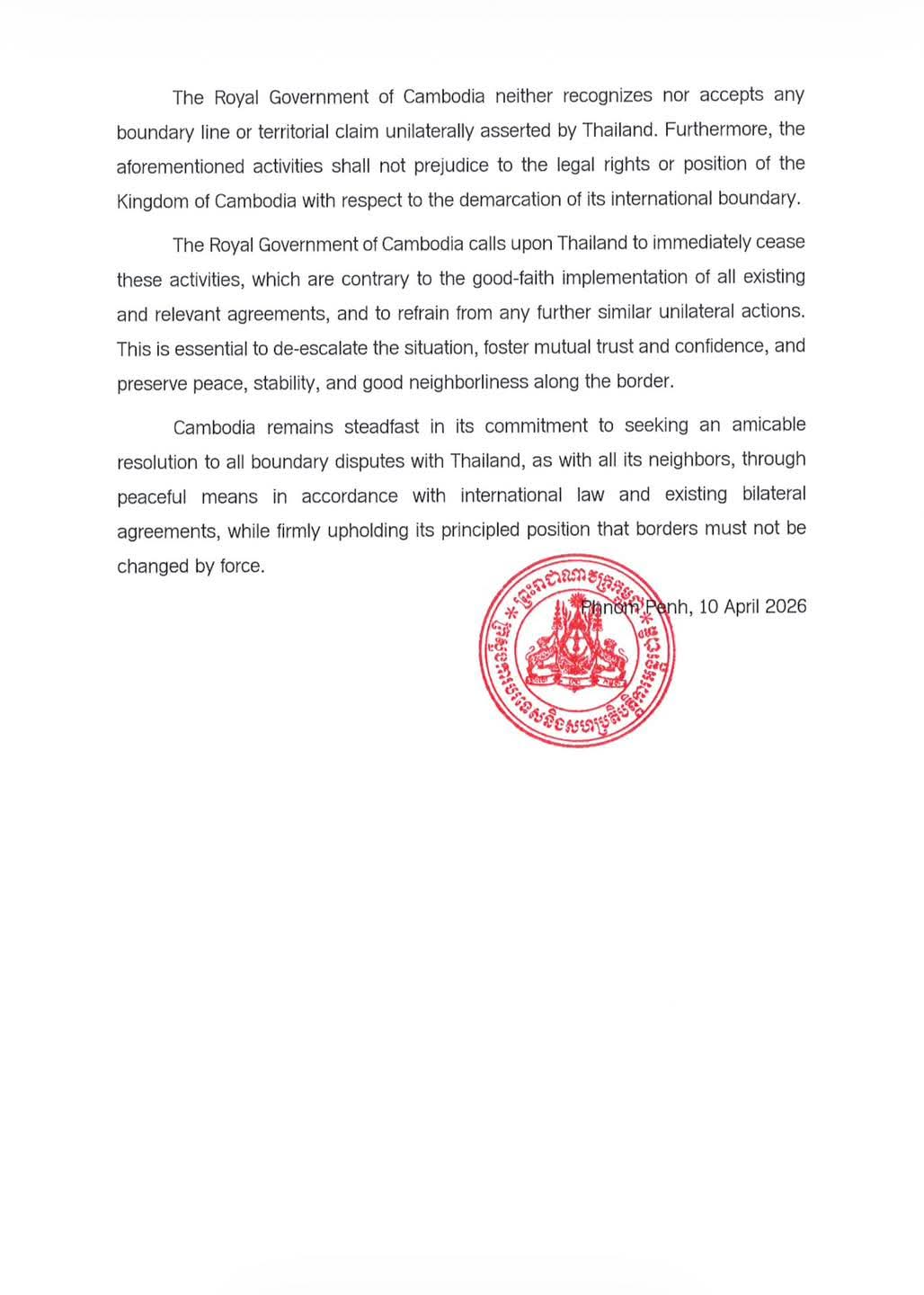
Phnom Penh said it does not recognize any boundary line or territorial claim unilaterally asserted by Thailand, stressing that such actions would not affect Cambodia’s legal position regarding border demarcation.
The government called on Bangkok to “immediately cease” the activities and refrain from further unilateral measures, warning that they risk undermining trust and escalating tensions along the border.
At the same time, Cambodia reiterated its commitment to resolving disputes through peaceful means in accordance with international law, emphasizing that borders must not be altered by force.
The statement comes amid renewed sensitivities along the Cambodia–Thailand frontier, where both sides have previously relied on joint mechanisms and diplomatic channels to manage overlapping claims and maintain stability.