Op-Ed: Thailand’s Fuel Crisis and the Politics of Blame
 Op-Ed: Thailand’s Fuel Crisis and the Politics of Blame
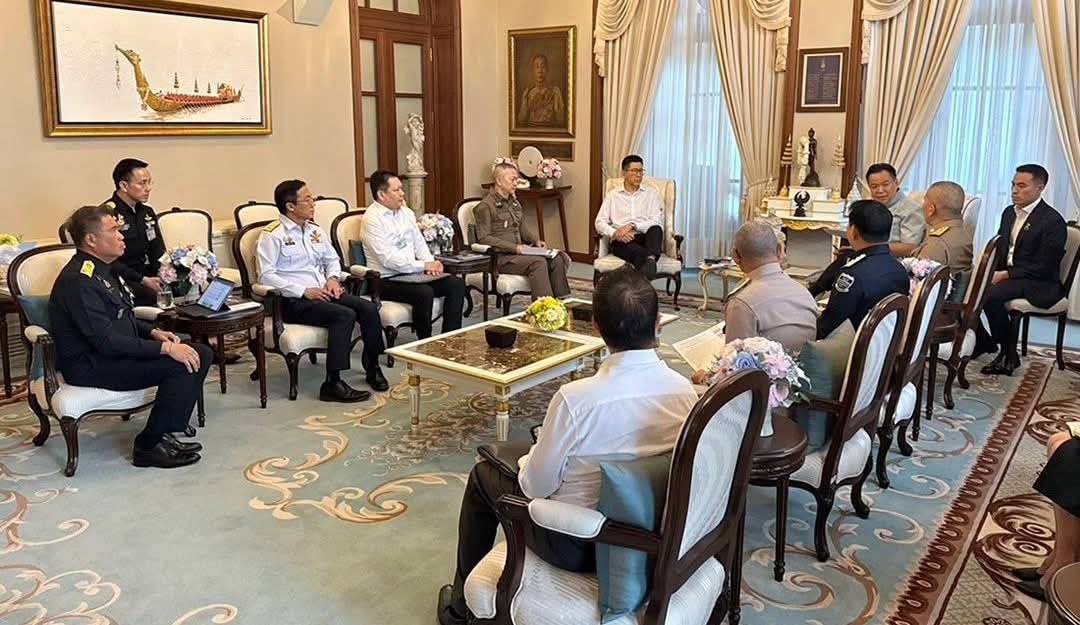
Thailand is currently grappling with two striking developments: the reported disappearance of 57 million litres of fuel and an emergency meeting convened by senior officials alleging that oil has been smuggled into Cambodia.
These developments come at a particularly sensitive moment. Thai citizens are facing rising fuel prices and potential shortages, placing mounting pressure on the government led by Anutin Charnvirakul. In times of economic strain, such crises often evolve beyond technical issues into political challenges.
What is unfolding appears to follow a familiar pattern in political playbooks worldwide. When domestic pressures intensify—driven by inflation, energy shortages, or declining public confidence—governments may turn outward, framing external actors as contributors to internal problems. Cambodia, in this case, risks becoming a convenient target.
The claim that large volumes of fuel are being smuggled across the border raises immediate questions. Can 57 million litres of oil realistically be transported undetected through informal crossings or small-scale smuggling networks? The scale alone suggests otherwise.
Losses of such magnitude are more commonly associated with systemic issues—failures in storage management, discrepancies in taxation systems, or even internal corruption. Fuel supply chains are complex, involving refineries, storage depots, transport logistics, and regulatory oversight. A breakdown at any of these points, particularly when coupled with weak governance, can lead to substantial discrepancies.
If such a volume has indeed gone missing, it is difficult to imagine that it occurred without the knowledge—or complicity—of individuals within the system. This raises the possibility that the issue is less about cross-border smuggling and more about internal accountability.
Framing the problem as an external threat offers political advantages. It shifts the narrative. A government under scrutiny for failing to manage fuel prices or supply can reposition itself as a victim of illicit external activities—or even as a defender acting against wrongdoing. In doing so, it may temporarily ease domestic criticism.
Three possible dynamics may be at play.
First, the narrative could serve as a means of buying time. Global oil prices have surged amid geopolitical tensions, and governments worldwide are struggling to shield consumers. Blaming external factors may delay demands for immediate policy solutions.
Second, it may obscure governance shortcomings. A loss of 57 million litres points to serious systemic vulnerabilities. It is politically easier to attribute the loss to smuggling than to confront potential failures within regulatory or administrative structures.
Third, it redirects public discourse. When citizens focus on alleged cross-border smuggling, attention shifts away from deeper questions about economic management and policy effectiveness under the current administration.
At the same time, Cambodia has moved to counter such narratives. Prime Minister Hun Manet has issued firm instructions to investigate and take action against any individuals or companies involved in illegal fuel imports. This sends a clear signal that Cambodia does not condone smuggling and is committed to enforcing its laws.
This response also carries broader implications. If Cambodia tightens controls and prevents illicit imports, yet fuel losses in Thailand persist, the focus inevitably returns inward. The question then becomes whether the root causes lie within Thailand’s own systems rather than across its borders.
Energy crises are inherently complex, often shaped by global markets, regional tensions, and domestic policy choices. However, how governments respond—whether through transparency and reform or through deflection—can significantly influence public trust.
In Southeast Asia, where cross-border relations are sensitive and historically layered, narratives that assign blame externally carry risks. They may inflame perceptions, complicate cooperation, and distract from the shared interest in stability.
Ultimately, the issue of missing fuel is not merely about supply discrepancies. It is a test of governance, accountability, and political responsibility. Whether the answer lies in border enforcement or internal reform remains to be seen—but the scale of the problem suggests that the most critical answers may lie closer to home.
Keo Chesda, Affiliate Researcher at the University of Cambodia