The Destruction of Preah Vihear Exposes a Truth Thailand Can No Longer Hide
 The Destruction of Preah Vihear Exposes a Truth Thailand Can No Longer Hide
The recent destruction of Preah Vihear Temple by the Thai Armed Forces marks one of the most tragic assaults on cultural heritage in Southeast Asia in decades. Preah Vihear is not just an ancient monument; it is a UNESCO World Heritage Site, a masterpiece of Khmer civilization, and a symbol of spiritual devotion and national identity. It has stood for more than a thousand years atop the Dangrek Mountains. Today, it stands wounded—not by nature or time, but by the very army that has long claimed it as their own.
If Thailand truly believed Preah Vihear belonged to them, they would not bomb it. A country does not destroy its own heritage. A military does not celebrate the collapse of sanctuaries it claims to honor. The Thai army’s attacks reveal a truth that legal documents and diplomatic arguments have been saying for decades: those who shell a temple do not own it, and those who protect it do.
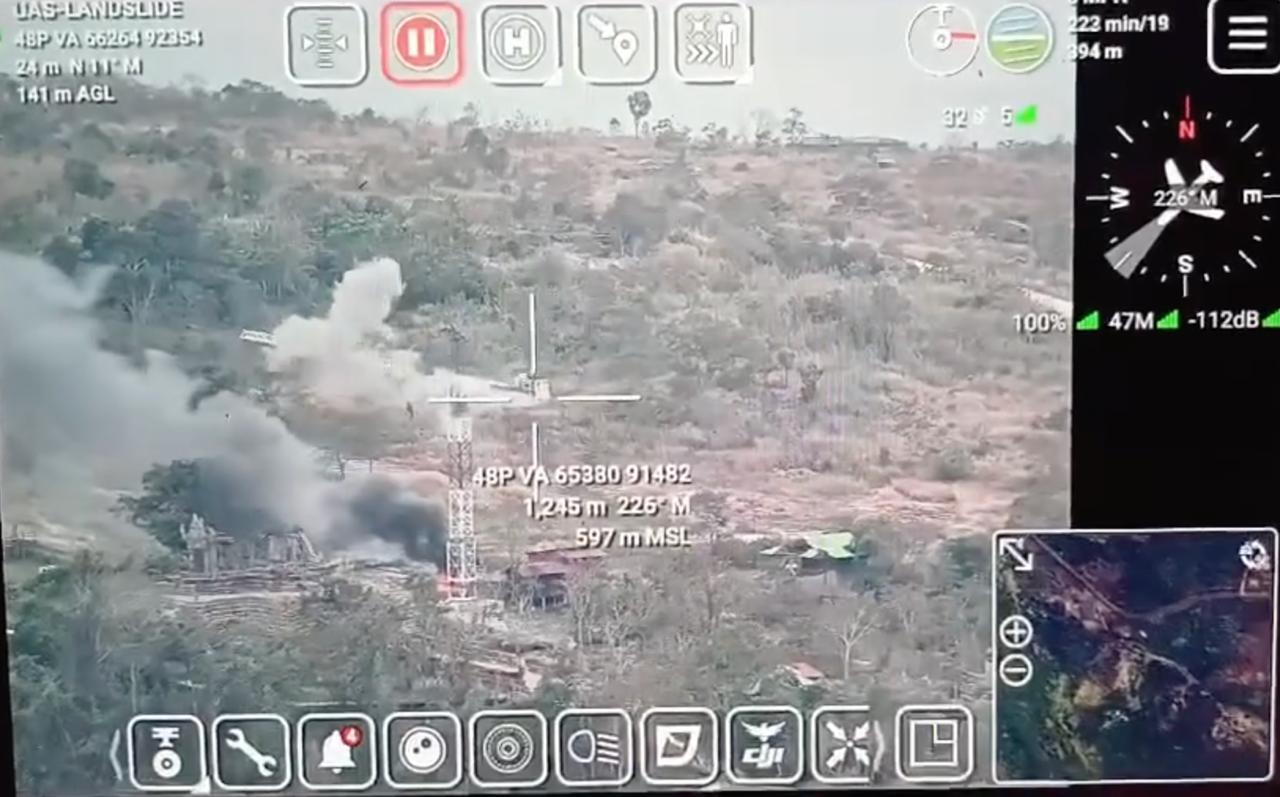
The Thai military’s assaults from 7 to 11 December did not stop at Preah Vihear. Other sacred Khmer temples—Ta Krabei, Ta Moan Thom, Ta Moan Touch, and Prasat Knar—have also suffered damage from indiscriminate artillery, drone strikes, and heavy weapons fire. These sites form part of a vast cultural landscape dating back to the height of the Khmer Empire, long before modern borders existed. Their significance is shared by humanity. Yet today they are being reduced to rubble under the weight of Thai firepower.
Perhaps the most disturbing part of this tragedy is not only the destruction itself, but the attitude that accompanied it. Reports and video evidence show Thai soldiers laughing and cheering as shells landed around temple structures. The satisfaction shown in the face of cultural devastation reflects a mindset entirely divorced from the values of heritage, humanity, and historical responsibility. It reveals that the goal is not merely military engagement but the erasure of symbols that contradict Thailand’s narrative.
UNESCO has long been clear on this matter. In its earlier statements during border tensions, the organization called for immediate protection of Preah Vihear and all endangered cultural sites, reminding both countries of their obligations under international law. UNESCO emphasized the importance of preserving cultural heritage in times of conflict and urged all parties to respect the principles laid out in the 1954 Hague Convention. The ongoing attacks blatantly disregard these appeals. They violate international humanitarian law, global norms, and the shared moral responsibility to protect the legacy of past civilizations.
This is not just a Cambodian loss; it is a loss for humanity. Ancient temples like Preah Vihear cannot simply be rebuilt. Their stones are irreplaceable. Their carvings are unique. Their presence carries the weight of centuries. When a temple is destroyed, a chapter of human history is erased. When a civilization’s sacred monuments are targeted, its identity is attacked. And when soldiers celebrate such destruction, it becomes an assault not only on culture but on conscience.
Cambodia has continued to act with restraint despite relentless provocations. It has respected the ceasefire and adhered to the principles of peaceful settlement, even as its people, its land, and its heritage come under fire. This contrast tells a story of two very different approaches to history: one side shells temples, while the other protects them; one side rewrites maps, while the other preserves memory; one side celebrates destruction, while the other mourns it.
The world must recognize that the destruction of Preah Vihear is not an accident or a by-product of conflict. It is a revealing moment, one that exposes the hollowness of Thailand’s territorial claims. It is impossible to claim ownership over something you are actively destroying. The stones of Preah Vihear speak louder than political rhetoric. They testify to who has safeguarded them for generations and who now threatens their existence.
The international community must not turn away. Allowing cultural heritage to fall victim to military aggression sets a dangerous precedent. It signals that temples, monuments, and irreplaceable sites can become acceptable casualties of political disputes. The credibility of UNESCO’s conventions and the integrity of international law depend on a clear and principled response.
In the end, Preah Vihear will remain a symbol of truth. Its damaged stones reveal the reality of who cherishes it and who seeks to erase it. Cambodia has never wavered in its responsibility to protect its heritage. The world must now stand with Cambodia to ensure that this sacred temple—and the history it embodies—survives this moment of darkness.
Keo Chesda, Affiliated Researcher at University of Cambodia