US attaché says Cambodian troop deployments at temples “normal”
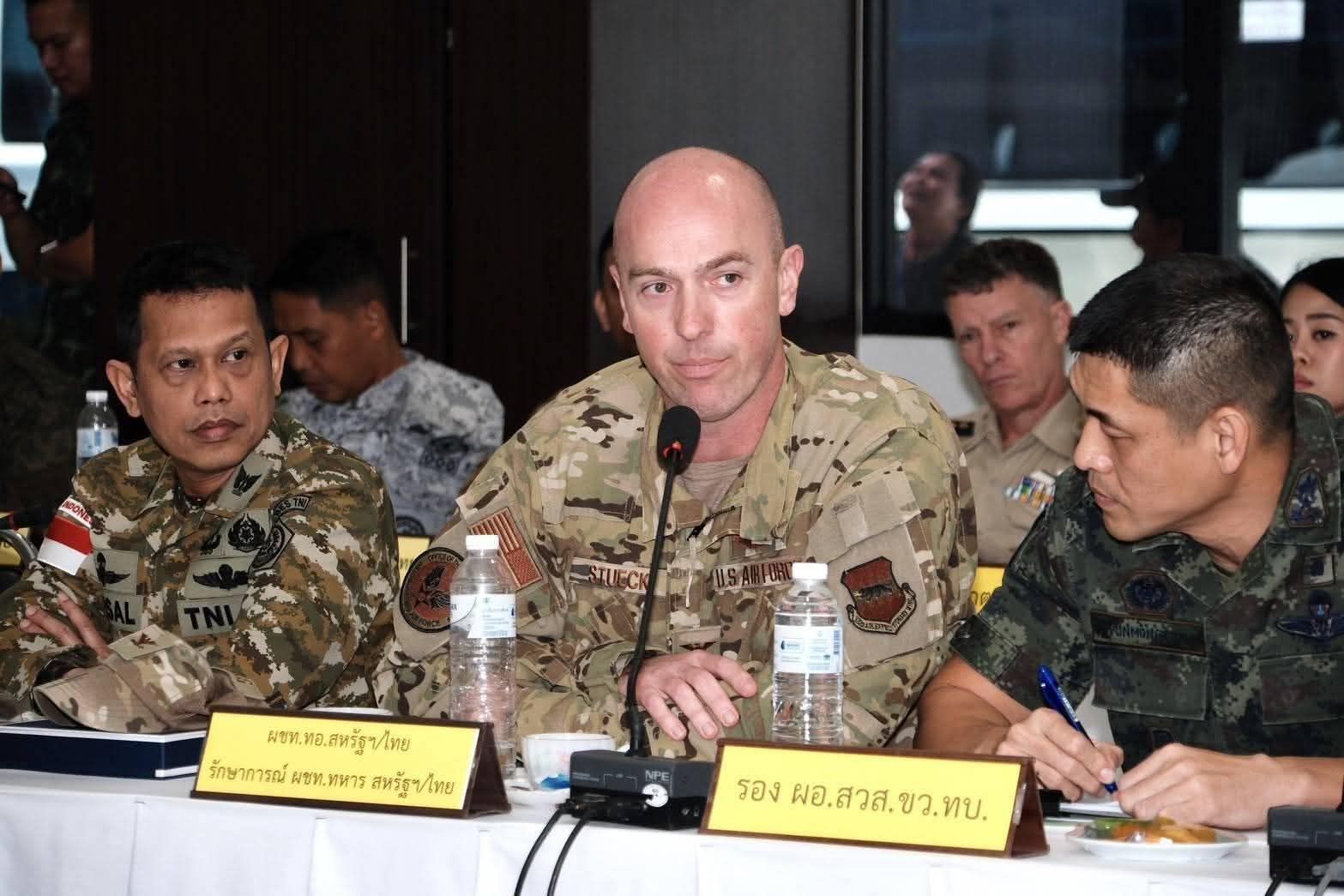 Matthew P. Stuck, the US assistant military attaché to Thailand
BANGKOK, Jan 24, 2026 — The Royal Thai Army on Thursday led a delegation of 23 military attachés from 20 countries on a visit to areas along the Thai-Cambodian border, as part of an effort to brief foreign diplomats on the security situation, the army said.
The delegation, comprising representatives from Australia, Brunei, Canada, China, Germany, India, Indonesia, Japan, Laos, Malaysia, Myanmar, the Netherlands, Pakistan, the Philippines, Russia, Singapore, Switzerland, the United Kingdom, the United States and Vietnam, visited areas under the responsibility of the Suranaree Task Force in Ubon Ratchathani and Sisaket provinces on January 22, 2026.
The visit was organised under the “Army Open House 1st Edition 2026” programme and was led by Theeranant Nanthakhwang, Director of the Army Intelligence Department. Thai military officials said the aim was to allow foreign defence representatives to observe conditions on the ground and receive factual briefings on border-related developments.
During the briefing, Matthew P. Stuck, the US assistant military attaché to Thailand, said it was common for opposing sides to maintain positions they consider strategically important.
“It’s normal in warfare for each side to have its own strategic points,” Stuck was quoted as saying, in comments referring broadly to military deployments near contested or sensitive areas.
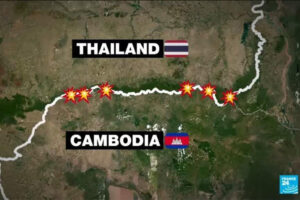
Thai officials have previously accused Cambodia of deploying troops around the Preah Vihear Temple, a long-disputed site near the border. Cambodia has consistently maintained that its troop presence is defensive and within its sovereign territory.
The border area surrounding Preah Vihear has been a source of intermittent tension between Thailand and Cambodia for more than a decade, despite rulings by the International Court of Justice and periodic bilateral talks aimed at reducing friction.