What Cambodia Gains from Participating in the Board of Peace Forum in the United States
 What Cambodia Gains from Participating in the Board of Peace Forum in the United States
In the 21st century, war no longer takes place solely through guns and military force. It unfolds at diplomatic tables, through international legal documents, and in contests over “legitimacy.” The country that demonstrates respect for international law is the one that secures long-term strategic advantages—without necessarily resorting to force.
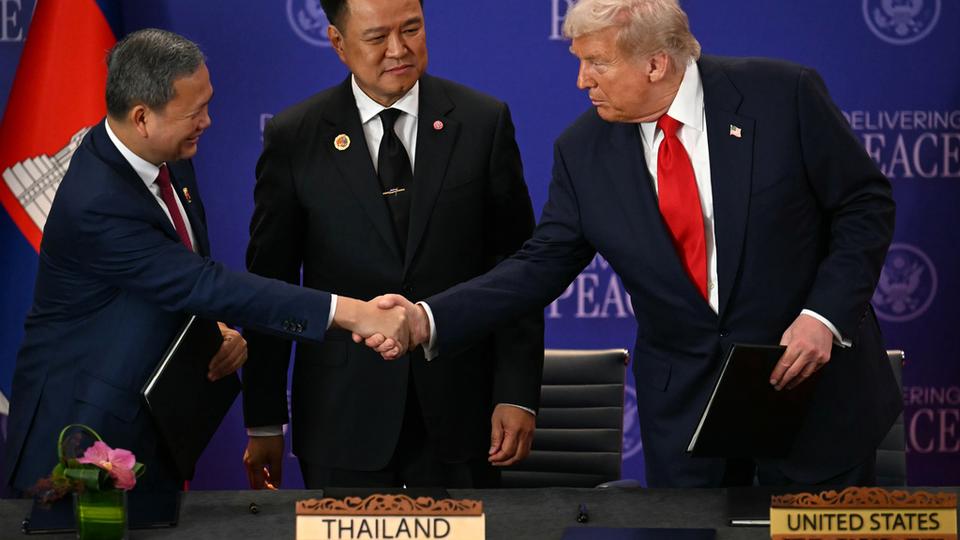
In this context, Cambodian Prime Minister Hun Manet’s participation in the inaugural meeting of the Board of Peace at the United States Institute of Peace in Washington, D.C., was far from a routine diplomatic gesture. It was a strategic diplomatic move with significant geopolitical implications, closely monitored by Thailand, which is not a member of this council.
The key question, therefore, is not whether Cambodia intends to “sue Thailand” or not. Rather, the real question is: what does Cambodia gain in this diplomatic and legal battlefield?
The short answer lies in strengthening Cambodia’s “international strategic capital” — capital built on legitimacy, multilateral support, and diplomatic deterrence, particularly in the context of the Cambodia–Thailand border dispute.
Participation in the Board of Peace forum is not an act of confrontation or an attack on any party. Instead, it demonstrates Cambodia’s deliberate choice to pursue peaceful dispute resolution in accordance with international law, under the framework of the United Nations Charter and the resolutions of the United Nations Security Council. Within this system, parties that show restraint, respect the law, and employ peaceful means to resolve disputes are more likely to gain enduring legitimacy and sustained international support.
Modern conflicts can no longer be measured solely by military strength. They are increasingly judged by diplomatic skill and the ability to demonstrate that one’s actions comply with international law. Cambodia’s participation in the peace forum underscores its adherence to Article 33 of the UN Charter, which encourages the peaceful settlement of disputes. This choice reinforces Cambodia’s standing as a law-abiding state, strengthens the rules-based international order, and enhances its soft power on the global stage.
Thailand’s claim that Cambodia may present “one-sided information” does not constitute a valid objection. International forums operate on open procedures and provide equal opportunities for all parties to present their perspectives. These forums are not courts of law; rather, they are platforms for shaping political context and public understanding—factors that exert significant influence on future international decision-making. On the eve of Cambodia’s statement at the Board of Peace forum, in the presence of President Trump as chair and representatives from several countries, Thailand appeared visibly unsettled, preemptively accusing Cambodia of using international platforms to attack Thailand and misrepresent border issues. Such anxiety suggests a state of guilty conscience—akin to a wounded ox startled by the mere flight of a crow—standing in stark contrast to Cambodia’s confidence, comparable to pure gold unafraid of fire.
In such an important international forum, any party with solid data and a strong legal foundation is free to clarify its position. Cambodia’s participation does not place any party at a disadvantage—unless that party is unable to demonstrate the legitimacy of its own claims.
The Prime Minister’s visits to Washington and Europe clearly reflect Cambodia’s multi-vector diplomatic strategy. Bilateral engagements with the United States and European partners help strengthen political and economic confidence. In the context of the Cambodia–Thailand border dispute, this confidence can function as a form of diplomatic deterrence, reducing the likelihood of Thailand resorting to the use of force against Cambodian territory.