When Thailand Protests the World, It Reveals What It Cannot Admit
 When Thailand Protests the World, It Reveals What It Cannot Admit
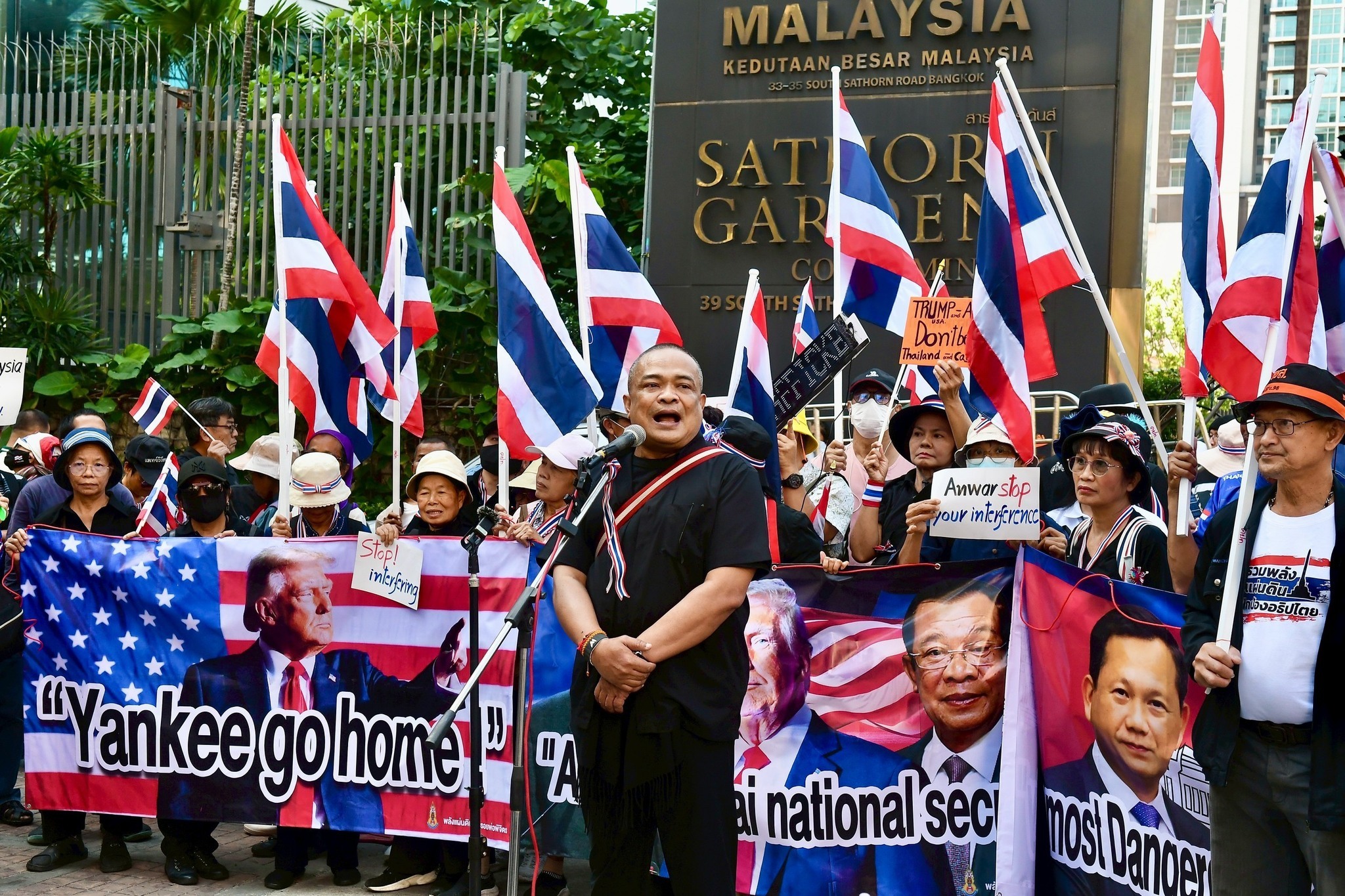
The protest outside the Malaysian and American embassies today was not about Cambodia at all. It was a reaction to a government losing control of its own story.
When Pichit Chaimongkol and Jatuporn Prompan gathered supporters under the banner of “Unite the Land to Protect Sovereignty,” the performance looked like patriotic defiance. But the real pressure was coming from somewhere else: two foreign governments whose decisions exposed the weakness of Thailand’s narrative.
Malaysia became the first target because it publicly validated Cambodia’s evidence. That single confirmation broke the Thai government’s claim that the landmine footage was fake or staged. Instead of confronting this collapse, nationalist groups redirected the anger outward, accusing Malaysia of “interference” to hide the fact that their own explanation no longer held. The protest is not a challenge to Kuala Lumpur. It is an attempt to repair internal credibility.
The march to the American Embassy reveals even more. Washington suspended tariff negotiations the moment Thailand withdrew from the Kuala Lumpur Peace Declaration. That was the first concrete consequence of breaking the peace pact. Nationalists cannot accept that Thailand’s decisions carry a price, so they reframed the situation: America is now “controlling” Thailand, not reacting to Thailand’s choices. The protest is a way to transform diplomatic pressure into a narrative of foreign oppression.
The timing exposes the truth. Thailand’s AOT denial fell apart under scrutiny. Surin’s bunker drills raised questions the government could not answer. The suspension of the peace pact triggered economic and diplomatic costs. When these pressures converge, the nationalist network mobilizes the public to shout at embassies, not because it changes policy, but because it restores the illusion that Thailand is still in command.
What the protest truly shows is that a stable country does not accuse Malaysia and the US of meddling in its sovereignty. A confident government does not need protest leaders to perform outrage on its behalf. A state secure in its narrative does not march its citizens from one embassy to another demanding silence from outsiders. These actions reveal a government trying to manage a crisis it can no longer contain.
In the end, today’s protest is a mirror. Thailand is not reacting to Cambodia. It is reacting to the loss of its own narrative and projecting that fear onto everyone else.
This is not a show of sovereignty. It is a show of insecurity dressed as patriotism.
Midnight