28 Countries Adopt Phnom Penh Declaration to Break Online Scam Criminal Chain
 28 Countries Adopt Phnom Penh Declaration to Break Online Scam Criminal Chain
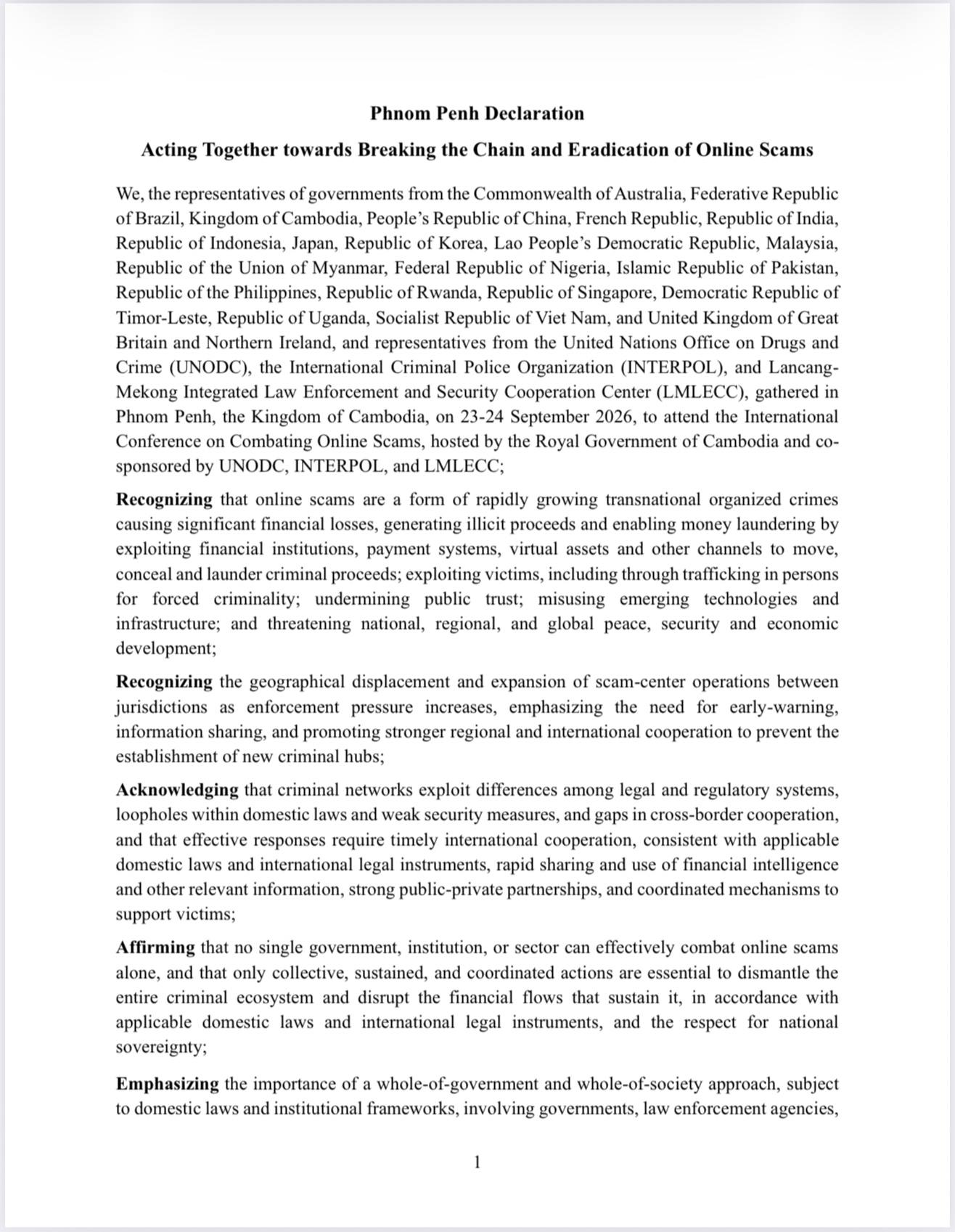
PHNOM PENH, Sept. 24, 2026 — Representatives from 28 countries and seven international organisations have adopted the Phnom Penh Declaration on Acting Together Towards Breaking the Chain and Eradication of Online Scams, committing to stronger international cooperation against online scams and related transnational organised crime.
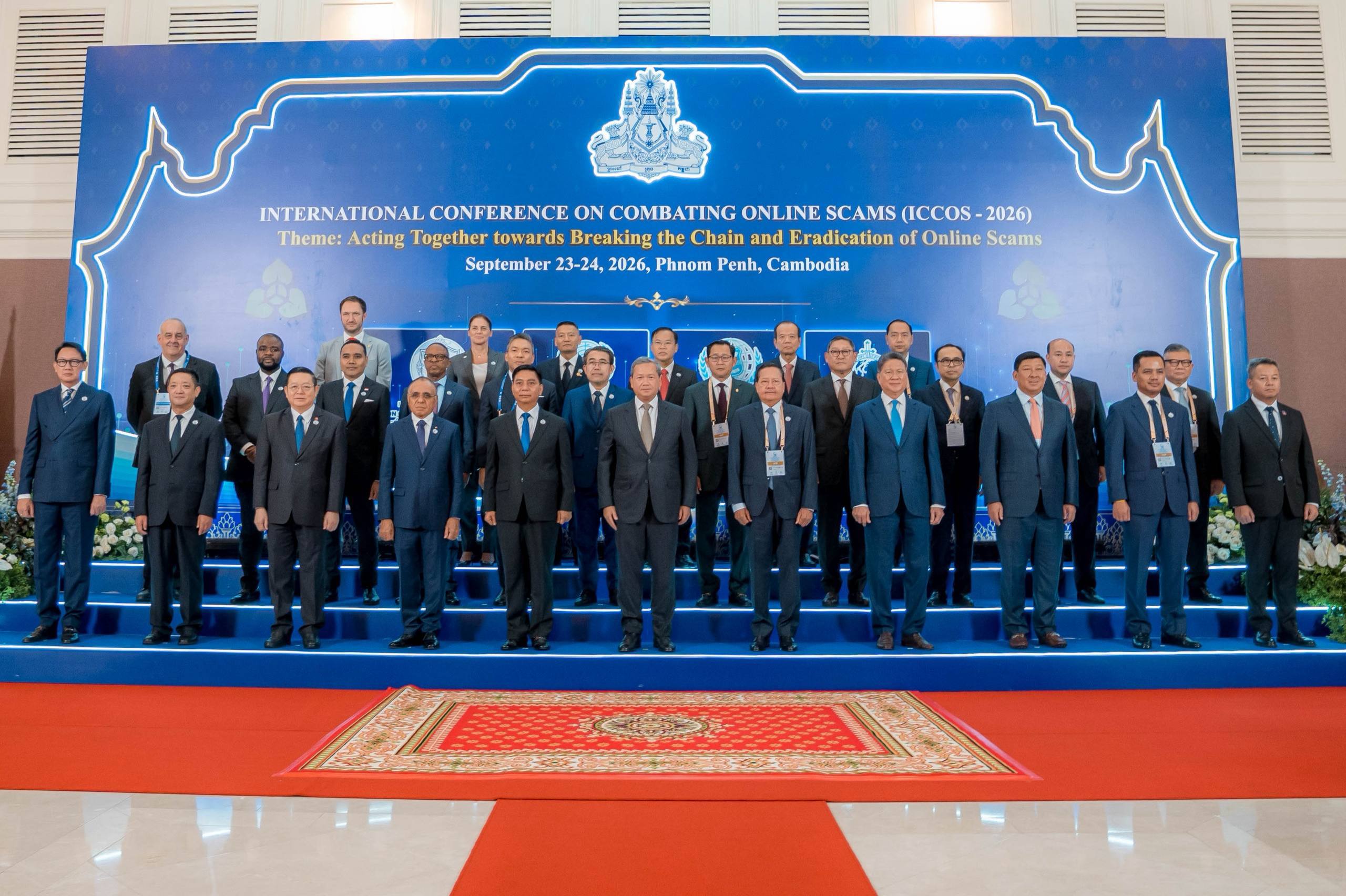
The declaration was adopted Thursday at the conclusion of the International Conference on Combating Online Scams (ICCOS-2026), hosted by Cambodia in Phnom Penh under the theme “Acting Together towards Breaking the Chain and Eradication of Online Scams.”
The participating governments include Australia, Brazil, Cambodia, China, France, India, Indonesia, Japan, Laos, Malaysia, Myanmar, Nigeria, Pakistan, the Philippines, Rwanda, Singapore, Timor-Leste, Uganda, Vietnam and the United Kingdom, alongside representatives from the United Nations Office on Drugs and Crime (UNODC), INTERPOL and the Lancang-Mekong Integrated Law Enforcement and Security Cooperation Center (LMLECC).
The declaration recognises online scams as a rapidly growing form of transnational organised crime that generates financial losses and illicit proceeds, facilitates money laundering and exploits victims, including people trafficked for forced criminality.
It also highlights the growing movement of scam-centre operations between jurisdictions as enforcement pressure increases, calling for stronger early-warning mechanisms, information sharing and international cooperation to prevent the emergence of new criminal hubs.
11 commitments to break the scam chain
The declaration sets out 11 commitments aimed at tackling online scams across the entire criminal ecosystem.
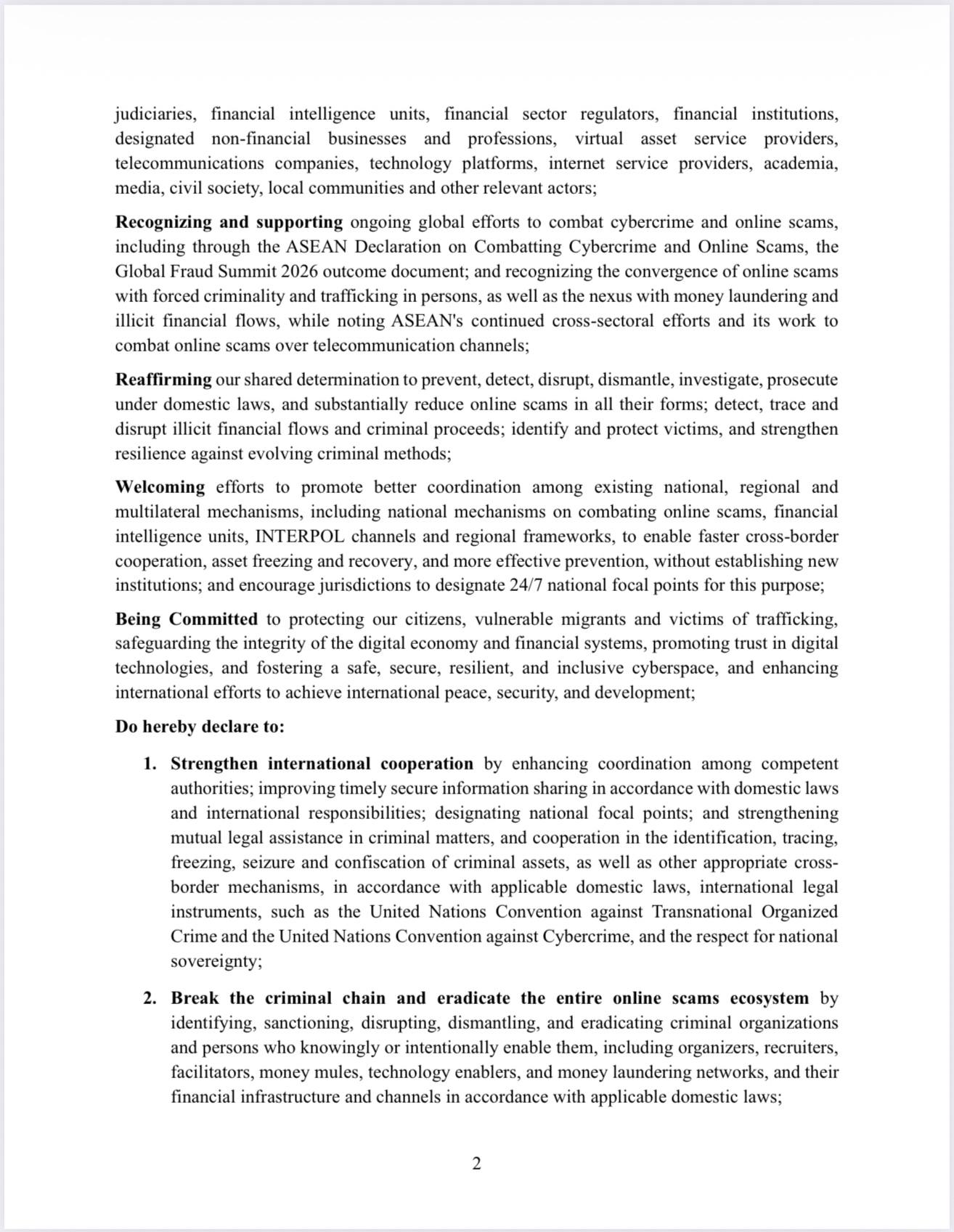
1. Strengthen international cooperation by improving coordination among competent authorities, secure information sharing, national focal points, mutual legal assistance and cross-border cooperation in identifying, tracing, freezing and seizing criminal assets.
2. Break the criminal chain and eradicate the online-scam ecosystem by identifying, sanctioning, disrupting and dismantling criminal organisations and those who knowingly enable them, including organisers, recruiters, facilitators, money mules, technology enablers and money-laundering networks.
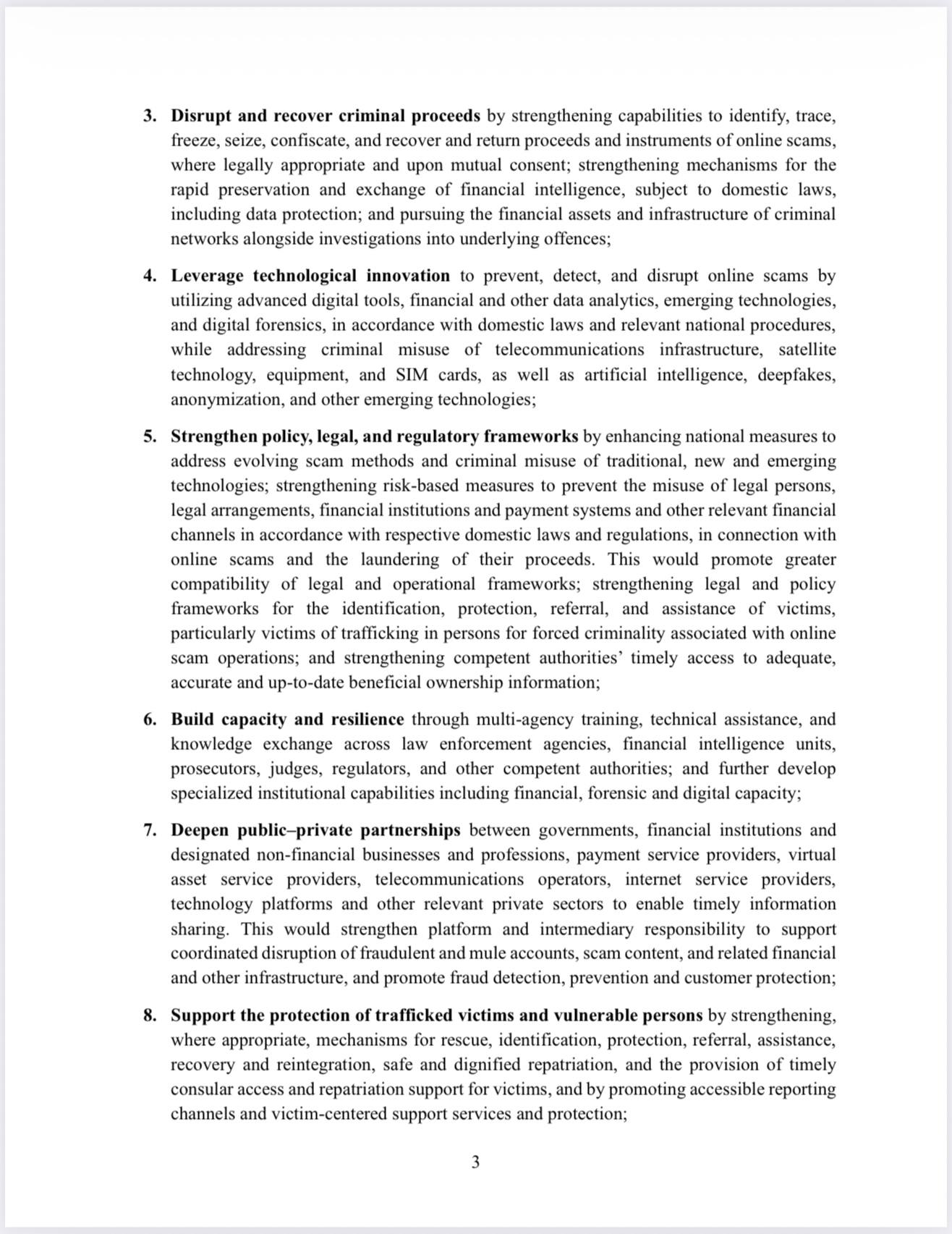
3. Disrupt and recover criminal proceeds by strengthening the ability to trace, freeze, seize, confiscate and recover illicit proceeds and financial infrastructure connected to online scams.
4. Leverage technological innovation through advanced digital tools, financial and other data analytics, emerging technologies and digital forensics, while addressing criminal misuse of telecommunications infrastructure, SIM cards, artificial intelligence, deepfakes and anonymisation technologies.
5. Strengthen policy, legal and regulatory frameworks to address evolving scam methods, improve compatibility between legal and operational systems, strengthen beneficial-ownership information and enhance victim identification, protection, referral and assistance.
6. Build capacity and resilience through multi-agency training, technical assistance and knowledge exchange among law-enforcement agencies, financial intelligence units, prosecutors, judges, regulators and other authorities.
7. Deepen public-private partnerships involving governments, banks, payment providers, telecommunications operators, internet service providers, technology platforms and other private-sector actors to facilitate timely information sharing and disrupt fraudulent and money-mule accounts and scam infrastructure.
8. Protect trafficked victims and vulnerable people by strengthening mechanisms for rescue, identification, protection, referral, assistance, recovery and safe repatriation.
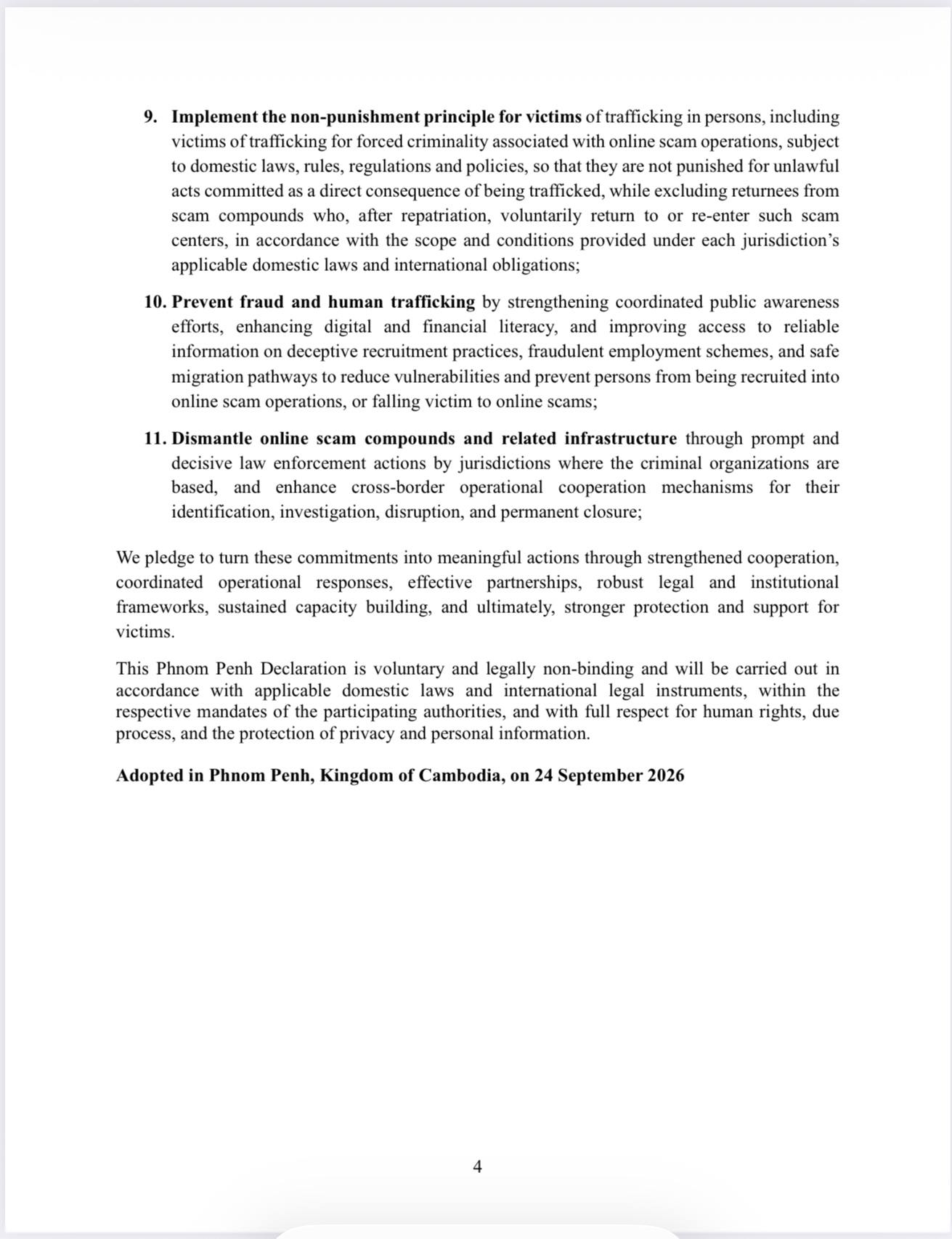
9. Implement the non-punishment principle for trafficking victims, including people forced to participate in online scam operations, subject to national laws and applicable international obligations.
10. Prevent fraud and human trafficking through coordinated public-awareness campaigns, stronger digital and financial literacy, reliable information on deceptive recruitment and fraudulent employment schemes, and safer migration pathways.
11. Dismantle online scam compounds and related infrastructure through prompt law-enforcement action in jurisdictions where criminal organisations are based, together with stronger cross-border cooperation to identify, investigate, disrupt and permanently close such operations.
Focus shifts from individual scams to the wider criminal ecosystem
The declaration emphasises that no single government, institution or sector can combat online scams alone. It calls for coordinated action involving governments, law-enforcement agencies, judiciaries, financial intelligence units, financial regulators, banks, telecommunications companies, technology platforms, academia, media, civil society and local communities.
The participating countries also committed to improving cooperation on financial intelligence, asset recovery and cross-border investigations while respecting domestic laws, international legal instruments, national sovereignty, human rights, due process and privacy.
The declaration specifically recognises the connection between online scams, human trafficking and forced criminality, particularly cases in which people are recruited or trafficked into scam compounds and compelled to commit fraud.
It therefore calls for victim-centred approaches, including safe repatriation and access to support, while distinguishing trafficking victims from people who voluntarily return to or re-enter scam centres after repatriation.
The declaration also calls for stronger action against the physical infrastructure supporting scam operations, including the permanent dismantling of online scam compounds and related facilities.
Despite the breadth of its commitments, the Phnom Penh Declaration is voluntary and legally non-binding. Its implementation is to be carried out in accordance with participating jurisdictions’ domestic laws and international legal obligations.
The adoption marks the principal outcome of ICCOS-2026, which Cambodia hosted on September 23–24 to promote coordinated international action against what participating governments describe as an increasingly transnational form of organised crime.