UNESCO Registration of Thai Royal Photography Collection Does Not Certify the Details of Individual Images
 UNESCO Registration of Thai Royal Photography Collection Does Not Certify the Details of Individual Images
Bangkok, September 24, 2026 —
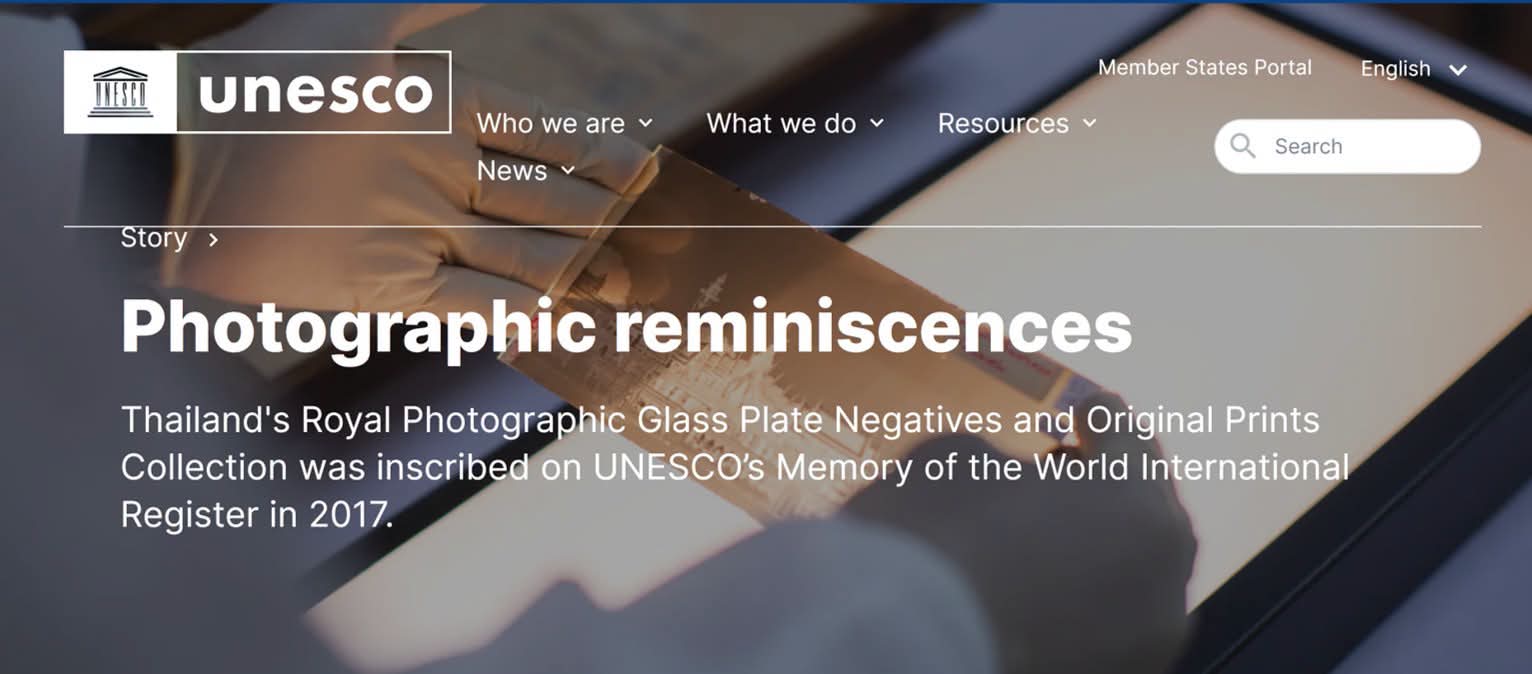
Questions have resurfaced over the interpretation of Thailand’s 2017 registration of a historic royal photographic collection under UNESCO’s Memory of the World Programme, with attention focusing on what the international registration does—and does not—establish about individual photographs.
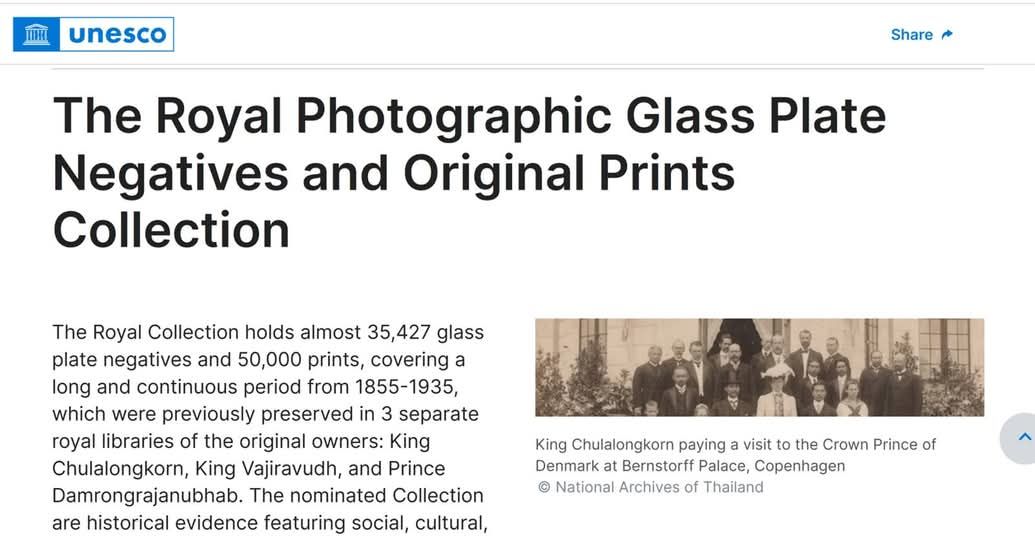
According to the registration materials, Thailand submitted a collection of royal photographic materials comprising approximately 35,427 glass-plate negatives and 50,000 original photographic prints, covering a continuous historical period from 1855 to 1935.
The materials were originally associated with three royal libraries belonging to their respective former owners: King Chulalongkorn (Rama V), King Vajiravudh (Rama VI), and Prince Damrong Rajanubhab. The collection was subsequently transferred to the National Archives of Thailand in Bangkok in 1977 for preservation.
Based on the figures stated in the nomination documents, the collection contains approximately 85,427 photographic documentary items when the negatives and photographic prints are counted together.
However, the registration should not be interpreted as meaning that every photograph held in the three royal libraries or in the National Archives was individually registered or authenticated by UNESCO.
More importantly, registration under the Memory of the World Programme concerns the documentary heritage value and significance of the collection. It should not automatically be understood as an individual certification of the precise location or date in which every photograph was taken, or the nationality or identity of every person appearing in each image.
Another important distinction is that the approximately 85,427 items do not necessarily represent 85,427 different photographs. A glass negative and a corresponding photographic print may represent the same original image.
The debate has emerged following comments attributed to Thailand’s Minister of Culture concerning the interpretation of the UNESCO registration. Critics have argued that the UNESCO listing should not be used as evidence that the organization independently verified the historical circumstances surrounding every individual photograph in the collection.
The UNESCO Memory of the World Programme is designed to identify and preserve documentary heritage considered to have significant historical and cultural value. Registration therefore provides recognition of the importance of documentary collections within the programme’s framework, rather than functioning as a blanket authentication of every historical claim that may subsequently be made using materials from those collections.
The Thai photographic collection was among a number of documentary heritage collections submitted by countries for inclusion in the programme. Other countries with photographic collections represented in the programme include Australia, Türkiye, Peru, Albania and Canada.
The distinction is particularly important when historical photographs are later used to support claims about where an image was taken, when it was taken, or who appears in it. Such questions may require additional evidence, including archival descriptions, provenance records, photographic metadata, contemporary documents and independent historical research.
The original UNESCO materials relating to Thailand’s submission therefore provide an important basis for understanding the collection’s documentary heritage significance, while the interpretation of individual photographs requires separate examination of the available historical evidence.
Sources: UNESCO, Photographic Reminiscences: The Glass Plate Negatives and Original Prints of the Royal Photographic Collection of Thailand; UNESCO Memory of the World Programme nomination materials, Thailand, 2017.