Scholar Cites Timber, Gemstones and Foreign Aid in Examining Thailand’s Role During Cambodian Refugee Crisis
 Scholar Cites Timber, Gemstones and Foreign Aid in Examining Thailand’s Role During Cambodian Refugee Crisis
PHNOM PENH, November 20, 2026 — A Cambodian scholar has questioned Thailand’s portrayal of Cambodian refugees as an economic burden, arguing that Thailand also gained significant political, military and economic benefits from the refugee crisis during the 1980s.
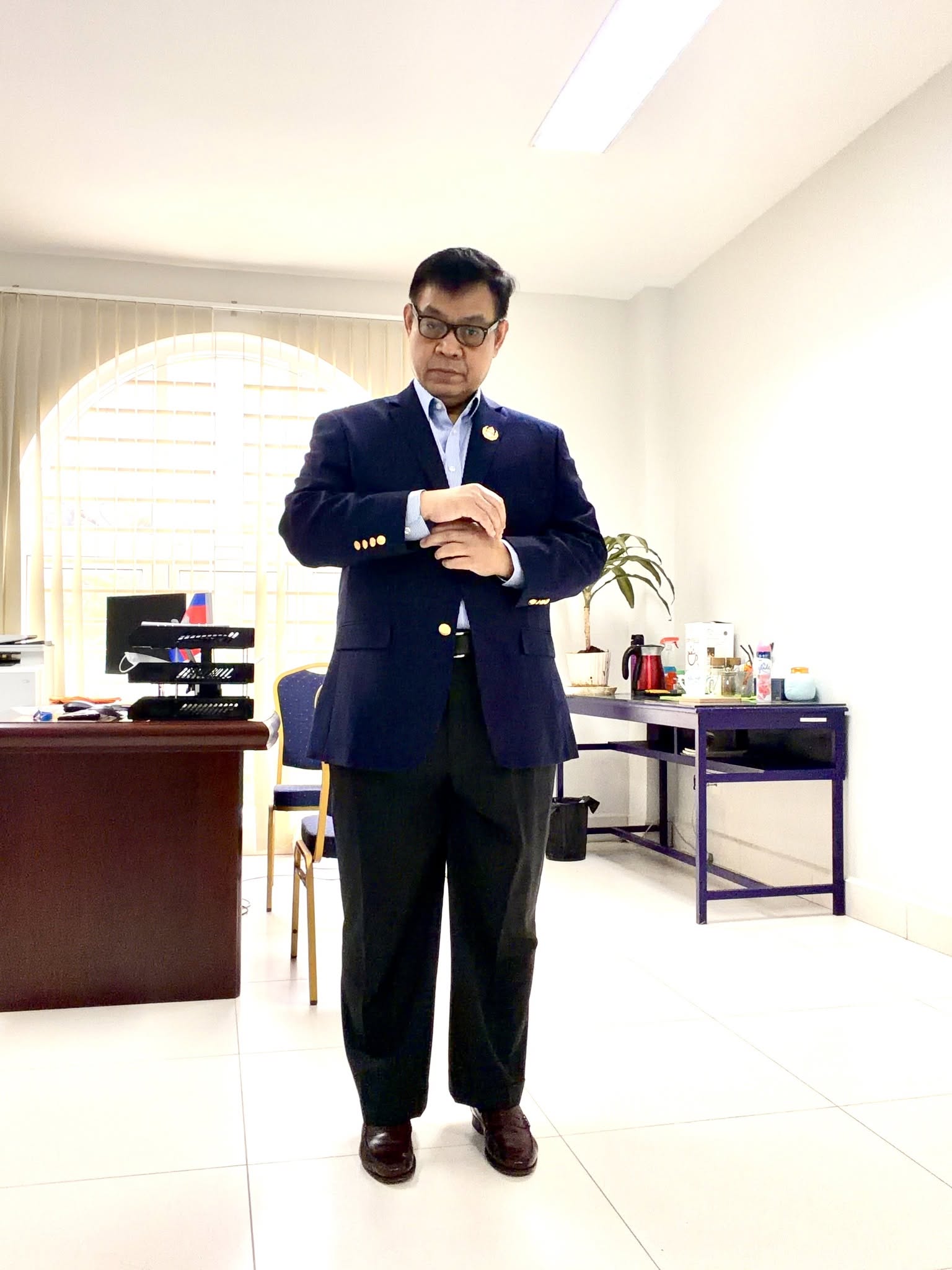
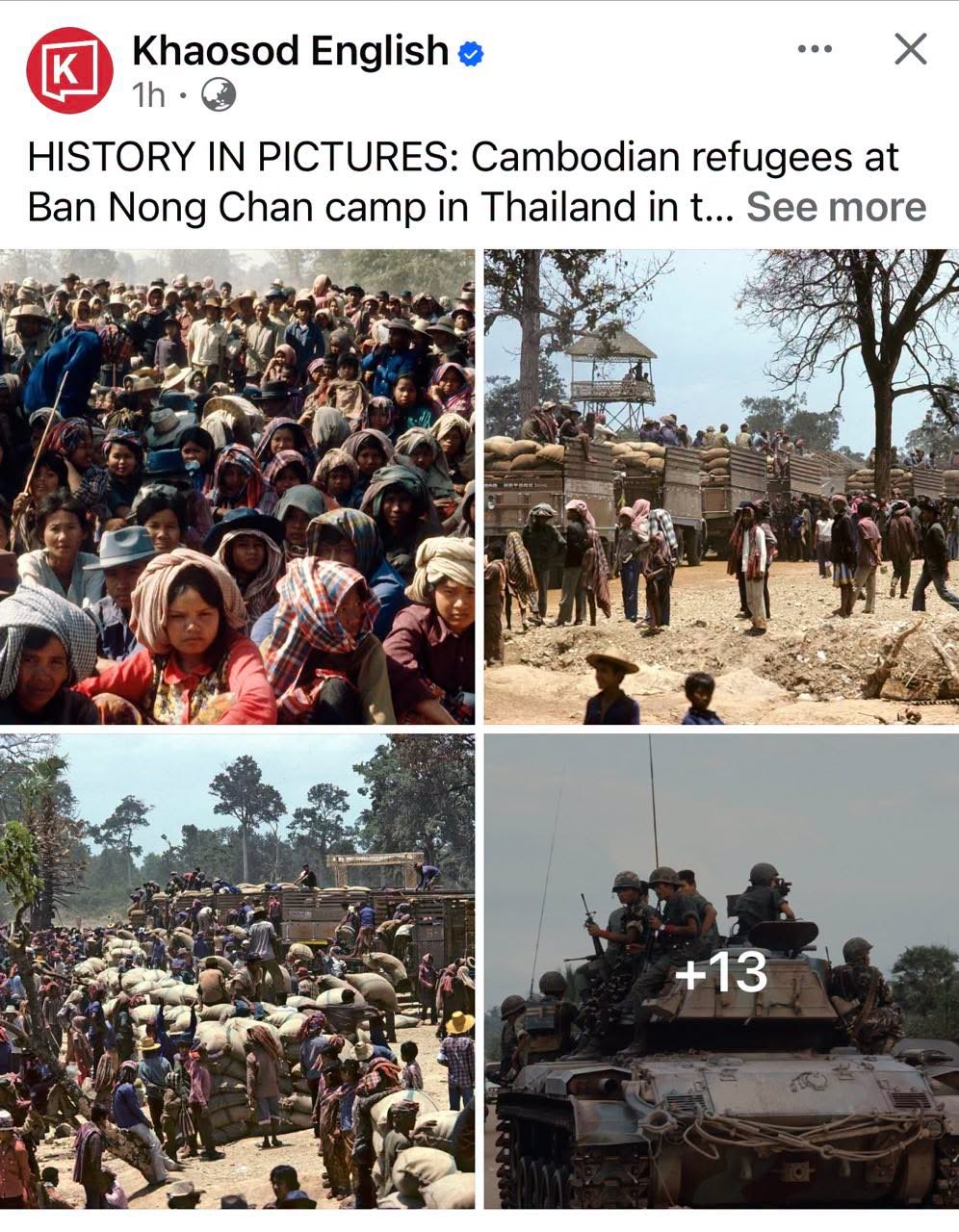
In a lengthy Facebook post published on November 18, 2026, on his official page, Cambodian scholar In Sophal outlined what he described as the benefits Thailand received from hosting Cambodian refugees, including international humanitarian assistance, military cooperation, cross-border timber trading and gemstone exploitation in Cambodia.
Addressing Thai newspaper Khaosod and the Thai public, In Sophal argued that discussions about the refugee crisis should consider not only the costs of accommodating displaced Cambodians but also the economic and strategic advantages Thailand allegedly gained during the same period.
Political and military interests
In Sophal claimed that Thailand received political and military benefits through its cooperation with Cambodian resistance factions, including the Khmer Rouge, during the conflict.
He alleged that foreign military equipment and financial assistance intended for Cambodian resistance groups passed through Thai military warehouses, with the Thai military managing their subsequent distribution.
He also argued that the Khmer Rouge and other Cambodian resistance movements served as a strategic buffer for Thailand against Vietnam.
International humanitarian assistance
The scholar further highlighted the economic benefits Thailand allegedly received from international humanitarian assistance intended for Cambodian refugees.
According to his post, the United States provided approximately US$350 million in emergency assistance, which was spent in Thailand.
He also cited figures suggesting that the United Nations Border Relief Operation (UNBRO) spent approximately US$36 million annually, with around 90 per cent of the expenditure taking place in Thailand.
In Sophal claimed that Thailand required international organisations to purchase food and essential supplies locally rather than importing them for distribution to refugees.
He additionally cited approximately US$500 million in expenditure by UNICEF and the International Committee of the Red Cross (ICRC) towards the end of the 1980s, of which he said around US$200 million was spent directly in Thailand.
Alleged exploitation of Cambodian natural resources
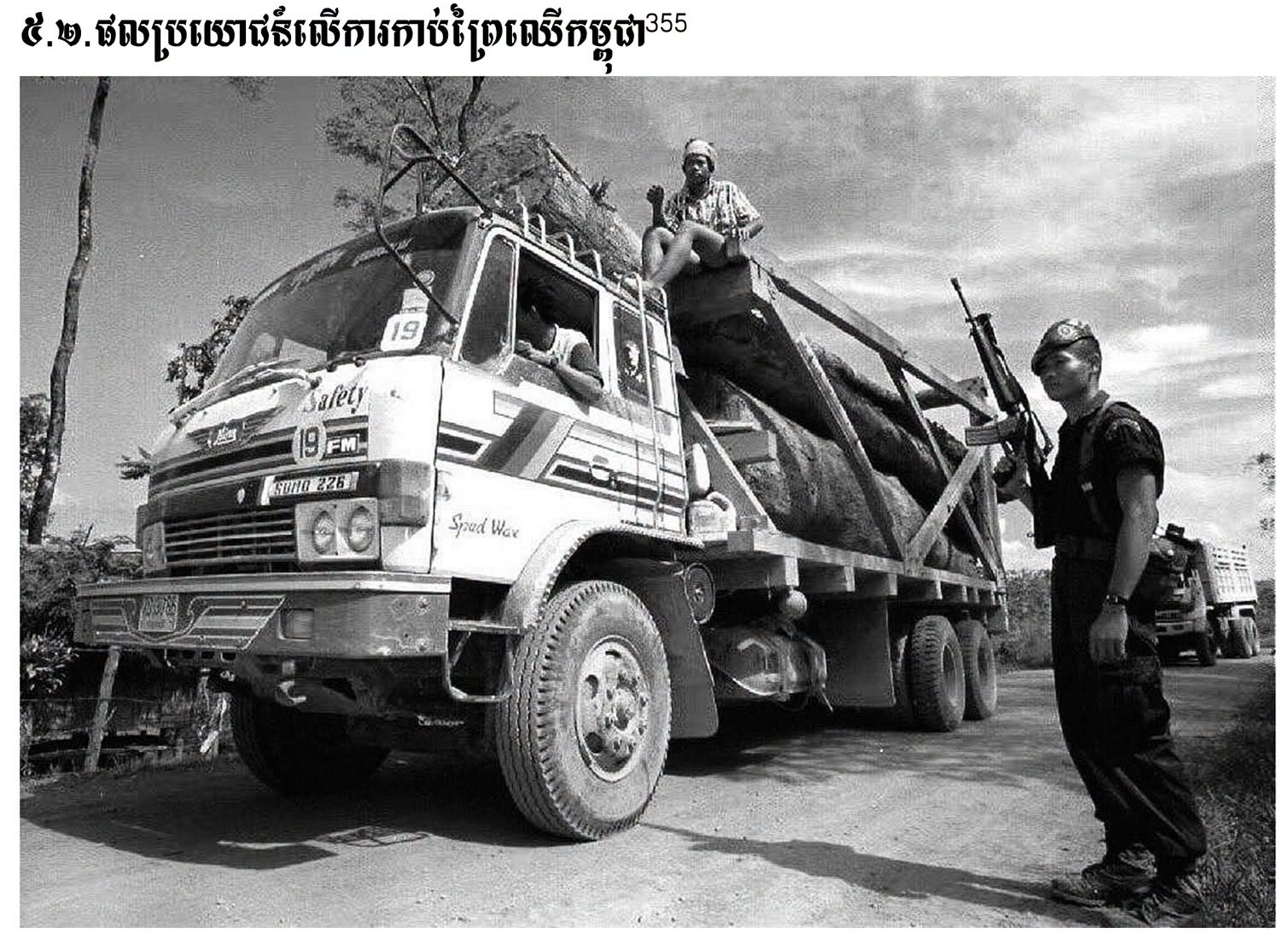
In Sophal also pointed to timber and gemstone trading as significant sources of economic benefit for Thailand during Cambodia’s conflict.
Citing information attributed to environmental organisation Global Witness, he claimed that an arrangement between Khmer Rouge leaders and the Thai military in 1979 allowed 15 Thai timber companies to extract timber in Cambodia.
He said Thailand imported between two million and three million cubic metres of Cambodian timber annually, while the Khmer Rouge allegedly granted Thai companies rights to extract approximately 15 million cubic metres over three to five years.
The post further cited estimates that illegal timber trading generated between US$10 million and US$20 million in monthly revenue for the Khmer Rouge, including approximately US$6.5 million earned by its soldiers.
Gemstone extraction was another area highlighted in the post. In Sophal cited accounts suggesting that thousands of Thai miners crossed into Cambodia to work in mining areas, particularly around Pailin.
He also referred to statements attributed to Trat provincial officials and Chan Kantikajornsarn, an adviser to a Thai gemstone miners’ association, concerning Thai companies and workers operating in Cambodian mining areas.
According to figures cited in the post, approximately 30 Thai companies had major gemstone-mining agreements with the Khmer Rouge, while another 300 smaller companies employed more than 30,000 miners in Cambodia.
A Thai banking official was also cited as estimating that gemstone trading with the Khmer Rouge generated between US$8 million and US$12 million in weekly financial circulation in Chanthaburi province.
Timber agreement with FUNCINPEC
Beyond its alleged commercial arrangements with the Khmer Rouge, In Sophal said Thai timber companies also entered into an agreement with FUNCINPEC in late 1982.
He described the agreement as worth approximately US$100 million and covering 650,000 cubic metres of ordinary timber and 350,000 cubic metres of valuable hardwood, which could reportedly supply Thai sawmills for up to six years.
The scholar also cited Dr. Phuangthong Rungswasdisap, a researcher associated with the Cambodian Genocide Program at Yale University, who argued that Thailand had repeatedly portrayed Cambodian refugees as an economic burden without adequately acknowledging the economic benefits it received from their presence.
Contrasting conditions for refugees and Thai economic activities
In the final part of his post, In Sophal drew attention to what he described as a stark contrast between the difficult conditions faced by Cambodian refugees in Thai camps and the economic activities of Thai nationals in Cambodia.
He alleged that Cambodian refugees were confined behind barbed-wire fences and subjected to shootings and sexual violence by Thai guards, while large numbers of Thai nationals entered Cambodian territory to exploit timber and gemstone resources.
He claimed that nearly 100,000 Thai nationals moved into and out of Cambodia or stayed in its territory during the period, contributing to the extraction of valuable natural resources and environmental destruction.
In Sophal argued that these activities continued from 1975 until 1998, when the Khmer Rouge’s organisational structure was finally dismantled.
Concluding his post, the scholar said there were many more tragic stories involving Cambodian refugees that he intended to discuss in his forthcoming book. He also invited readers to visit the annual book fair from December 17 to 20, 2026.
The historical figures and allegations presented in the Facebook post were attributed to various reports, officials and researchers. They have not been independently verified for this article.