Prak Sokhonn: Trust With Thailand Must Be Restored Through Concrete Action
 Prak Sokhonn: Trust With Thailand Must Be Restored Through Concrete Action
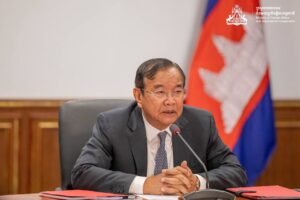
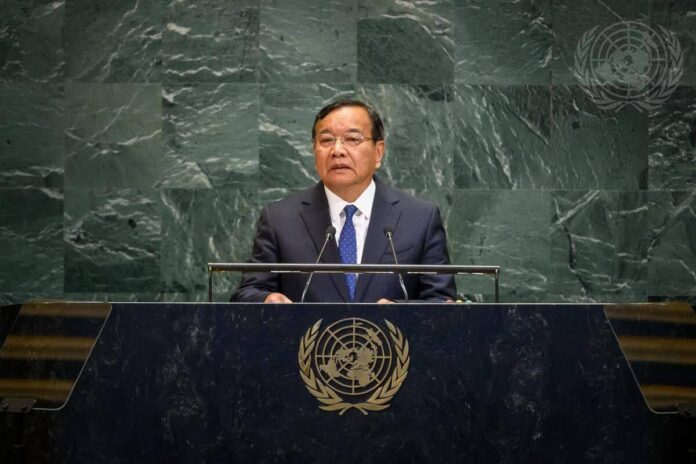
NEW YORK, Sept. 27, 2026 — Cambodian Deputy Prime Minister and Foreign Minister Prak Sokhonn used the 81st session of the United Nations General Assembly to raise Cambodia’s concerns over the Cambodia-Thailand border conflict, calling for concrete measures to rebuild trust and restore normal relations between the two neighbouring countries.
In Cambodia’s account of his address, Prak Sokhonn said the conflict had seriously damaged mutual confidence and left lasting consequences, including damage to cultural heritage and continuing risks from unexploded ordnance.
He said rebuilding trust would require the full and effective implementation, in good faith, of existing agreements and commitments between the two countries, including the Kuala Lumpur Joint Declaration, the Fuxian Consensus and, in particular, the Dec. 27, 2025 Joint Statement.
Cambodia says those arrangements include commitments to refrain from threats or the use of force, respect international boundaries and take practical measures to reduce tensions, restore confidence and normalise bilateral relations.
Prak Sokhonn called for Thailand to resume the work of the Joint Boundary Commission on survey and demarcation without delay, in accordance with international law, existing treaties and agreements between the two countries.
He also called for measures to enable more than 20,000 displaced Cambodian civilians to return to their homes, which Cambodia says remain under the control of Thai military forces.
The Cambodian position is consistent with documents previously submitted to the United Nations, in which Phnom Penh has called for Thai military personnel and equipment to withdraw from what Cambodia describes as its territory and for the two sides to comply with their existing bilateral and international obligations.
The issue was raised as both countries presented their positions at UNGA81. Thailand’s Prime Minister Anutin Charnvirakul also addressed the Cambodia-Thailand dispute in his Sept. 24 General Assembly statement, saying Thailand favoured bilateral dialogue and describing Cambodia’s initiation of UNCLOS compulsory conciliation as a departure from that approach. Thailand said it was nevertheless participating in the process in good faith and maintained that the UNCLOS proceedings concern maritime boundary delimitation.
Cambodia and Thailand have separately begun proceedings under the UN Convention on the Law of the Sea, with the first meeting of the Conciliation Commission taking place in Singapore from Sept. 14–16. Prak Sokhonn said Cambodia’s objective was a peaceful settlement that would serve the interests of both countries and contribute to regional peace and cooperation.
The land-border issue remains governed by separate bilateral mechanisms and agreements, including the 2000 Memorandum of Understanding on survey and demarcation, which references the 1904 and 1907 Franco-Siamese agreements and the maps produced through the bilateral delimitation process.
Prak Sokhonn’s appeal came under the overarching theme of this year’s UN General Assembly — “Restoring Trust, Managing Transformation: A United Nations that Delivers for All.” Cambodia’s Foreign Ministry had said before the session that its participation would emphasise multilateralism and the importance of strengthening the UN system in addressing regional and global challenges.
For Cambodia, restoring confidence with Thailand now depends on translating existing commitments into practical measures, including border survey and demarcation, tension reduction and arrangements allowing displaced civilians to return home.
Thailand, for its part, has called for renewed bilateral cooperation on border security, demining and transnational crimes while maintaining its own position on the disputed border and maritime issues.