Trade Agreement With US Close to Completion, Thai Prime Minister Says
 Trade Agreement With US Close to Completion, Thai Prime Minister Says
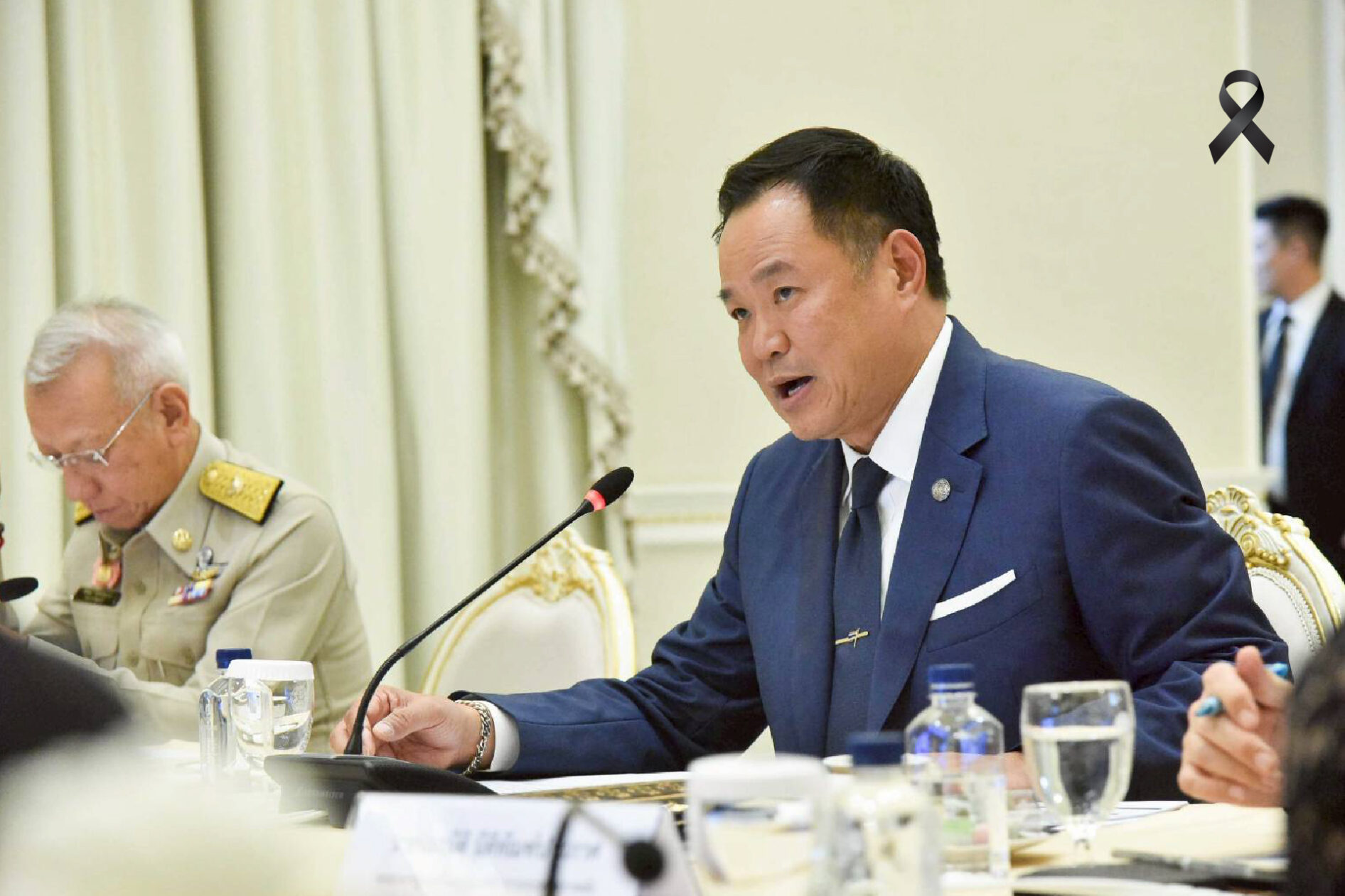
Anutin Charnvirakul said that he expected to sign the Agreement on Reciprocal Trade during President Donald Trump’s next visit to Asia.
Trade negotiations between Thailand and the United States are in the final stages and an agreement is expected to be signed as soon as next month, Thai Prime Minister Anutin Charnvirakul said on Wednesday.
Speaking at a forum in Singapore, Anutin said negotiations on the Agreement on Reciprocal Trade (ART) are now on “the last paragraph” and that he expected to sign the final agreement during U.S. President Donald Trump’s next visit to Asia, Reuters reported. This could take place during the ASEAN Summit in the Philippines on November 16–18, which Trump has confirmed he is attending, or the Asia-Pacific Economic Cooperation meetings in Shenzhen on November 18–19. Trump’s attendance at the latter summit has not yet been confirmed.
Anutin said that he received a letter from the U.S. president last week confirming the deal is at its final stage. “He told me that I was to make sure that my people and the United States Trade Representative would write up the final clause,” the Thai leader said.
The U.S. is Thailand’s largest export market, and the country’s imports of Thai goods totaled $91.3 billion in 2025, according to U.S. government figures.
Bangkok and Washington have been negotiating a “reciprocal” trade deal with the U.S. since Trump’s initial “liberation day” tariff day announcement in April 2025, which hit Thailand with a 36 percent tariff.
In October 2025, the U.S. and Thailand announced a “framework” for an agreement on reciprocal trade, which reduced the tariff to 19 percent in exchange for a Thai pledge to “eliminate tariff barriers on approximately 99 percent of goods, covering a full range of U.S. industrial and food and agricultural products.” Under the framework, Thailand also promised to purchase more American energy, agricultural products and aircraft in order to close its $71.7 billion goods trade surplus with the U.S.
However, the negotiation of a final agreement has been complicated and delayed by recent shifts in U.S. tariff policy. In February, the U.S. Supreme Court struck down the “liberation day” tariff regime.
As a workaround, Trump imposed a temporary 10 percent global tariff under Section 122 of the Trade Act, which expired in July. The Office of the U.S. Trade Representative (USTR) also used Section 301 of the U.S. Trade Act of 1974, which allows Washington to investigate and impose tariffs on foreign countries for unfair trade practices. In March, it initiated two separate investigations, one examining 60 nations’ alleged failures to take action on forced labor, and another examining excess industrial capacity on the part of 16 major trading partners.
Thailand was a target of both investigations, and in June, it was hit with a 12.5 percent tariff in the forced labor probe. The USTR has also accused Thailand of maintaining a “structural overcapacity” in three sectors – automotive and parts, machinery, and rubber products – although this investigation has not yet been concluded.
The Commerce Ministry says Thailand and the U.S. have already agreed on the main substance and principles of the ART, leaving technical teams to settle remaining details and legal wording. Thailand’s aim, according to The Nation, “is to keep the eventual overall tariff burden around the previous 19 percent benchmark, or at least no higher than that faced by regional competitors.”
The finalization of the ART would undoubtedly be a positive development for the U.S.-Thailand relationship, which has not been helped by the drawn-out negotiations. In August, Bloomberg reported that Thailand was going so far as to consider using military cooperation as leverage in the trade talks. According to its report, which quoted an unnamed Thai official, Bangkok was preparing to warn the Trump administration that steep U.S. tariffs might force it to scale back military cooperation, including the Cobra Gold exercises that have been a cornerstone of the U.S.-Thailand alliance since the 1980s.
Thailand’s government denied the reports.
Sebastian Strangio/The Diplomat