Hun Manet: Losing Control of Border Areas Does Not Mean Cambodia Has Surrendered Them
 Hun Manet: Losing Control of Border Areas Does Not Mean Cambodia Has Surrendered Them
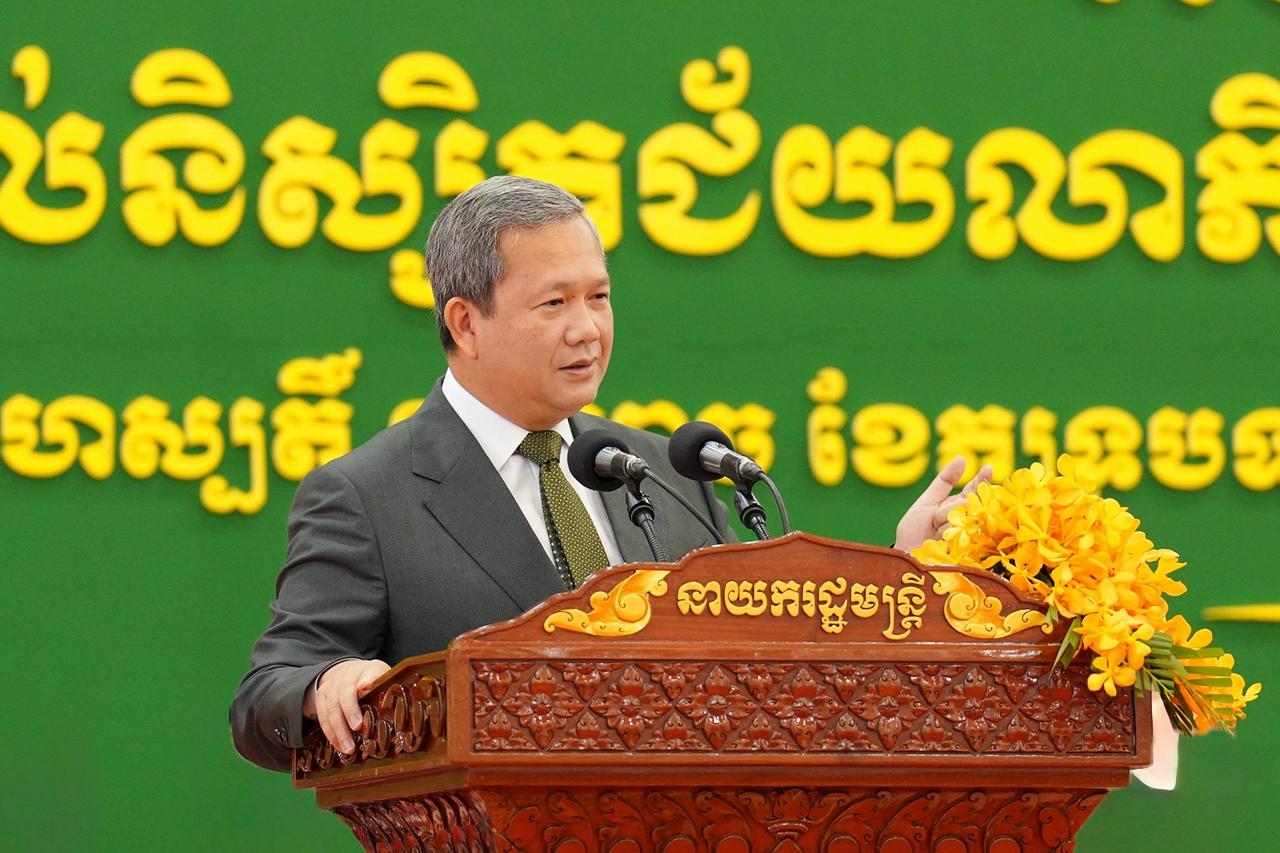
BATTAMBANG, October 8, 2026 — Cambodian Prime Minister Hun Manet has reaffirmed that Cambodia will not abandon its claims to territory it considers legally Cambodian, stressing that losing control of an area on the ground does not mean the country has agreed to surrender its sovereignty.
Speaking at a graduation ceremony at the University of Management and Economics (UME) in Battambang province on Thursday, Hun Manet distinguished between losing effective control of territory and relinquishing legal ownership.
“Losing control of certain places does not mean we have agreed to cede them,” he said, according to reports of his remarks. He argued that Cambodia had not signed any agreement transferring the disputed areas to another country and would continue to defend its territorial position through legal and diplomatic channels.
The prime minister said Cambodia’s claims were based on the 1904 Franco-Siamese Convention, the 1907 Franco-Siamese Treaty and associated maps. He stressed that Cambodia was not seeking Thai provinces such as Surin or Buriram, but only territory it considers covered by the historical agreements.
Hun Manet also cited Battambang’s history, noting that the province and surrounding areas had experienced changes in territorial control before returning to Cambodian administration under historical agreements.
He maintained that military force cannot, by itself, settle a territorial dispute permanently and said Cambodia would not recognise territorial changes imposed through force.
Cambodia to pursue border mechanisms
Addressing the technical process for resolving the dispute, Hun Manet referred to the Joint Boundary Commission (JBC) and the 2000 Memorandum of Understanding on land-boundary surveying and demarcation.
He discussed work involving boundary markers 52 to 59 and said border issues should be addressed through agreed technical procedures. He also referred to the need for both sides to withdraw from areas where their presence is not supported by the eventual boundary determination.
Hun Manet said Cambodia wanted a resolution as soon as possible, particularly to enable more than 20,000 displaced Cambodian civilians to return to their homes and land.
He added that even if the government could build several thousand new houses for displaced families elsewhere, its preferred outcome remained their safe return to their original communities.
Government urges resilience amid multiple challenges
The prime minister acknowledged that Cambodia was facing overlapping challenges, including economic pressures, flooding and border tensions. He called on the government and public to remain united, strengthen national capacity and continue working toward long-term stability.
His remarks reinforced the government’s stated position that territorial claims should be pursued through international law, negotiations and established bilateral mechanisms rather than renewed military confrontation.
The legal status of individual disputed areas remains a matter for the relevant treaties, maps, technical boundary work and diplomatic processes to address.