Education Gap Widens as Poor Thai Students Fall Behind
 Education Gap Widens as Poor Thai Students Fall Behind
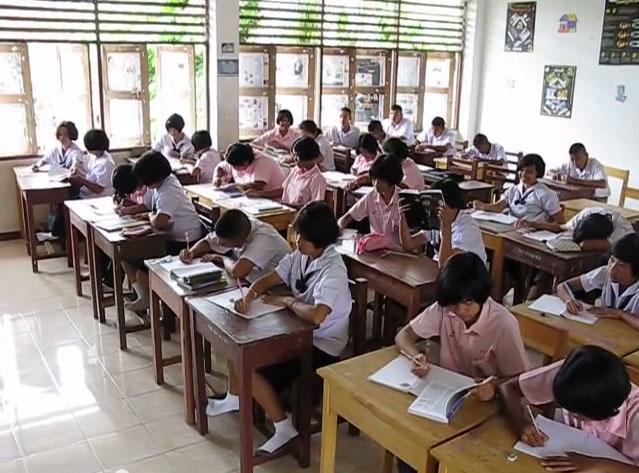
BANGKOK, June 10, 2026 — Thailand’s education system is failing to provide truly free and equitable learning opportunities, with experts warning that deep-rooted inequalities continue to disadvantage millions of children from low-income families despite nearly two decades of government-backed free education policies.
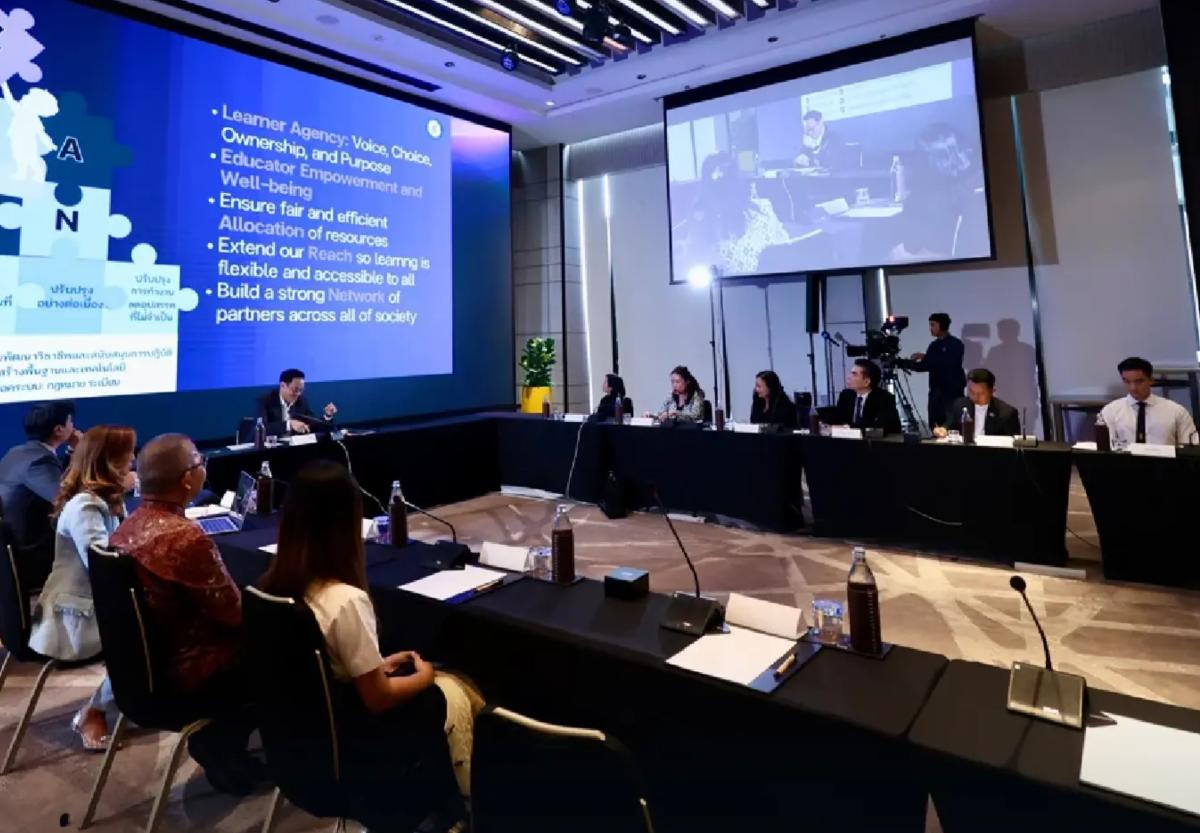
The concerns were raised during a Nation Visionary Club roundtable discussion on June 8, where education specialists, policymakers and student representatives called for urgent structural reforms to address widening gaps in educational access and quality.
Dr. Kraiyos Patrawart, Managing Director of Thailand’s Equitable Education Fund (EEF), said long-term data shows that education remains a significant financial burden for poor households. According to EEF findings, families in the lowest-income bracket still spend around 10,000 baht annually on education-related expenses for each child, despite policies intended to provide free schooling.
“At the same time, poorer students are often receiving lower-quality education than their wealthier peers,” Dr. Kraiyos said, describing the problem as a “two-dimensional inequality” that combines financial hardship with unequal learning opportunities.
The issue became more pronounced following the COVID-19 pandemic, which increased the number of economically vulnerable students and exposed weaknesses in the education system. While Thailand continues to produce internationally successful students who win academic competitions, experts noted that roughly two-thirds of the population still perform below the baseline learning standards set by the Organisation for Economic Co-operation and Development (OECD).
People’s Party lawmaker Parit Wacharasindhu argued that quality education should not be limited to those who can afford private or international schools.
“Thailand cannot succeed if access to quality education depends on family income,” he said, adding that public education remains neither sufficiently effective nor genuinely free despite substantial state investment.
Participants also criticized the Ministry of Education’s funding model, which allocates budgets according to student numbers. The system has left many small rural schools struggling to cover basic operational costs, resulting in teacher shortages and multi-grade classrooms where a single teacher may be responsible for several year levels simultaneously.
Student representative Krai Satarak from Chulalongkorn University said the national curriculum often overlooks local realities and practical skills. Drawing on field research in Nan province, he cited examples of students leaving school to support family agricultural businesses despite possessing valuable knowledge and experience that receives little recognition within the formal education system.
Experts further warned that Thailand risks falling behind in an era increasingly shaped by artificial intelligence, advanced computing and rapid technological change. Dr. Kraiyos called for a national debate on the future purpose of education, questioning whether traditional memorisation-based teaching methods remain suitable for preparing students for the modern economy.
The roundtable concluded with calls for comprehensive reforms, including needs-based funding, greater autonomy for schools and revisions to the National Education Act. Participants warned that unless significant changes are implemented within the next decade, the divide between well-resourced and under-resourced schools could continue to widen, further limiting opportunities for disadvantaged children and affecting Thailand’s long-term competitiveness.