Why Cambodia and Thailand’s Peace Is So Uneasy
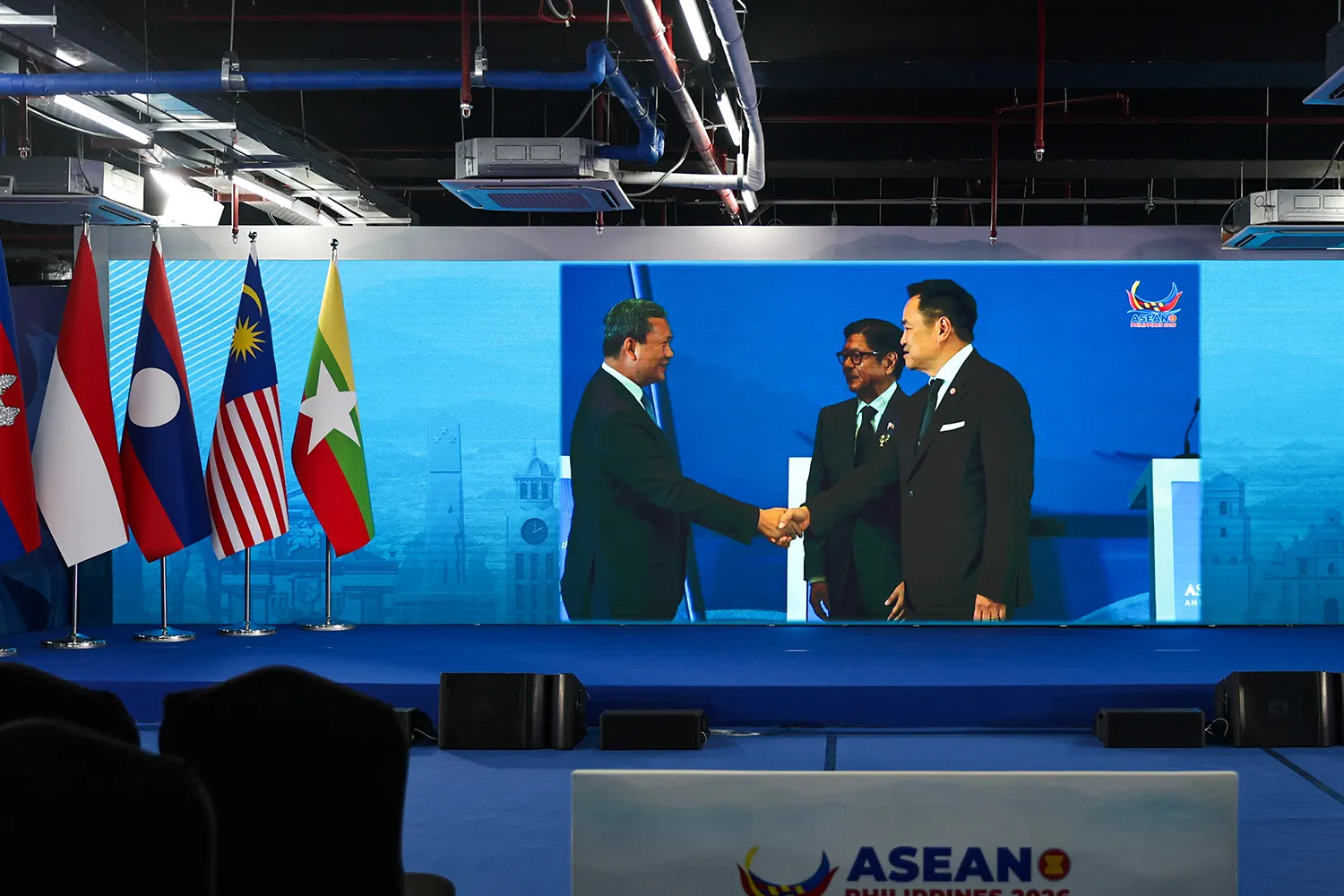 Photo: Foreign Policy
Six months after fighting ended between Cambodia and Thailand, their relationship remains dangerously unsettled.
On June 5, Thailand said it will join the United Nations arbitration process launched by Cambodia to resolve the two countries’ maritime boundary dispute. At the same time, though, Thailand announced that bilateral efforts to resolve its contested land borders with Cambodia would be put on hold. Peace talks on the land border look stalled, and small skirmishes have taken place along the border. A third round of fighting looks unlikely—but certainly not impossible.
The cease-fire remains in place, but as recently as May, Thailand accused Cambodian soldiers of firing shots along the border. Cambodia has accused Thailand of occupying areas it previously accepted as Cambodian territory. Thailand has kept the border closed despite the economic cost. Now Thailand has an excuse to abandon the border peace talks it has been slow-walking for months. Association of Southeast Asian Nations attempts to keep Thailand and Cambodia moving toward a peace deal seem to have flopped. And without change, the border dispute will remain a frozen conflict, not a solved one.
Meanwhile, what of the maritime boundary dispute now facing arbitration?
The process now being launched is the compulsory conciliation provision of the United Nations Convention on the Law of the Sea (UNCLOS). At stake is a stretch of water with an estimated $300 billion worth of energy resources under it, claimed by both Cambodia and Thailand.
The trigger to Cambodia launching this process was Thailand tearing up a 2001 agreement declaring an intention to agree on a framework to jointly develop any valuable resources in the area. The mechanism has only been used once before—also in Southeast Asia, to rule on boundaries between Australia and Timor-Leste in 2016.
Thailand has up until now tried to avoid international arbitration, feeling bilateral negotiations favored it. It has now said it will participate in the process, though it is clearly not thrilled about it.
“I told my Cambodian colleagues, ‘Why don’t we give talks a chance? Six months or something,’” Thai Foreign Minister Sihasak Phuangketkeow told Reuters.
Thailand has also said it rejects the discussion of resource sharing alongside the maritime border at the conciliation. But shared resources is a vital issue.
So, what is Thailand actually up to?
I have some hunches here. First, by participating, it might be hoping to assert some influence over the process—most obviously by trying to ring-fence the resource issue. Secondly, Southeast Asia as a region puts a lot of emphasis on the importance of international law. Phuangketkeow is a career diplomat, and conspicuous non-cooperation with international law might just be thought to look too bad. Lastly, even if Thailand feels the conciliation goes against its interests, this needn’t cost it anything. As the text of the UNCLOS annex on compulsory conciliation plainly states, “The report of the commission, including its conclusions or recommendations, shall not be binding upon the parties.”
Foreign Policy