Cambodia Urges International Attention as Thai Border Actions Continue
 Cambodia Urges International Attention as Thai Border Actions Continue
CAMEROON, 11 July 2026 — A senior Cambodian Senate leader has told Francophone parliamentary leaders that Thai military forces have continued unilateral activities inside areas Cambodia claims as its sovereign territory since a ceasefire took effect on December 27, 2025.
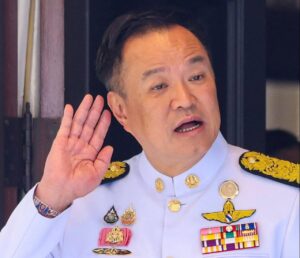
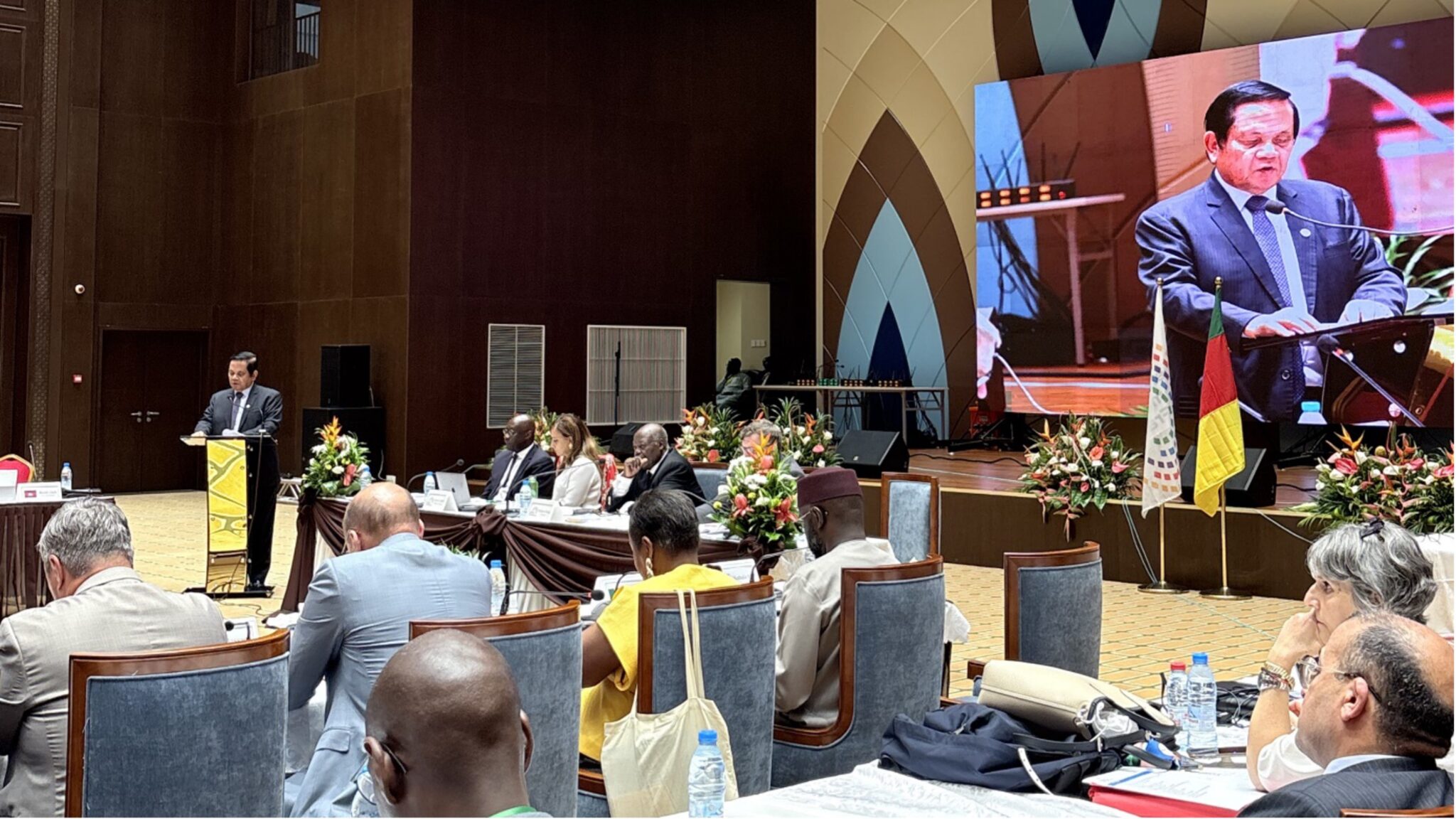
Ouch Borith, First Vice President of the Cambodian Senate and Vice President of the Parliamentary Assembly of the Francophonie (APF), raised the issue during a meeting of the APF Executive Committee in Cameroon, held from July 7 to 12.
In his address on July 7, Ouch Borith provided a detailed account of the current situation along the Cambodia-Thailand border, accusing the Thai side of attempting to create “facts on the ground” in disputed areas before a final settlement of the border issue.
He thanked members of the APF Political Committee who visited Siem Reap in May and witnessed what he described as evidence of violations, destruction and the suffering of Cambodian civilians displaced by the conflict.
According to Ouch Borith, Cambodia has fully respected its commitments under the ceasefire agreement reached on December 27, 2025, and has consistently prioritised restraint, dialogue and de-escalation.
However, he said Cambodia’s efforts had not been met with the same approach from the Thai side.
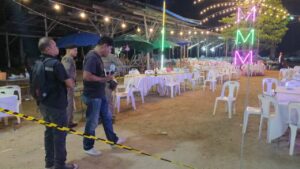
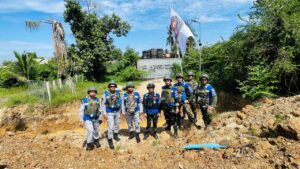
Ouch Borith alleged that immediately after the ceasefire took effect, Thai forces continued unilateral activities in areas under Cambodian sovereignty, including clearing land, installing barbed wire and shipping containers, surrounding civilian villages, reinforcing military positions and constructing permanent infrastructure.
He also accused Thai forces of conducting religious ceremonies at temples regarded by Cambodia as part of its cultural and religious heritage, as well as damaging and replacing religious statues.
“Despite Cambodia’s repeated formal protests, these activities have continued to the present day,” he said.
The Cambodian Senate leader argued that the incidents should not be viewed as isolated actions, but as part of a broader pattern aimed at gradually changing the situation on the ground before a final resolution of the border dispute.
He said the actions violated Article 5 of the 2000 Memorandum of Understanding, commitments to de-escalation under the December 27, 2025 joint statement, and the legal framework established by the 1904 and 1907 treaties and conventions.
He also cited the 1962 and 2013 rulings of the International Court of Justice concerning the border dispute.
Ouch Borith warned that attempts to create a fait accompli, or an irreversible situation on the ground, were undermining the existing legal framework and damaging prospects for a peaceful, fair and lasting settlement of the dispute.
He also highlighted the plight of tens of thousands of displaced Cambodian civilians who remain unable to return to their homes, as well as damage to Cambodian cultural heritage, including Preah Vihear Temple, a UNESCO World Heritage Site.
Addressing the maritime dispute between the two countries, Ouch Borith said Cambodia had exercised its right to seek conciliation procedures under the United Nations Convention on the Law of the Sea (UNCLOS) following Thailand’s unilateral move to cancel the 2001 memorandum concerning overlapping maritime claims.
He said Cambodia had pursued the UNCLOS mechanism to seek a peaceful and lawful settlement of the issue.
However, Ouch Borith accused Thailand of using Cambodia’s move towards the UNCLOS mechanism as a pretext to suspend meetings of the Cambodia-Thailand Joint Boundary Commission (JBC).
He stressed that the JBC is a technical mechanism and should not be linked to political considerations.
“Despite Cambodia’s repeated requests to convene the commission, its work has not been able to resume, gradually undermining bilateral cooperation mechanisms and mutual trust,” he said.
Ouch Borith told the meeting that Cambodia remained committed to international law, dialogue and multilateral mechanisms as the means of peacefully resolving disputes.
He called for continued attention and support from the international community and the Francophone parliamentary community for the principles of sovereignty, territorial integrity, non-use of force, good-faith implementation of agreements and peaceful settlement of disputes.
“No border can be unilaterally changed through the use of force or by creating faits accomplis,” he said.
Concluding his address, Ouch Borith urged Francophone parliamentary leaders to continue paying close attention to what he described as the worrying situation along Cambodia’s western border.