1962 ICJ Ruling Offers Key Lesson for Cambodia-Thailand Border Stability
 1962 ICJ Ruling Offers Key Lesson for Cambodia-Thailand Border Stability
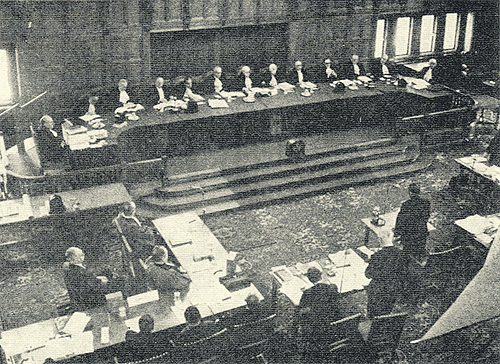
BANGKOK, 14 July 2026 — The International Court of Justice’s landmark 1962 ruling in the Preah Vihear Temple case remains a crucial lesson for resolving current Cambodia-Thailand border disputes, according to Thai international relations and security expert Surachart Bamrungsuk, who has urged greater reliance on international law and peaceful negotiations rather than military force and nationalism.
Surachart recently highlighted a key principle from the 1962 judgment that he said has been largely overlooked in Thai society: the fundamental purpose of establishing boundaries between states is to achieve stability, certainty and finality.
According to his analysis, once a boundary has been clearly established, allowing it to be repeatedly challenged or subjected to demands for revision would create endless disputes. Border settlements, therefore, cannot remain permanently open to renegotiation whenever one side contests an established boundary.
Thailand has already been involved in two proceedings concerning the Preah Vihear dispute before the ICJ, first in 1962 and again in 2013, and accepted the court’s judgments in both cases.
Surachart warned that creating circumstances that could lead to a third case before the world court would pose unnecessary risks for Thailand. He argued that relying on military power and promoting excessive nationalism instead of pursuing peaceful solutions based on international law could leave the country at a disadvantage both politically and legally.
Unresolved border issues, particularly those arising from changes in natural geographical features, should instead be addressed through established technical and bilateral mechanisms, he said.
These mechanisms include the Cambodia-Thailand Joint Boundary Commission (JBC), General Border Committee (GBC) and Regional Border Committee (RBC), which provide channels for negotiation and technical discussions without resorting to military confrontation.
International law does not allow a state to use force to alter established borders, Surachart noted. Even if territory is temporarily seized through military action, such control does not necessarily change the legally recognised boundary.
He compared international border disputes to disagreements between neighbouring property owners.
Ultimately, such disputes must be settled by surveying the land and examining legally recognised documents rather than through the use of force.
Surachart argued that Thailand’s best course of action is to pursue a peaceful settlement of its border disputes with Cambodia and avoid military measures that could have serious consequences for civilians living along both sides of the frontier.
Giving priority to negotiations and existing cooperation mechanisms, he said, would help reduce tensions and allow Cambodia and Thailand to focus their resources on responding to rapidly changing global geopolitical challenges.
The 1962 ICJ judgment, therefore, should not be viewed merely as a historical event, but as an enduring lesson in the importance of stability and certainty in international borders.
The ruling underscores the principle that boundaries between states should be respected in accordance with treaties, maps and other legally recognised instruments, while disputes should be resolved through international law and peaceful negotiations rather than military force.
Respecting these principles, Surachart argued, remains essential to maintaining stability along the Cambodia-Thailand border and building lasting peace for the people of both countries.
By: Sok Sovann