Colby: Stronger Sovereign States Key to US ‘Peace Through Strength’ Strategy in Asia
 Colby: Stronger Sovereign States Key to US ‘Peace Through Strength’ Strategy in Asia
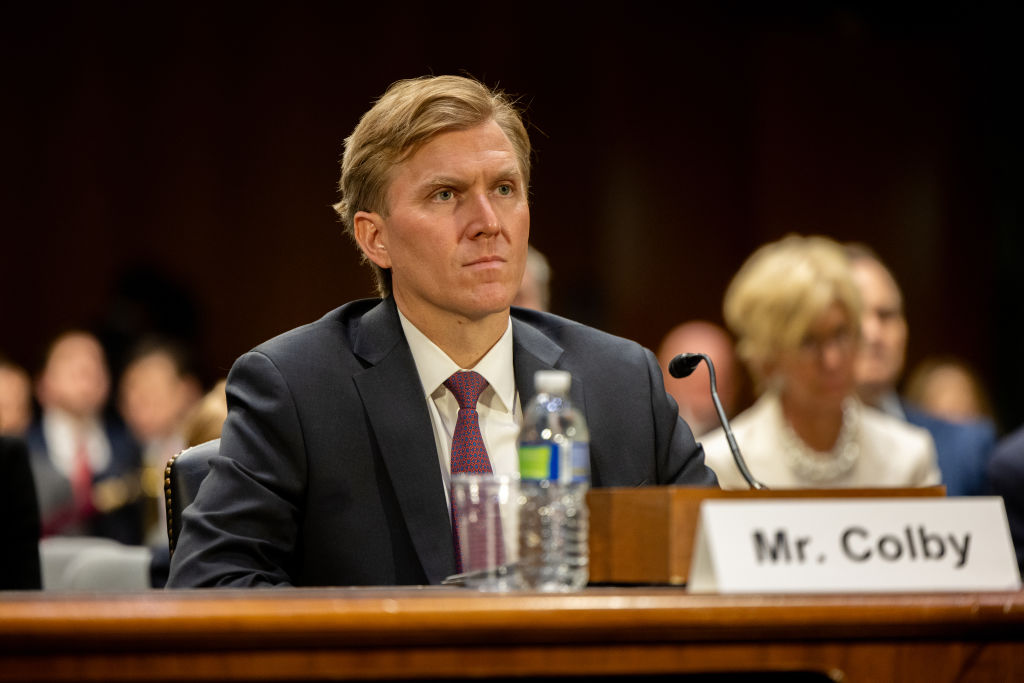
WASHINGTON, Aug. 13, 2026 — The United States is recalibrating its defense strategy in the Indo-Pacific around “peace through strength,” stronger burden-sharing and the development of sovereign countries capable of defending themselves, U.S. Under Secretary of War for Policy Elbridge Colby said Thursday, as Washington seeks deeper security partnerships across Southeast Asia, including with Cambodia.
Speaking during a virtual press conference following his Southeast Asian tour, Colby said the United States was not disengaging from Asia but instead seeking to strengthen a favorable regional balance of power through capable partners.
His remarks followed a speech in Manila earlier this week in which he said Washington wanted “partners, not protectorates” and called for greater responsibility from U.S. allies and partners in their own defense.
Reuters reported that Colby described the U.S. approach as “partnership, not dependency” and said Washington was seeking a stronger deterrence posture in the Indo-Pacific.
Cambodia part of broader U.S. regional approach
Although Colby did not announce a specific new defense agreement with Cambodia during Thursday’s briefing, Cambodia was included in his Southeast Asian tour alongside the Philippines, Indonesia and Thailand.
The U.S. Department of War has described the tour as part of efforts to strengthen bilateral defense relationships and build what it calls a durable regional peace through strength.
Colby’s broader message suggests that Washington’s engagement with Cambodia is intended to fit within a strategy that places greater emphasis on national sovereignty, indigenous defense capabilities and practical security cooperation, rather than requiring Southeast Asian countries to choose between the United States and China.
For Cambodia, this approach could provide room for expanded cooperation with Washington in areas aimed at strengthening the country’s ability to protect its sovereignty, while maintaining its own strategic independence.
Philippines, Indonesia and Thailand illustrate the approach
The Philippines remains a central element of the strategy. Colby said Washington would continue helping Manila strengthen its defense and deterrence capabilities, while emphasizing that the objective was to enable the Philippines to defend its own sovereignty rather than create permanent dependence on U.S. forces.
In Indonesia, Colby emphasized respect for Jakarta’s strategic independence. The two countries have been strengthening defense cooperation under their newly established Major Defense Cooperation Partnership, which provides a framework covering military modernization, training, professional military education, exercises and operational cooperation. Indonesian Defense Minister Sjafrie Sjamsoeddin said after meeting Colby on Aug. 11 that the partnership should develop on an equal basis while respecting national interests and sovereignty.
Thailand, meanwhile, is another important component of the U.S. strategy. Colby has described Thailand as Washington’s oldest diplomatic partner in Asia and its only mainland treaty ally, with the two countries seeking to make military exercises more operationally focused and improve joint readiness.
Washington wants countries to carry more of their own defense burden
A recurring theme in Colby’s remarks was that stronger regional countries would produce stronger deterrence.
He argued that U.S. strategy should not rely solely on American military power. Instead, Washington wants partners to develop credible defense capabilities of their own, while the United States provides support, cooperation and military commitments.
The approach is closely tied to Colby’s concept of “deterrence by denial” — making potential aggression sufficiently difficult and costly that an adversary concludes it cannot achieve its objectives.
The strategy is particularly focused on the Western Pacific and the First Island Chain, while also seeking stronger cooperation with countries such as India whose strategic geography extends beyond that framework.
No demand for Southeast Asian countries to choose sides
Colby also stressed that closer U.S. defense cooperation should not require countries such as Indonesia or Cambodia to choose between Washington and Beijing.
Instead, he framed the emerging U.S. approach around pragmatism, mutual interests and respect for sovereignty, with Washington seeking capable partners rather than states dependent on U.S. protection.
That position marks an emphasis on practical security cooperation rather than making ideological or political alignment a prerequisite for closer defense ties.
For Cambodia, the message is particularly relevant as Phnom Penh continues to maintain relationships with multiple major powers while emphasizing sovereignty and an independent foreign policy.
Taiwan and wider regional security
On Taiwan, Colby reiterated U.S. support for maintaining the status quo and emphasized deterrence rather than unnecessary rhetorical escalation. He argued that credible military strength is intended to prevent conflict rather than provoke it.
He also highlighted stronger conventional capabilities and greater burden-sharing among wealthy allies, including South Korea and Japan, while describing Australia as one of Washington’s closest allies and a key partner in the regional security architecture through AUKUS.
Overall, Colby’s remarks point to a U.S. Indo-Pacific strategy that seeks to combine American military strength with increasingly capable regional partners.
For Southeast Asia, including Cambodia, the emerging model is therefore less about choosing between competing powers and more about developing sovereign national capabilities, practical defense partnerships and a regional balance of power intended to deter conflict.