Britain Urges Cambodia and Thailand to Keep Peace and Continue Dialogue
 Britain Urges Cambodia and Thailand to Keep Peace and Continue Dialogue
The visit to Cambodia by Ms. Rosie Winterton, the United Kingdom Minister responsible for the Indo-Pacific, at a time when the Cambodia–Thailand border issue is drawing increasing attention from the international community, carries significance beyond the strengthening of bilateral relations. The message she brought with her focused on preserving peace, continuing dialogue, and fully and sustainably implementing the ceasefire.
Britain has called on Cambodia and Thailand to continue resolving their issues through peaceful dialogue and to fully respect the ceasefire agreement reached between the two sides. This message is particularly important at a time when people living along the border want to see an end to tensions and hope to return to their normal lives.
The word “dialogue” may sound ordinary, but in the context of the continuing tensions and fragility surrounding the Cambodia–Thailand border dispute, it carries significant meaning. When the two sides have confronted each other and have previously resorted to the use of force, the call to return to the negotiating table is a reaffirmation that such complex issues should be resolved through negotiations and peaceful means rather than through military force.
A border dispute cannot be brought to an end simply through victory on the battlefield or by one side occupying a particular position and declaring it to be under its control. Ultimately, such disputes must return to the negotiating table and to mechanisms mutually agreed upon by both sides. Therefore, maintaining a ceasefire is not merely about silencing the guns. It is about creating the time and space necessary for diplomacy and for the resolution of outstanding issues to move forward.
In this regard, the position is consistent with the substance of the Joint Declaration, under which both sides agreed that the arrangements contained in the declaration would not affect the demarcation or the international boundary between the two countries. Likewise, both sides assigned the Joint Boundary Commission (JBC) the responsibility to continue the survey and demarcation of the boundary in accordance with existing agreements, giving priority to areas where people live and where communities have been affected by the conflict. This work must also ensure the safety of the teams involved, including protection from the danger posed by landmines.
Based on these provisions, both sides must maintain the ceasefire and preserve peace on the ground, while the border demarcation process continues through the existing mechanisms. A clear separation of responsibilities between maintaining peace and addressing the border issue will help reduce tensions and create a favorable environment for negotiations and for resolving the remaining issues.
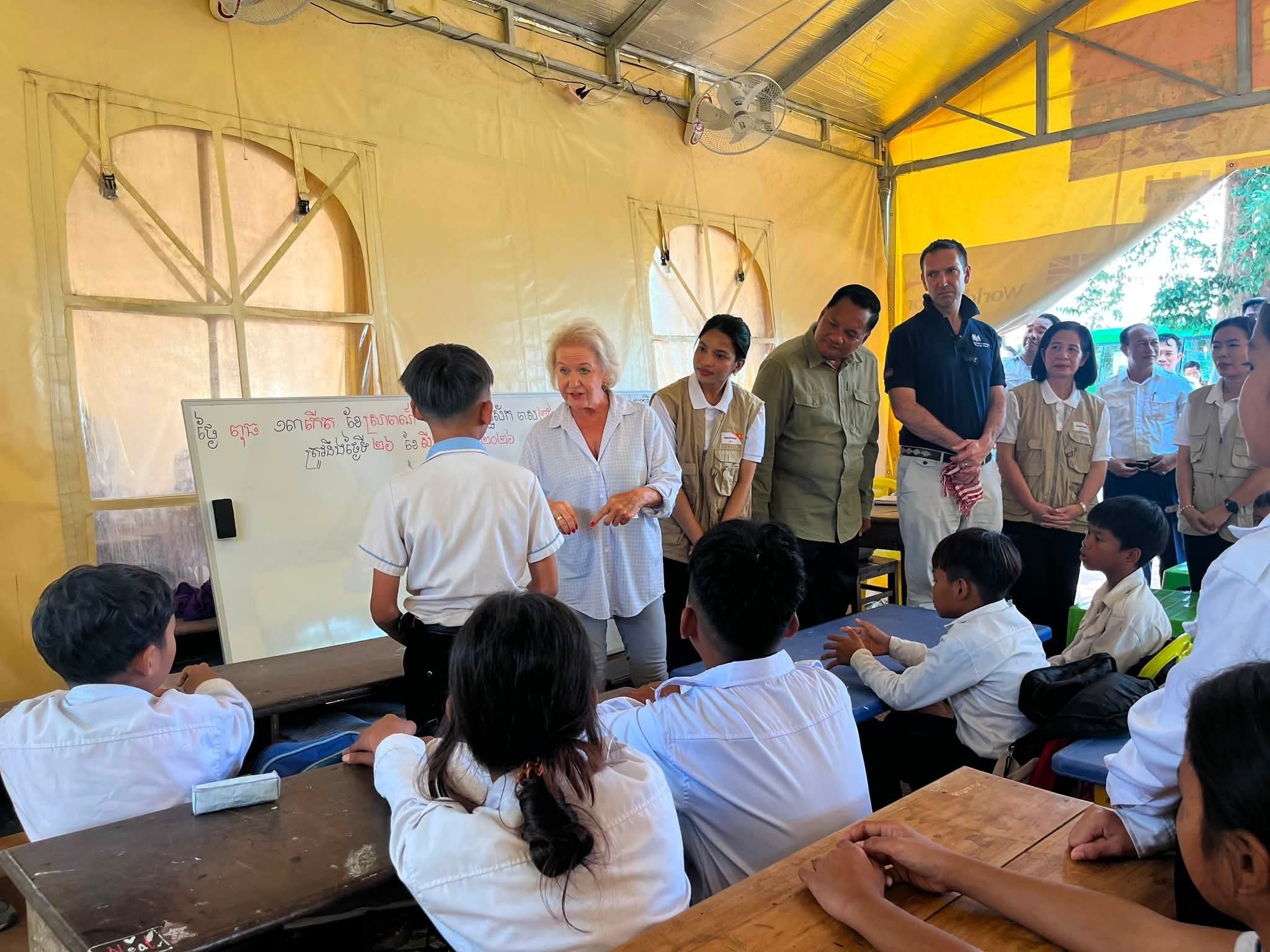
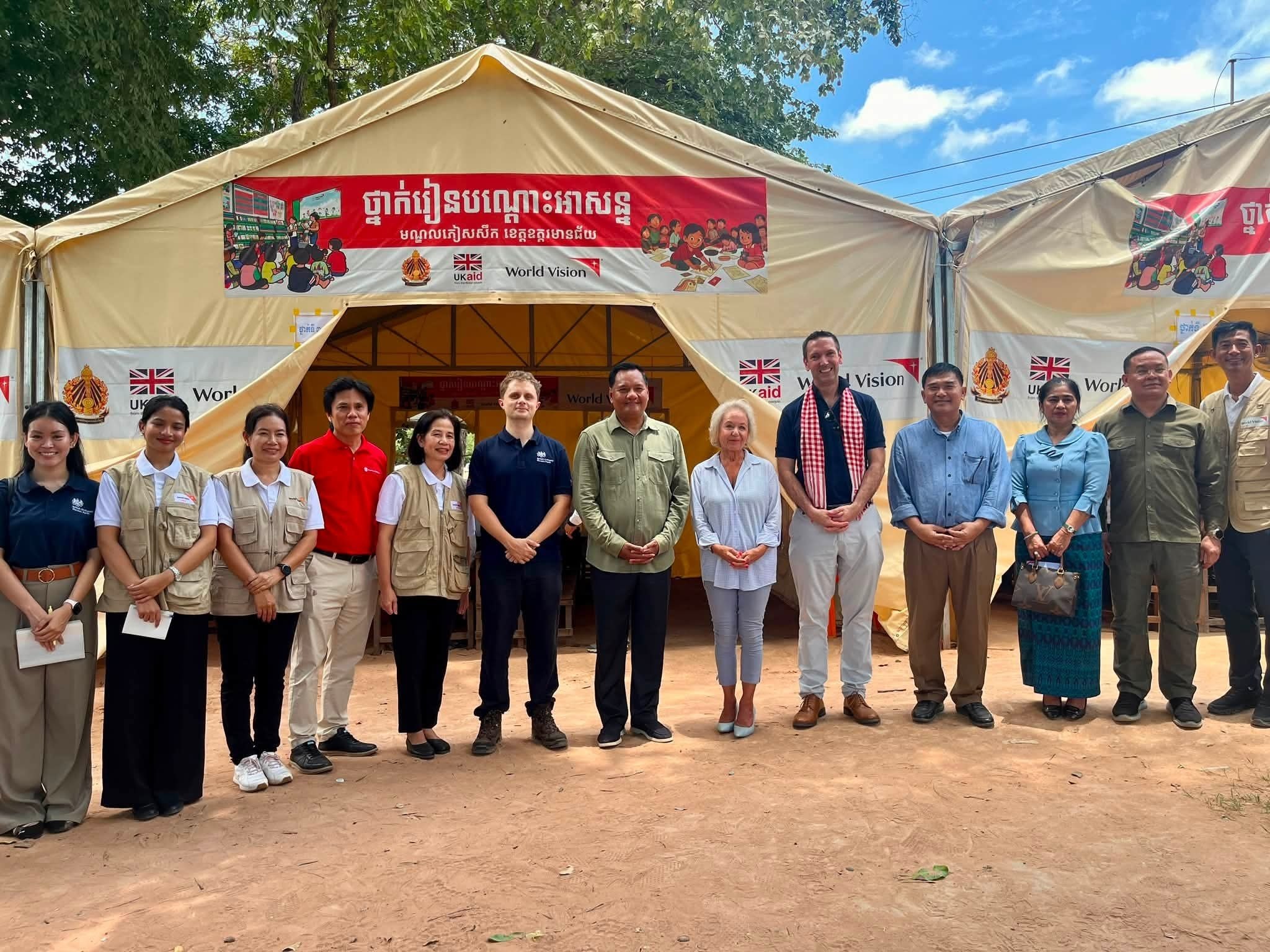
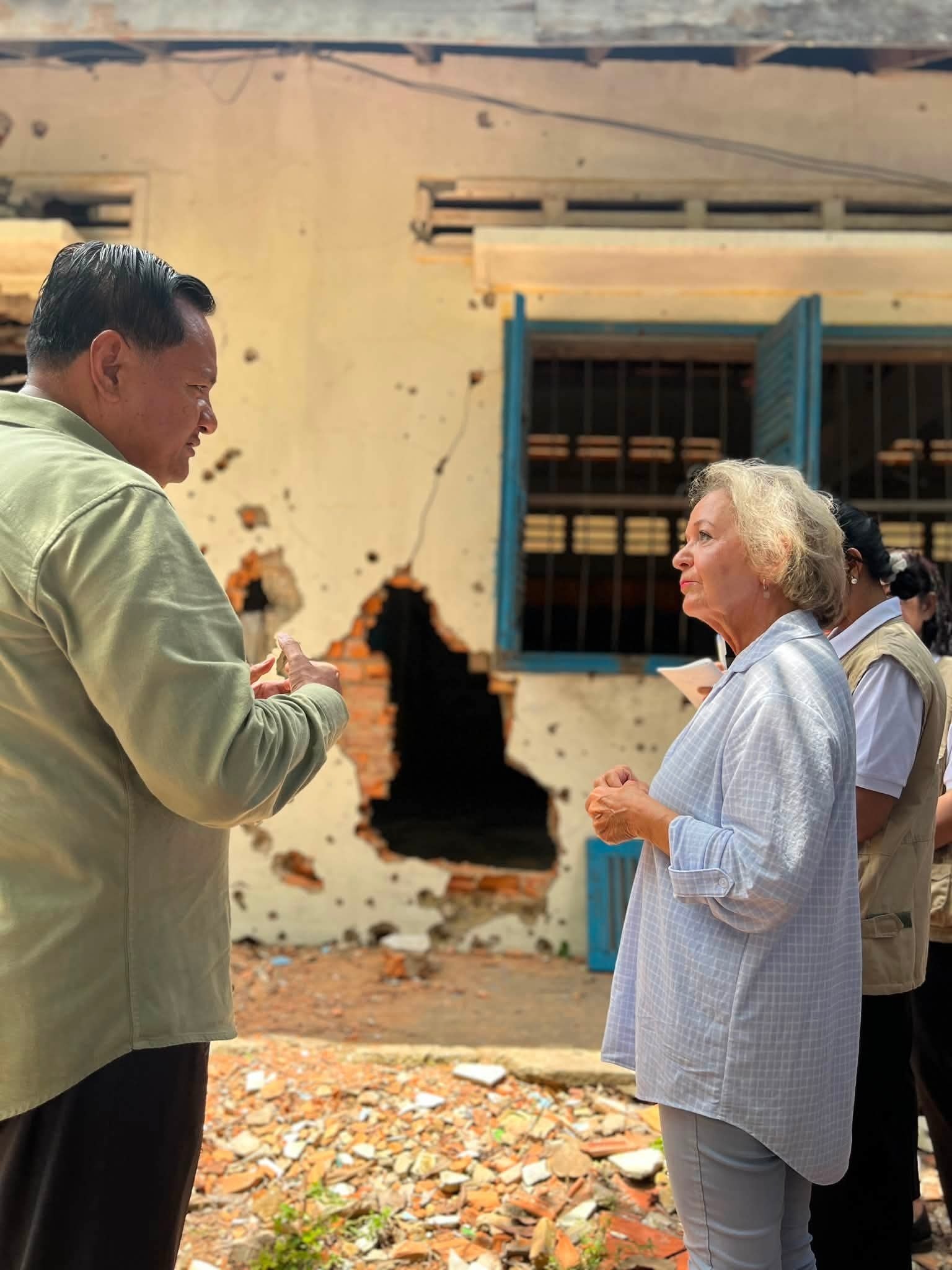
Ms. Winterton’s visit to Oddar Meanchey Province gave the trip a significance beyond that of an ordinary diplomatic visit. She placed particular emphasis on the impact of the conflict on Cambodian civilians and on children who have been displaced from conflict-affected areas. This is where peace must become more than a word used in official statements. It must translate into tangible peace for people affected by the conflict along the border.
That means enabling people to return to their homes, resume farming and other livelihoods, reopen their businesses, and allow their children to return to school without fear.
Therefore, maintaining the ceasefire and continuing dialogue are matters that cannot be overlooked. If the sound of weapons falls silent but tensions along the border continue to rise, peace will remain fragile. Conversely, if the ceasefire is respected, the work of the JBC can move forward, and both sides can use the existing mechanisms to address their border issues. This provides an important foundation for achieving lasting peace.
The United Kingdom’s attention to this issue does not end with the ceasefire.
Britain is also continuing to support mine clearance, education, and the recovery of communities affected by the conflict. This demonstrates that the kind of peace the international community wants to see is not merely the absence of fighting, but a peace in which Cambodian people can genuinely live their lives in safety and stability.
Ms. Rosie Winterton’s visit should therefore be viewed as another sign of the international community’s growing attention to the situation surrounding the Cambodia–Thailand border dispute. What Britain wants to see is the preservation of peace, respect for the ceasefire, and continued dialogue, so that tensions do not once again escalate into a military confrontation.
For Cambodia and Thailand, resolving the border issue may require time and patience, as well as diplomacy and the use of mechanisms mutually agreed upon by both sides. But one thing should not be postponed any longer: peace. Maintaining the ceasefire, protecting civilians along the border, and creating the conditions for the JBC to resume its work are steps that both sides can begin taking immediately.
Ultimately, what the people want is not a prolonged conflict or war. They want security and a return to normal life. Therefore, the remaining issues should continue to be addressed through dialogue, while peace and the ceasefire must be preserved, and the demarcation of the land boundary must continue through the mechanisms agreed upon by both sides.
By: Pin Vichey