Cambodia Calls for Accountability as UNESCO Condemns Heritage Destruction
 Cambodia Calls for Accountability as UNESCO Condemns Heritage Destruction
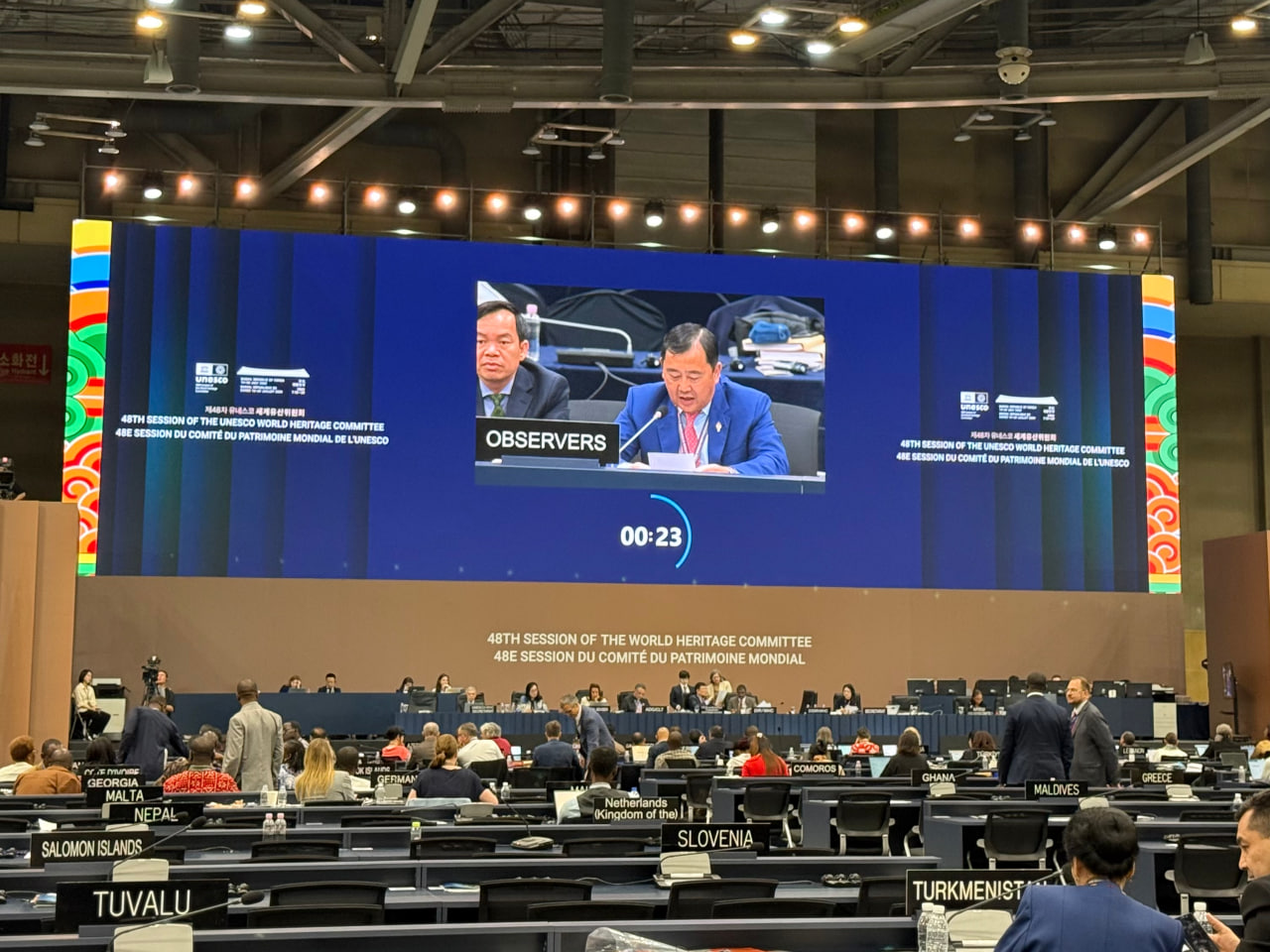
BUSAN, 30 July 2026 — The 48th session of the UNESCO World Heritage Committee has unanimously adopted a resolution condemning the destruction of World Heritage properties during armed conflicts, with representatives from 162 member states, international organizations, partner institutions and observer bodies participating in the meeting.
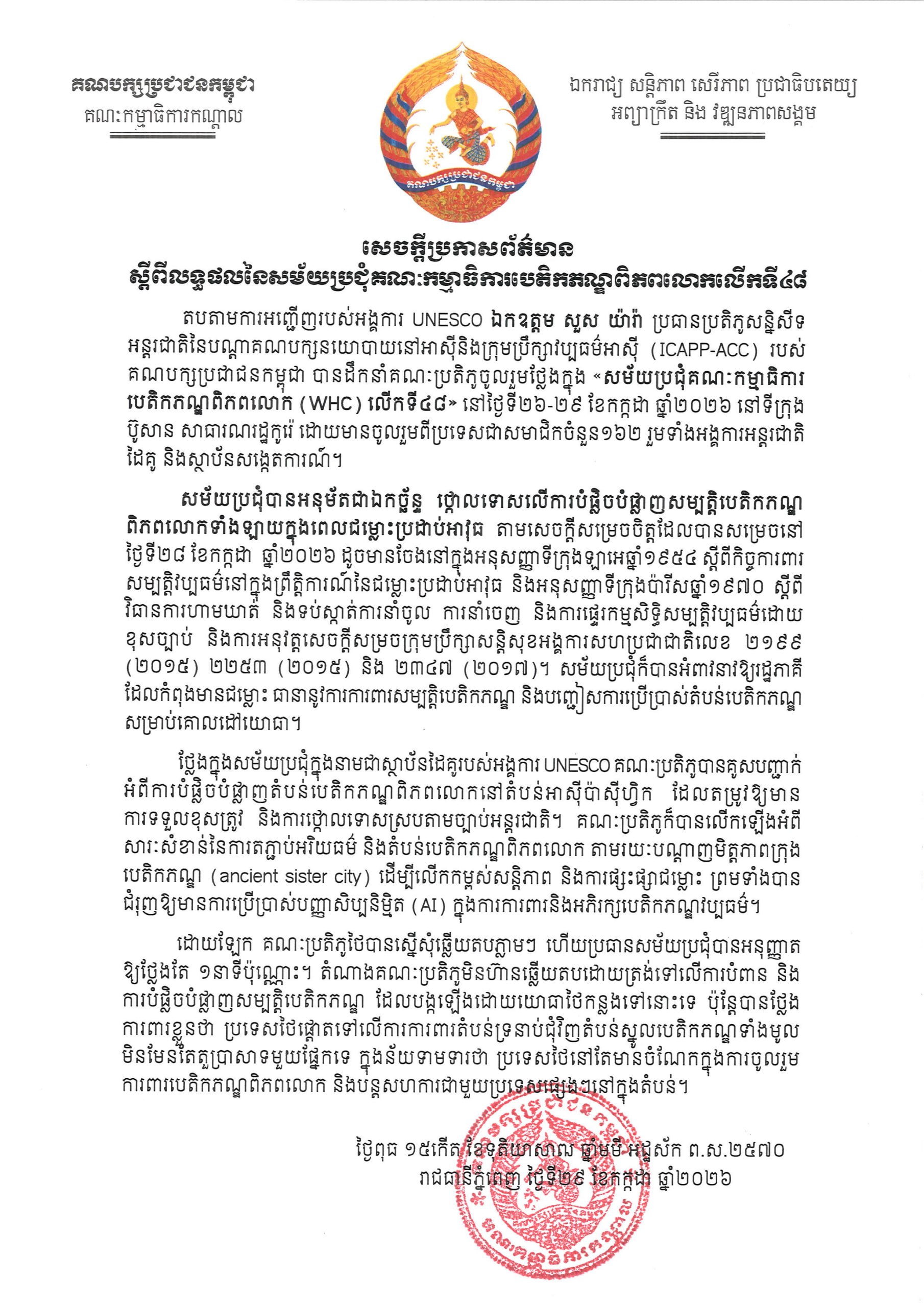
According to a statement released on Thursday by Cambodia’s Central Committee of the Cambodian People’s Party, the decision was adopted on July 28 during the committee’s meeting, held in Busan, South Korea, from July 26 to 29.
The resolution reaffirms international legal obligations under the 1954 Hague Convention for the Protection of Cultural Property in the Event of Armed Conflict, the 1970 UNESCO Convention against the illicit import, export and transfer of ownership of cultural property, and relevant United Nations Security Council resolutions 2199 (2015), 2253 (2015) and 2347 (2017).
The committee also called on states involved in armed conflicts to ensure the protection of cultural heritage sites and to refrain from using World Heritage areas for military purposes.
Speaking as a UNESCO partner organization, a delegation led by Suos Yara, head of the Cambodian People’s Party’s delegation to the International Conference of Asian Political Parties and the ICAPP Asian Cultural Council, stressed the need for accountability and condemnation of the destruction of World Heritage sites in the Asia-Pacific region in accordance with international law.
The Cambodian delegation also highlighted the importance of promoting peace and reconciliation through networks of “ancient sister cities” linking World Heritage sites and called for greater use of artificial intelligence (AI) in the protection and conservation of cultural heritage.
According to the statement, Thailand’s delegation requested the right to respond during the session and was given one minute by the chair.
The statement said the Thai representative did not directly address allegations concerning damage to cultural heritage attributed to the Thai military, but instead said Thailand’s focus was on protecting the buffer zones surrounding World Heritage sites rather than only the core monument, arguing that Thailand remained committed to safeguarding World Heritage and continuing cooperation with other countries in the region.
The Cambodian statement reflects the position presented by its delegation during the meeting. The UNESCO resolution itself broadly condemns the destruction of World Heritage during armed conflict and calls for the protection of cultural heritage sites in accordance with international conventions and relevant U.N. Security Council resolutions.