Francophonie Summit: A Strategic Opportunity Cambodia Must Not Waste
 Francophonie Summit: A Strategic Opportunity Cambodia Must Not Waste
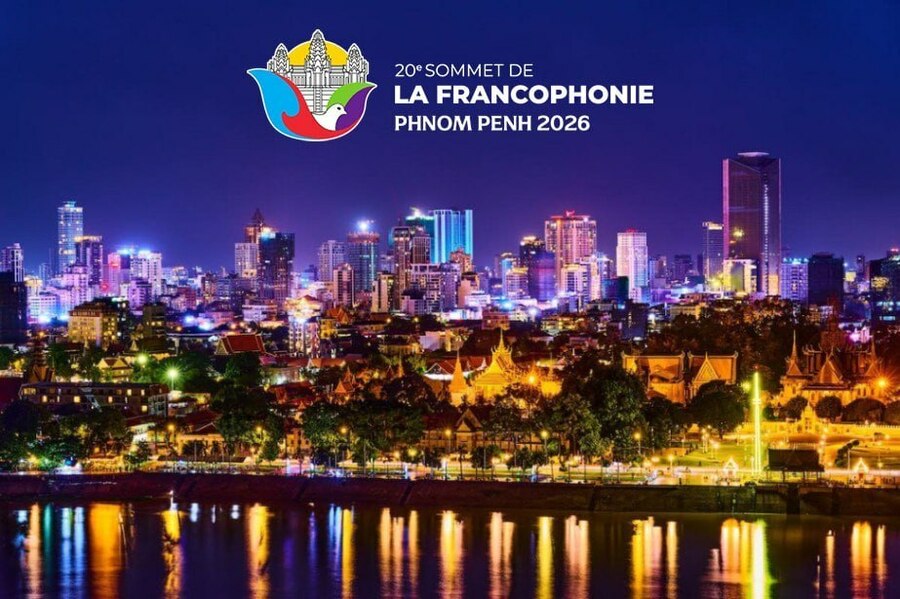
Cambodia’s hosting of the 20th Francophonie Summit on November 15–16, 2026, is more than an honour or an opportunity to organise a major international event. Politically and diplomatically, it offers the country a valuable platform to strengthen its international standing, expand relations with other nations and establish partnerships that can deliver tangible national benefits. Successfully hosting the summit is one achievement; turning the occasion into lasting benefits for Cambodia is even more important.
The International Organisation of La Francophonie (OIF) is a significant international network, comprising 90 member states and governments and approximately 321 million French speakers worldwide. Its role extends far beyond promoting the French language and culture. The organisation also provides a platform for political cooperation, peacebuilding, democracy, human rights, education and economic development. Cambodia should therefore view its membership not simply as a continuation of historical and linguistic ties, but as a valuable network of partnerships that can serve its national interests.
Cambodia joined the OIF as an observer in November 1991 before becoming a full member in October 1993. Since then, cooperation has continued to expand across various sectors. The establishment of the National Francophonie Committee in 2016 and Cambodia’s participation in the organisation’s various mechanisms demonstrate its sustained commitment to the Francophone community.
Hosting the 20th summit represents another important step in strengthening these relations. At a time when countries are competing to expand their international influence and partnerships, bringing leaders from numerous nations together on Cambodian soil offers considerable diplomatic value. Cambodia can use this opportunity to share its perspectives on regional and international issues while helping foreign partners better understand its development potential and national priorities.
However, diplomatic prestige should not be the country’s only expectation. More importantly, Cambodia must translate its Francophonie connections into economic opportunities. The OIF has promoted economic cooperation through economic missions and business networking among member countries. In March 2022, Cambodia hosted the first Asia-Pacific MECA meeting, attracting approximately 70 institutions and economic operators. These initiatives have highlighted opportunities in agro-industry, renewable energy and digital services.
The proposed establishment of an ACEF economic cooperation office could further connect investors and businesses while encouraging trade among member countries. If Cambodia can facilitate practical partnerships between private-sector businesses across the Francophone world, it could attract investment and open access to new markets. Achieving this, however, requires preparation, coordination and systematic follow-up rather than simply discussing potential opportunities during the summit.
Education and human resource development also deserve greater attention. OIF support for French-language training and education could strengthen young people’s capabilities while expanding opportunities for scholarships, employment and international exchanges. Over the long term, investing in knowledge and skills can be just as valuable as attracting financial investment.
Most importantly, Cambodia needs a clear action plan covering the periods before, during and after the summit. Good organisation may earn international recognition, but following up on agreements, developing new cooperation projects and connecting relevant institutions will determine whether the event creates lasting value. Without sustained efforts, this valuable opportunity could become little more than a diplomatic memory.
Ultimately, hosting the Francophonie Summit should not be Cambodia’s final destination. It should be the starting point for expanding diplomatic influence, building new partnerships and securing greater economic benefits. The summit’s true success will not be measured by the scale of its opening ceremony or the number of leaders attending, but by what Cambodia achieves after its international guests have returned home.
By Pin Vichey