The paradox of Anutin’s govt
 The paradox of Anutin’s govt
Prime Minister Anutin Charnvirakul’s government may have little to fear from a parliamentary revolt, but its biggest political threat could be building beyond the walls of parliament: a growing public perception that corruption, political collusion and double standards are becoming entrenched under its watch.
The government may be strong enough to survive until near the end of its term. But the corruption allegations, Senate collusion case and Khao Kradong dispute could leave behind a political cost that is paid not in parliament, but at the ballot box — where voters could once again redraw Thailand’s political map.
The ultimate test, therefore, will not be whether the Anutin government can survive the next no-confidence motion or coalition dispute. It will be whether voters still trust the political system it represents when they enter the polling booths. If the government can resolve the controversies, demonstrate accountability and restore confidence in the fairness of state institutions, its political stability could translate into electoral strength. If it cannot, the current parliamentary advantage may prove to be only temporary.
Mr Anutin may have built a political structure capable of shielding his government from parliamentary defeat. What he cannot easily build through coalition negotiations or parliamentary numbers is public faith. This is where the current government’s apparent strength could become deceptive.
None of these issues may be sufficient to bring down the government today. But political damage does not always have an immediate effect. It can accumulate gradually, becoming a burden that a government carries into the next election.
The Senate collusion case and Khao Kradong land dispute could similarly reinforce perceptions of double standards and a justice system that is more accommodating to powerful individuals and political allies. The alleged corruption in the local government recruitment exam has the potential to damage confidence in the civil service, particularly among younger people who expect merit rather than connections to determine access to government jobs.
The ultimate test For these reasons, the Anutin government is likely to remain in office for most, if not nearly all, of its term, regardless of continuing political controversies. But surviving in parliament is not the same as winning public confidence.
This distinction could become increasingly important as the next general election approaches. Its role in legislation and the selection of candidates for independent organisations also gives the governing coalition greater room to manoeuvre within the broader political system. The Senate provides another layer of protection.
Although allegations surrounding the 2024 Senate election have become one of the public’s biggest political concerns, the current Senate’s orientation and relationships with the governing camp mean it is unlikely to become an immediate threat to the government.
For the conservative establishment, this makes the government a useful political buffer: strong enough to maintain order and protect existing institutional interests, but sufficiently pragmatic to work with different political factions. His political position is further reinforced by his ability to act as a middleman between competing power centres. He has maintained working relationships with conservative forces, business interests and established state institutions, presenting his government as a vehicle for political continuity and stability.
This means Mr Anutin can expect to pass major legislation and budget bills without facing an immediate threat of defeat. There are also no clear signs that coalition partners are preparing to withdraw their support. The government whip mechanism remains effective, while its parliamentary numbers give it a substantial advantage over the opposition.
The government coalition has so far shown little sign of serious fragmentation. The ruling Bhumjaithai Party has managed to coordinate with Pheu Thai and other coalition parties while allocating cabinet portfolios and political interests without triggering a major internal dispute. ‘Political middleman’ Viewed through the arithmetic of parliament, the Anutin administration remains remarkably strong. Taken at face value, the findings suggest a government under severe public pressure. But they tell only half the story.
The poll’s assessment of the government’s prospects was equally revealing. Some 37.86% of respondents said the government was “certain not to survive”, while 26.03% believed it would survive but be badly battered. Only 17.71% expected it to survive comfortably. Other concerns included energy-price volatility, cited by 37.33%; tensions between Thailand and Cambodia, 33.36%; the government’s 400-billion-baht borrowing plan, 28.78%; and agricultural prices, 28.17%. The third was parliamentary scrutiny of the Khao Kradong land dispute, cited by 42.29%.
The case has become politically sensitive because of its links to the power base and key figures associated with the coalition’s leading party. The second-biggest concern was the alleged collusion in the 2024 Senate election, cited by 55.88% of respondents. The controversy has cast a shadow over the legitimacy of the Senate and raised broader questions about the integrity of the political system.
A recent Nida Poll, titled “So Many Problems, Will It Survive?”, illustrates this growing credibility problem. The biggest concern among respondents was alleged graft in the recruitment exam for local administrative officials, cited by 62.75%. The controversy has raised questions over transparency and patronage in the bureaucracy, striking particularly hard at public expectations that entry into government service should be based on merit.
In modern politics, governments can survive parliamentary pressure while gradually losing public confidence. Allegations of corruption and abuse of state power can call into question the government’s integrity and, if left unresolved, its political legitimacy. This gives the government considerable protection from challenges within the political system. Yet institutional strength alone cannot guarantee long-term legitimacy.
Mr Anutin’s rise to the top post marked a significant shift in the country’s political balance. In terms of the distribution of power, his government has one of the strongest institutional foundations in recent years, drawing support from coalition parties, MPs and senators, the state bureaucracy, constitutional bodies and established conservative networks.
Tensions and public distrust the tension between these two forms of political strength and weakness could ultimately determine the fate of Mr Anutin’s government.
That creates a paradox at the heart of the government. Mr Anutin has assembled a formidable political coalition and secured the backing of powerful conservative and institutional networks, giving his administration a level of political stability that makes its early collapse highly unlikely. But the same government is struggling to convince the public that the system it presides over is fair, transparent and accountable.
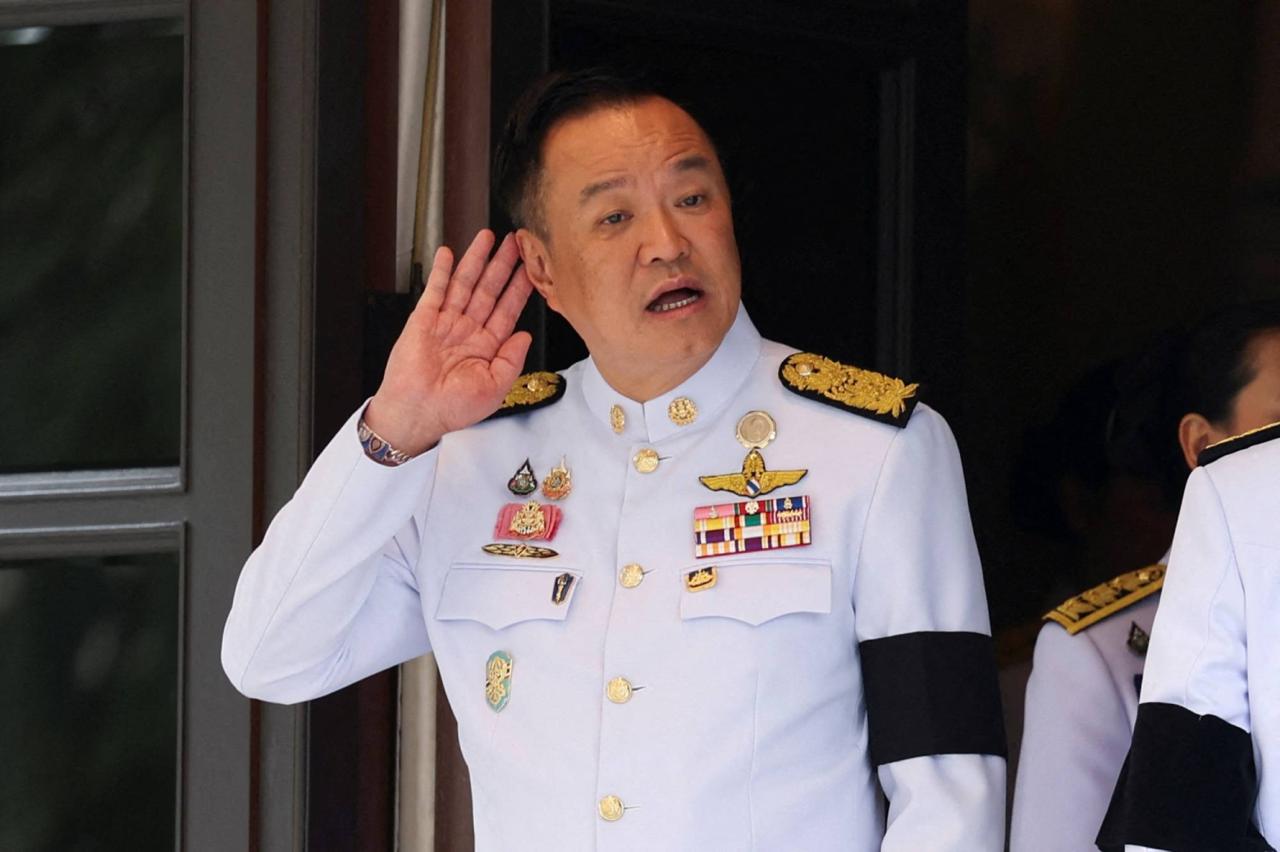
Aekarach Sattaburuth/Bangkok Post