
Cambodia Border Dispute Deepens Thailand’s Labour Crisis as Fruit Harvests Suffer
 Cambodia Border Dispute Deepens Thailand’s Labour Crisis as Fruit Harvests Suffer
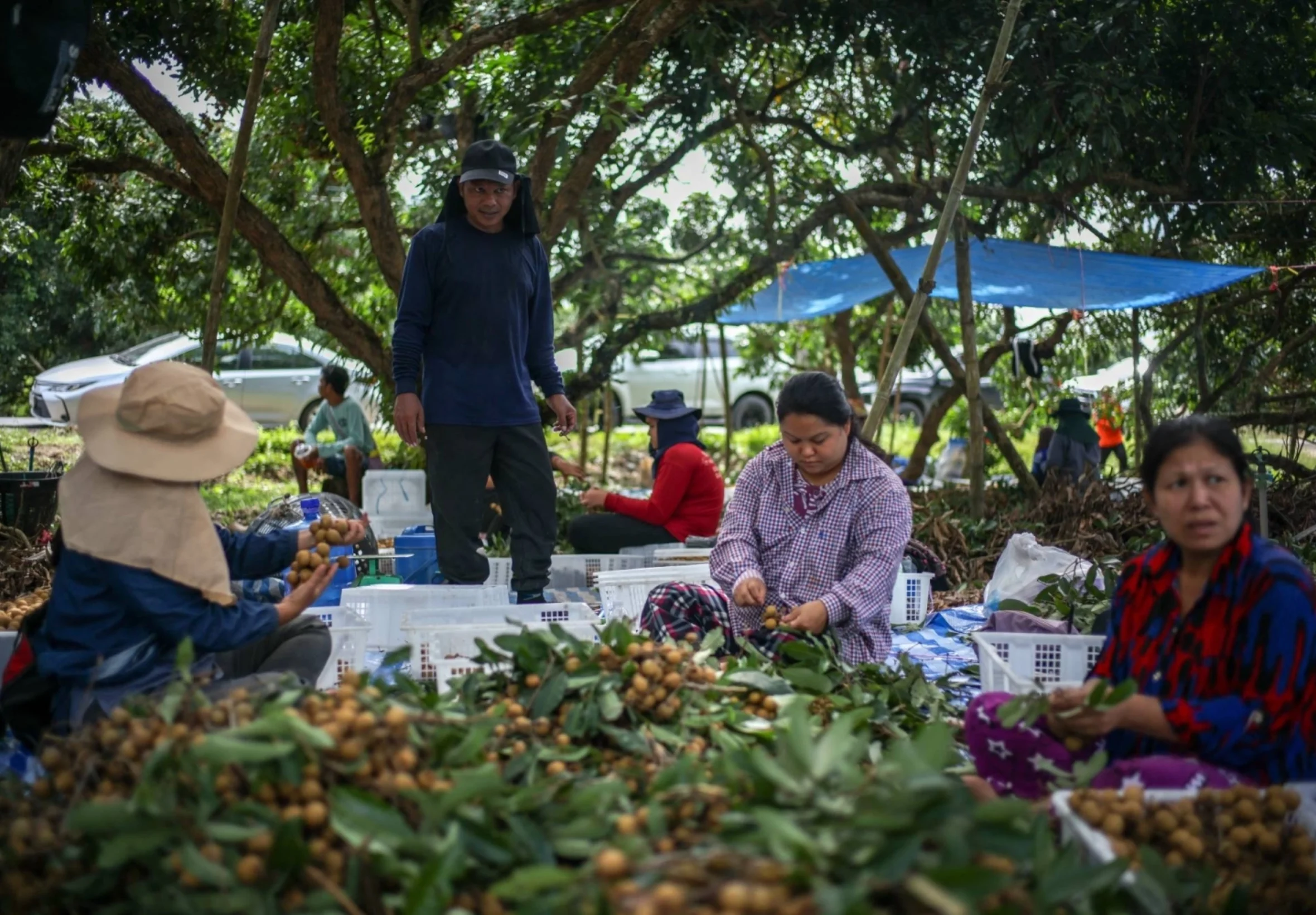
CHANTHABURI, October 15, 2026 — Ripe mangosteen and rambutan are being left to rot on trees in eastern Thailand as a shortage of migrant workers drives up harvesting costs and forces farmers to prioritise higher-value crops.
For durian farmer Jomsak Putirattana in Chanthaburi province, the loss of five Cambodian workers following disruptions linked to the Cambodia-Thailand border dispute has intensified competition for labour during the critical fruit season.
Daily wages for farm workers have more than doubled in some cases, rising from around 350–400 baht to as much as 800–1,000 baht, Jomsak said. The higher costs have made harvesting some lower-priced fruit economically unviable.
“We have to choose which fruit to harvest and leave the lower-priced fruit to rot on the trees,” he said, adding that his hope of preventing further waste was “dimming every day”.
Migrant worker shortage spreads across industries
Thailand’s ageing population has reduced the size of its domestic workforce, increasing the country’s reliance on migrant labour. Migrants account for roughly one-tenth of the national labour force and have long filled jobs in agriculture, construction and manufacturing that employers struggle to staff.
Their presence has also expanded into the service sector, including shops, restaurants, bars and other businesses in Bangkok and major cities.
The labour shortage has been compounded by the departure of Cambodian workers amid the border dispute, while political turmoil and recruitment restrictions in Myanmar have made hiring workers from that country more difficult.
Myat Thu, managing director of recruitment firm Kaung Myat San Thu, said recruitment from Myanmar now takes six to eight months. Concerns over wages, subcontracting practices and worker protections have also made some construction jobs in Thailand less attractive to Myanmar workers.
Thailand looks to South Asia for workers
Labour Minister Julapun Amornvivat said Thailand plans to recruit workers from Sri Lanka, Nepal and Bangladesh for the first time, seeking to diversify its sources of foreign labour.
The move would put Thailand in greater competition with Singapore and Malaysia, which already employ workers from South Asia.
“We need to build resilience and flexibility, rather than depend too heavily on any one source,” Julapun said.
The first Sri Lankan workers are expected to arrive in January, primarily to work on construction projects. Thailand has discussed an initial pilot programme involving approximately 10,000 workers, while labour agreements with Nepal and Bangladesh are expected next year.
The construction industry faces particular pressure. Migrants account for an estimated 60–70 per cent of its workforce of approximately 4.2 million to 4.5 million people, according to Thai Contractors Association president Liza Ngamtrakulpanit.
Employers have warned that continued shortages could delay infrastructure projects and private developments while putting pressure on contractors’ cash flow.
The government is also preparing a broader registration programme intended to speed up migrant work-permit renewals and bring undocumented migrants already in Thailand into the legal workforce. The programme could potentially cover millions of workers.
Fruit growers warn of mounting losses
Eastern Thailand produces fruit worth approximately 200 billion baht annually, according to Jomsak’s estimate. The main fruit season lasts four to five months, beginning in late April.
Moving workers from other parts of Thailand can provide temporary relief, but Jomsak said it would not resolve the underlying labour shortage.
“What we’re doing is giving a painkiller to treat the wound. The problem is still there,” he said.
For growers facing rising wages and limited access to workers, the shortage threatens not only harvesting schedules but also the amount of fruit that reaches the market. Thailand’s plans to recruit workers from new countries may help diversify its labour supply, but farmers and other employers continue to face immediate staffing challenges.