The Right to Return and Border Demarcation: Two Issues That Cannot Be Separated
 The Right to Return and Border Demarcation: Two Issues That Cannot Be Separated
When discussing border disputes, attention is often focused primarily on maps, boundary lines, and the sovereignty of states. But behind those boundary lines are the lives of people who have been forced to abandon their homes, places of birth, and livelihoods because of conflict.
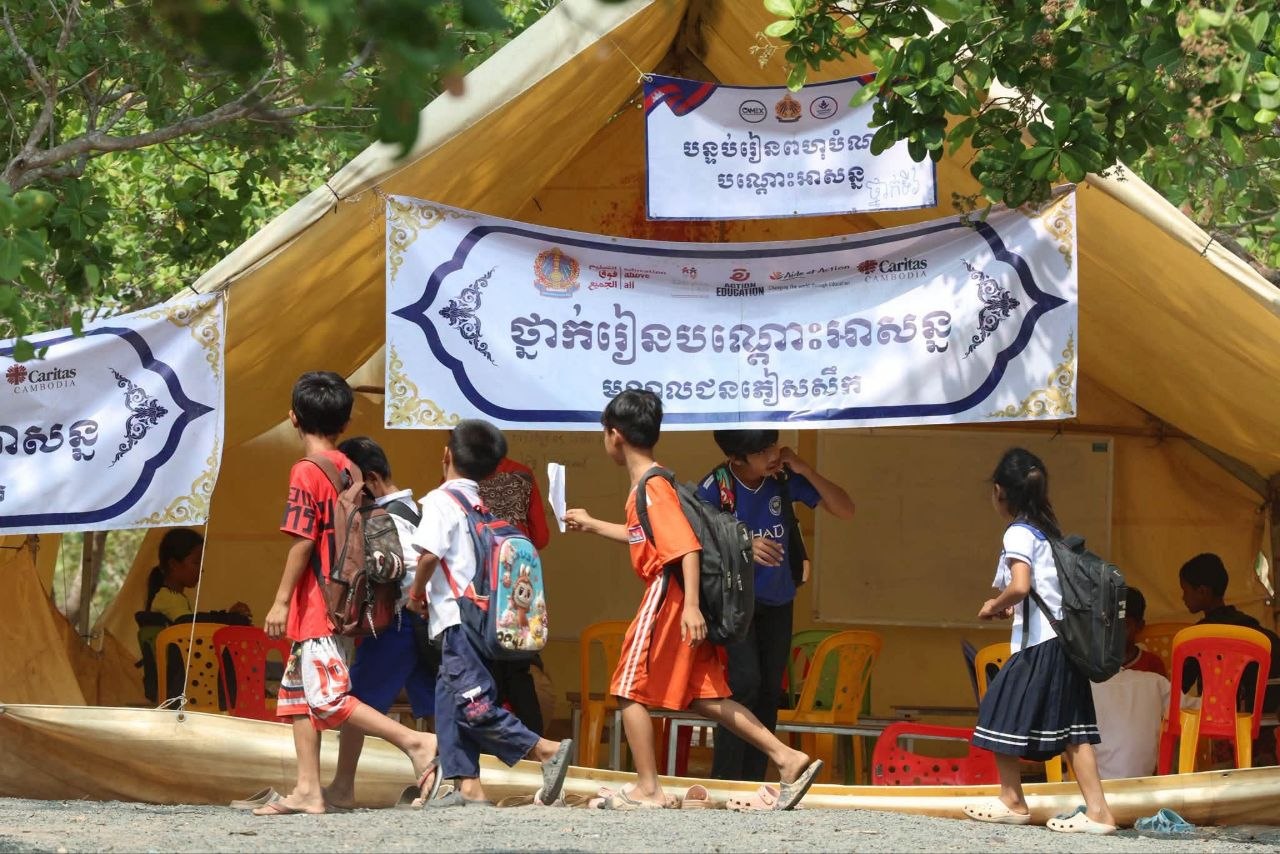
This point was highlighted in a response by Thomas Andrews, the United Nations Special Rapporteur on the situation of human rights in Cambodia, regarding his statement concerning approximately 650,000 Cambodian civilians who were displaced by the Cambodia–Thailand border conflict. The key point emphasized by Mr. Andrews is that the border dispute must be resolved peacefully and as quickly as possible, so that displaced people can safely and stably return to their homes and once again benefit from economic opportunities along the border. This is a point that deserves the utmost attention: the return of displaced people cannot be separated from the resolution of the border issue.
For displaced people, the question to which they most want an answer is: “When can we finally go home?” But in order to answer this question clearly, there must first be certainty regarding the safety and status of the areas to which they are expected to return. This is precisely why clear border demarcation and the continuation of the border-surveying and demarcation process are important—not only for the two countries, but directly for the people living along the border.
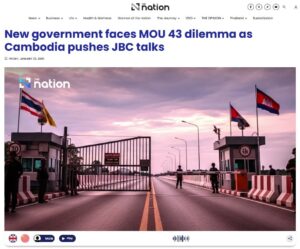
Point 3 of the Joint Statement of December 27, 2025, clearly stipulates that the implementation of the Joint Statement shall not affect the ongoing process of border demarcation and the international boundary. Both sides assigned the Joint Boundary Commission (JBC) to continue surveying and demarcating the border as quickly as possible, in accordance with existing agreements, with particular priority given to areas where people live and where they have been affected.
In this sense, a ceasefire should not be regarded as the end of the border issue. Rather, it should be the starting point for addressing the remaining problems through the mechanisms that both sides have already agreed upon.
However, the return of displaced people should not be understood merely as allowing them to re-enter the areas where they previously lived. A meaningful return must be a return that is safe and dignified, with adequate conditions enabling people to rebuild their daily lives and livelihoods. If people are able to return to their homes but continue to live in fear, lack adequate security, or are unable to earn a living, then such a return cannot yet be considered the true end of the crisis.
For this reason, the resolution of the border issue and the guarantee of the people’s right to return must proceed hand in hand. Border demarcation through the mechanisms agreed upon by both sides can provide legal and political clarity, while ensuring security and restoring livelihoods can provide certainty and confidence to the people living along the border.
One important question that should be raised is: Who determines whether a particular area is sufficiently safe for people to return? The answer should not depend solely on a declaration made unilaterally by either side. Rather, it should be based on the actual situation on the ground, coordination between both parties, and the mechanisms they have mutually agreed upon. The safety of civilians must not become part of a competition over territorial claims.
Another critical issue that deserves the utmost attention is the creation of a new situation on disputed territory, or a fait accompli, by the Thai side—where a new reality is established on the ground and then used as a basis for asserting rights. If this occurs, future resolution through legal and bilateral mechanisms could become significantly more complicated and difficult, because such actions would run contrary to the agreements already reached between the two sides.
Therefore, effective control or physical presence on the ground should not be used as a substitute for border demarcation conducted in accordance with existing agreements and international law. The presence or exercise of de facto control over a particular location should not automatically be interpreted as determining the legal status of that territory.
At the same time, protecting the population is a humanitarian obligation, whereas determining the boundary is an issue that must be resolved through law and the mechanisms that have been mutually agreed upon.
Therefore, what is needed after a ceasefire is not merely the “silencing of the guns.” There must be at least three parallel areas of continued work: maintaining security in the border areas, accelerating the border demarcation process through the existing mechanisms, and creating appropriate conditions for people to return and rebuild their livelihoods.
If any one of these areas is neglected, the uncertainty arising from the border conflict may continue even after the sound of gunfire has fallen silent. Peace without certainty and without security for the people is a peace that remains incomplete.
The fact that the Cambodia–Thailand border issue has also been raised at the APF forum demonstrates that this is not merely a bilateral matter. It is also connected to broader principles, including sovereignty, territorial integrity, the prohibition of the use of force, respect for international law, and the protection of civilians.
Ultimately, peace does not simply mean “an end to fighting”. Genuine peace is achieved when displaced people can safely return to their homes, have certainty regarding their land and territory, are able to earn a living, and no longer live with the fear that conflict could erupt again at any moment.
Therefore, urging the border-resolution process to move forward as quickly as possible does not mean bypassing the law or established procedures. Rather, it means encouraging the mechanisms that both sides have already agreed upon to move forward, in order to end the uncertainty faced by people who have been displaced and lost their homes, while also creating a solid foundation for lasting peace.
Because, ultimately, the true value of resolving a border dispute does not lie merely in the boundary line drawn on a map. It lies in the lives of people who can once again live without fear on their ancestral land—in what they can once again call “home.”
By: Pin Vichey