When Territorial Claims Are Not Enough: The Battle Over History
 When Territorial Claims Are Not Enough: The Battle Over History
As the Cambodia–Thailand dispute has moved from the border battlefield to the negotiating table and international legal forums, one question deserves to be asked: When territorial claims can no longer be pursued through force, will the struggle over identity become a new battlefield?
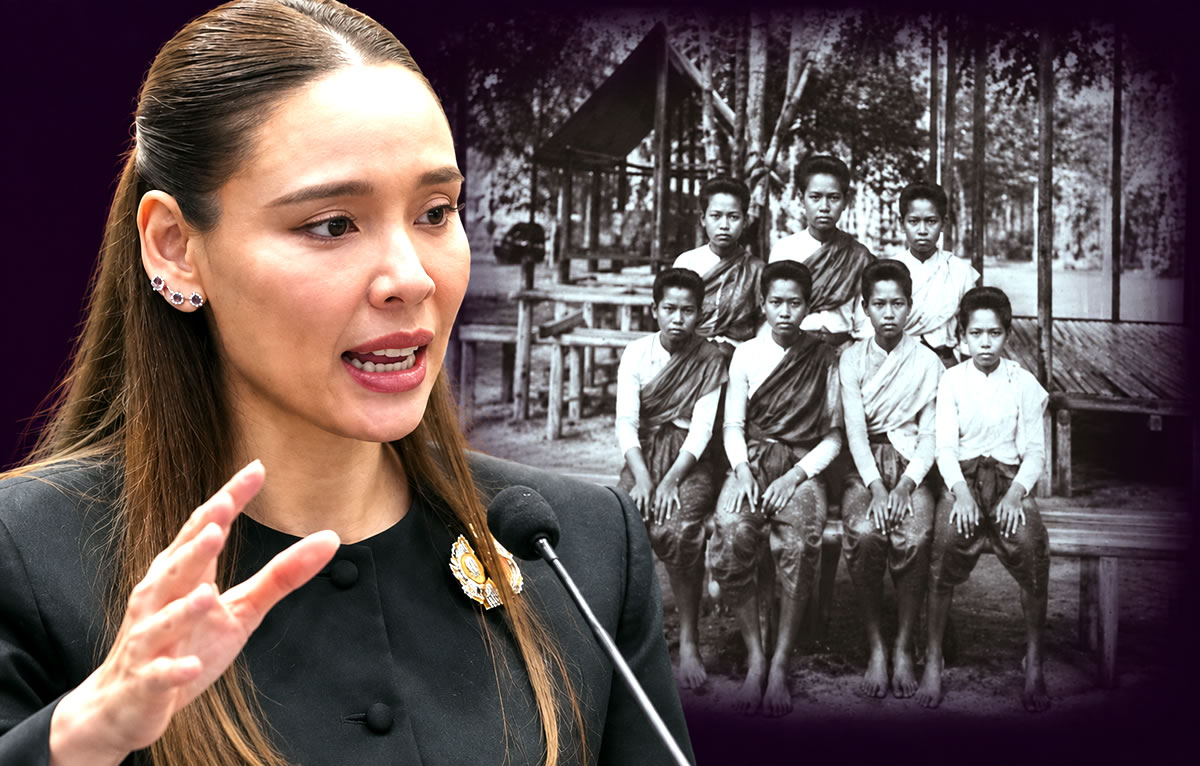
What is happening now has drawn considerable attention because the issue no longer appears to be confined to borders or maritime territory. It is increasingly extending into the realms of history and culture. Recently, Thailand’s Minister of Culture publicly protested the use of a historical photograph on the Miss Universe Cambodia stage, claiming that the photograph originated in Thailand and had been presented as part of Cambodian culture.
At first glance, this may appear to be nothing more than a dispute over a single photograph. But when examined more closely, it reveals a much broader issue: a contest over who has the authority to define and establish the origins of culture within this shared historical context.
Cambodia’s position is that history is not a piece of fabric that can simply be cut, altered, recolored, given a different narrative, and relabeled as one’s own at will. The past has its own evidence, and evidence cannot be altered according to political interests, extreme nationalist sentiment, or the claims of any particular side.
This is especially significant in the context of the tensions and disputes between Cambodia and Thailand, where territorial issues along the Cambodia–Thailand border remain highly sensitive. What is particularly noteworthy at this moment is the apparent expansion of competing claims from land, to the sea, and from the sea, into the realm of culture.
The history of Southeast Asia has gone through centuries of transformation, mutual influence, and cultural interaction. However, cultural exchange and mutual influence do not mean that one side can erase the origins of a historical tradition and rewrite the story according to its own preferences. Influence can cross borders, but the origins of a culture and its history must be established through evidence.
Cambodia does not need to compete with anyone through assertions or verbal arguments. What Cambodia has is history and evidence that can speak for itself.
From inscriptions, archaeology, temples, and works of art to languages, scripts, and historical records, these are all sources that can be studied, cross-checked, and used to establish the development of Khmer civilization.
Khmer culture is also not limited to temples that anyone can simply look at and rename according to their wishes. A living culture exists in language, script, dance, theater, Kun Lbokator, music, clothing, traditions, customs, and the way people live.
Therefore, if there are attempts to take a Khmer cultural form of clothing or symbol and label it or present it as belonging to another side, the question that should be asked is not “Who is better at making claims?” but rather, “What historical evidence exists to substantiate that claim?”
Because a claim is not evidence. Promotion is not historical verification. And words alone cannot turn a particular version of history into fact.
The same principle applies to border issues.
Territorial disputes require maps, documents, treaties, and legal foundations. Cultural questions, on the other hand, require inscriptions, archaeological artifacts, historical records, primary sources, and research that can be independently examined and verified.
Therefore, Cambodia does not need to compete over who speaks more persuasively or who makes stronger claims. What Cambodia needs to do is present the sources, documents, and evidence it possesses, and allow history and evidence to speak for themselves.
Ultimately, what matters in the study of history is not the volume of claims, but evidence that can be independently verified.
By: Pin Vichey