Thailand’s Three-Front War Against Cambodia: Undermining Strength, Weakening the Economy, and Damaging Its Reputation
 Thailand’s Three-Front War Against Cambodia: Undermining Strength, Weakening the Economy, and Damaging Its Reputation
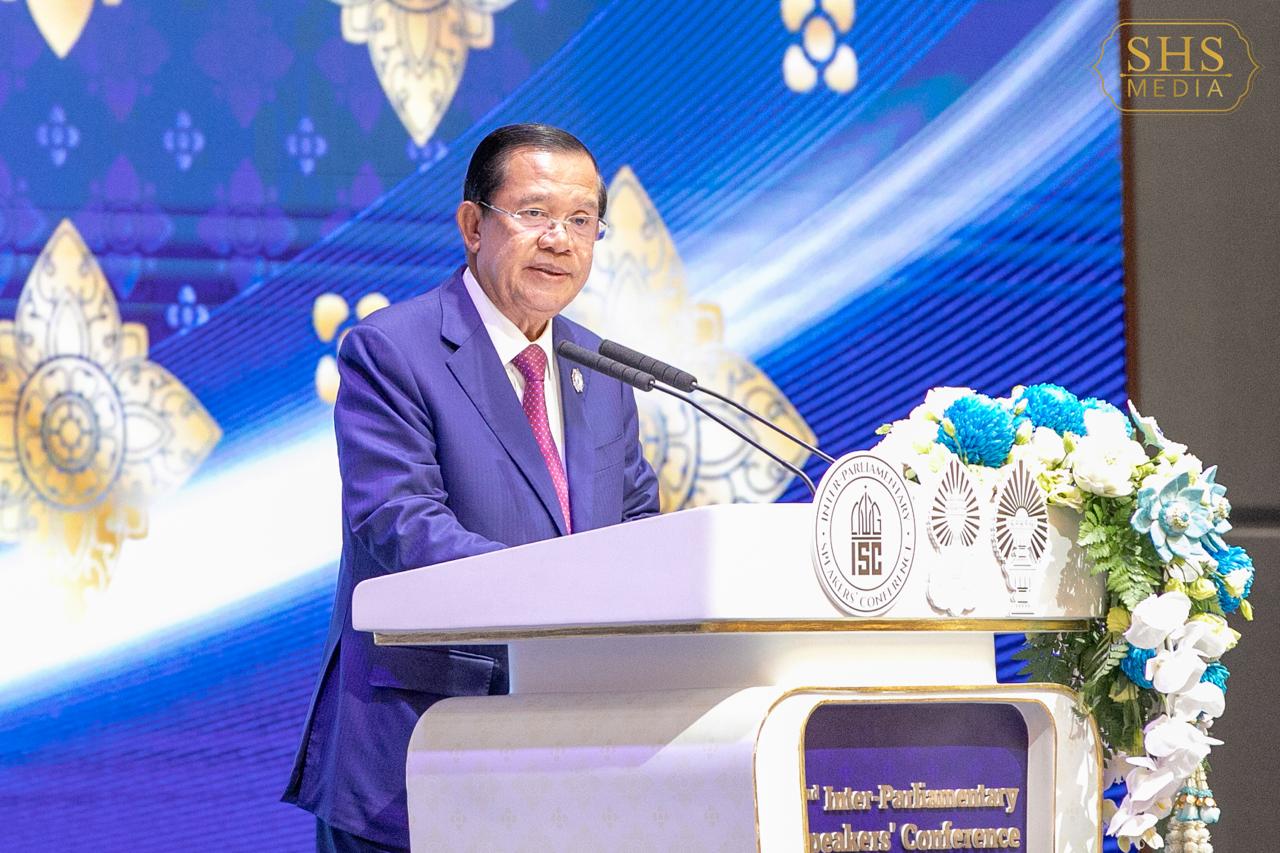
According to key remarks recently delivered by Samdech Techo Hun Sen, President of the Senate of Cambodia, the current Cambodia-Thailand conflict cannot be viewed merely as a confrontation along the border.
A deeper examination of the series of developments and actions taking place reveals that the pressure being exerted by Thailand on Cambodia has taken multiple forms. It is not limited to the military dimension alone, but also includes economic pressure and information warfare, all of which can affect Cambodia and its ability to protect its national interests.
Put simply, if Thailand’s actions are viewed from this perspective, they can be described as a “three-dimensional war”: a war to undermine Cambodia’s strength, a war to undermine its economy, and a war to undermine its reputation.
The War to Undermine Cambodia’s Strength
A war to weaken a country does not necessarily require large-scale armed clashes. It can be carried out through military pressure, the escalation of tensions, and actions that force Cambodia to expend increasing amounts of manpower and resources.
When tensions along the border are prolonged, Cambodia is required to allocate greater military forces, financial resources, and national assets to border defense.
This is essentially a kind of “marathon war”—one that does not necessarily seek an immediate victory, but instead seeks to exhaust and weaken the other side first.
One of the issues requiring the greatest attention is the preservation of military positions or the creation of new conditions in contested areas after a ceasefire agreement has been reached with the objective of reducing tensions.
Such actions have reportedly occurred repeatedly. In particular, on August 24, 2026, Thai military forces sent heavy machinery into Cambodian territory to dig a canal in the Chok Krous area, in Thmor Don village, Kouk Mon commune, Banteay Ampil district, Oddar Meanchey province.
Such activities gradually alter the situation on the ground within Cambodian sovereign territory and further increase pressure on Cambodia.
Therefore, Cambodia must not only defend its borders and prevent the escalation of tensions, but must also remain vigilant against attempts to create “new facts on the ground” through concrete actions that may gradually alter the existing situation.
The War to Undermine the Economy
In modern conflicts, economic power is one of the sharpest weapons and can be no less effective than military force.
The closure of border crossings, disruption of trade, transportation blockages, and the impact on workers’ livelihoods can directly create negative consequences for ordinary people.
Thailand cannot simply claim that such measures are unrelated to the conflict.
When border measures cause trade to decline, small cross-border businesses suffer, workers are forced to return to their home communities, and their families lose income, the pressure does not fall solely on the Cambodian government. It also falls directly on ordinary citizens.
This is one way of creating internal hardship in a country without having to fire even a single bullet.
The War to Undermine Cambodia’s Reputation
In the modern era of technology-driven information, whoever can disseminate information more quickly, more broadly, and with greater influence can gain an advantage on the international stage.
In particular, when information is widely circulated before the facts have been clearly verified, it can already shape perceptions among the international public.
Cambodia has never denied that online scam-related crime is a problem. However, this issue should be addressed through the law and through cooperation between the two countries.
The question, however, is whether criminal activities committed by specific criminal networks are being expanded and portrayed in a way that creates the impression that Cambodia as a whole is the source of the problem.
If such issues are being used to create negative perceptions of Cambodia, then this is no longer merely a fight against crime. It becomes part of an information war aimed at damaging Cambodia’s reputation.
The Three Dimensions Are Interconnected
These three forms of pressure can reinforce one another.
Military pressure forces Cambodia to spend more manpower and resources, while economic pressure creates hardship for its people. At the same time, information warfare can undermine the confidence of the international community in Cambodia.
When all three forms of pressure occur simultaneously, they can create a heavy burden on Cambodia and potentially have consequences far more serious than confrontation on the battlefield alone.
For Thailand, if it genuinely wants lasting peace, it should begin by respecting agreements, refraining from escalating tensions, and avoiding the use of economic pressure that causes innocent Cambodian citizens to bear the consequences.
It should also refrain from using Cambodia’s internal problems as instruments to damage the country’s reputation.
If the objective is truly to achieve a peaceful resolution, then dialogue and international law should be the path pursued by both sides—not the escalation of pressure across multiple fronts.
Lessons for Cambodia
For Cambodia, this is an important lesson that cannot be overlooked.
Cambodia must continue strengthening its national defense capabilities, increasing the resilience of its economy, reducing excessive dependence on any single market, and strengthening its diplomatic and information capabilities.
At the same time, Cambodia must ensure that the international community understands the country based on accurate, verifiable information and evidence.
What Cambodia is facing today is not merely pressure along the border. It is pressure that affects the country’s strength, economy, and national reputation.
Therefore, Cambodia must remain resilient across all fronts.
It must not allow misinformation and distortions to influence international perceptions. It must not allow external economic pressure to weaken the country. And it must not allow the creation of “new facts on the ground” within Cambodian territory.
Peace is a choice and it is what Cambodia wants.
But the protection of sovereignty and territorial integrity is a national duty that cannot be negotiated away or traded for anything.
By: Pinh Vichey