Cambodia Asks UNCLOS Commission to Prepare Report for Both Sides if Maritime Deal Fails
 Cambodia Asks UNCLOS Commission to Prepare Report for Both Sides if Maritime Deal Fails
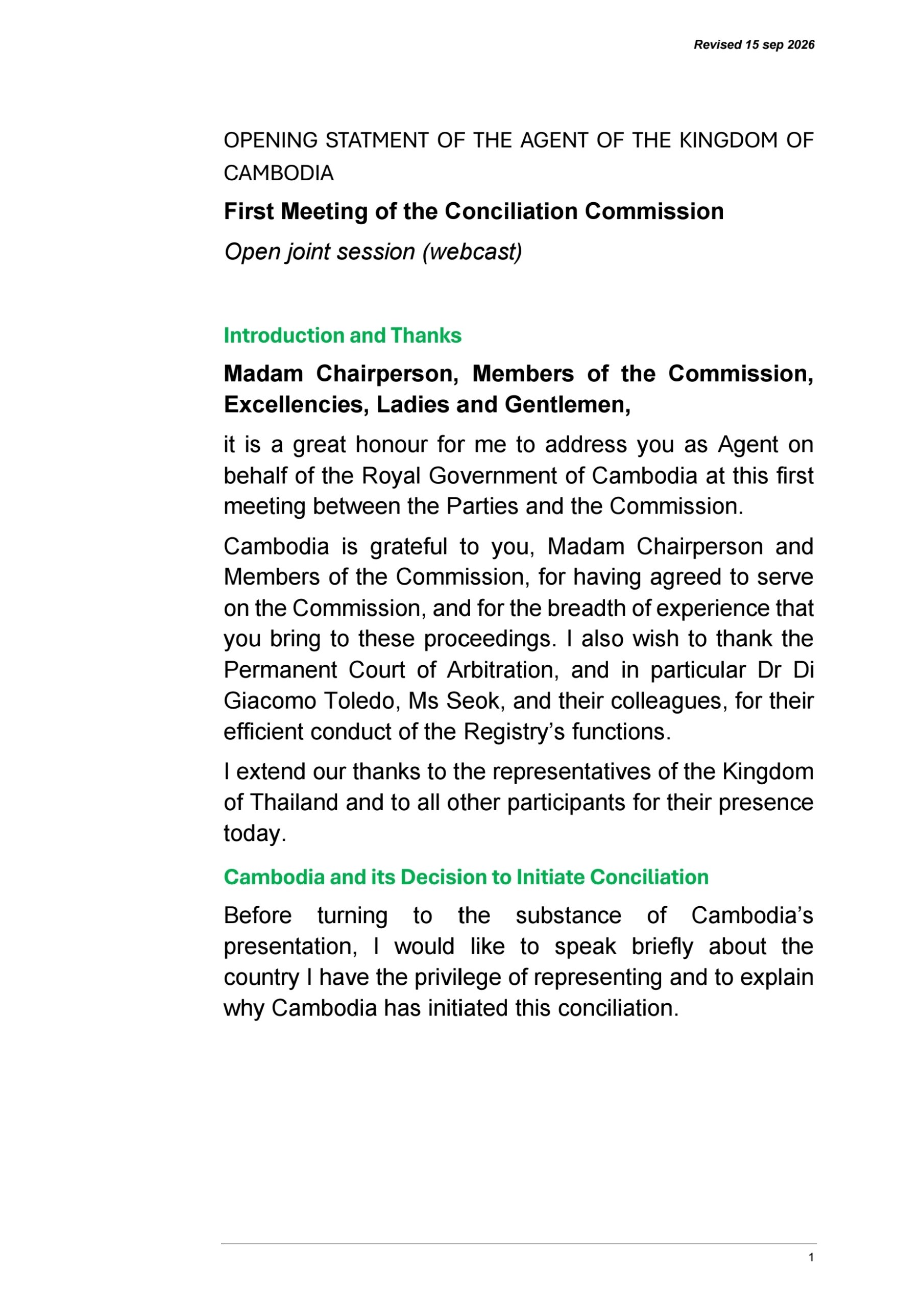
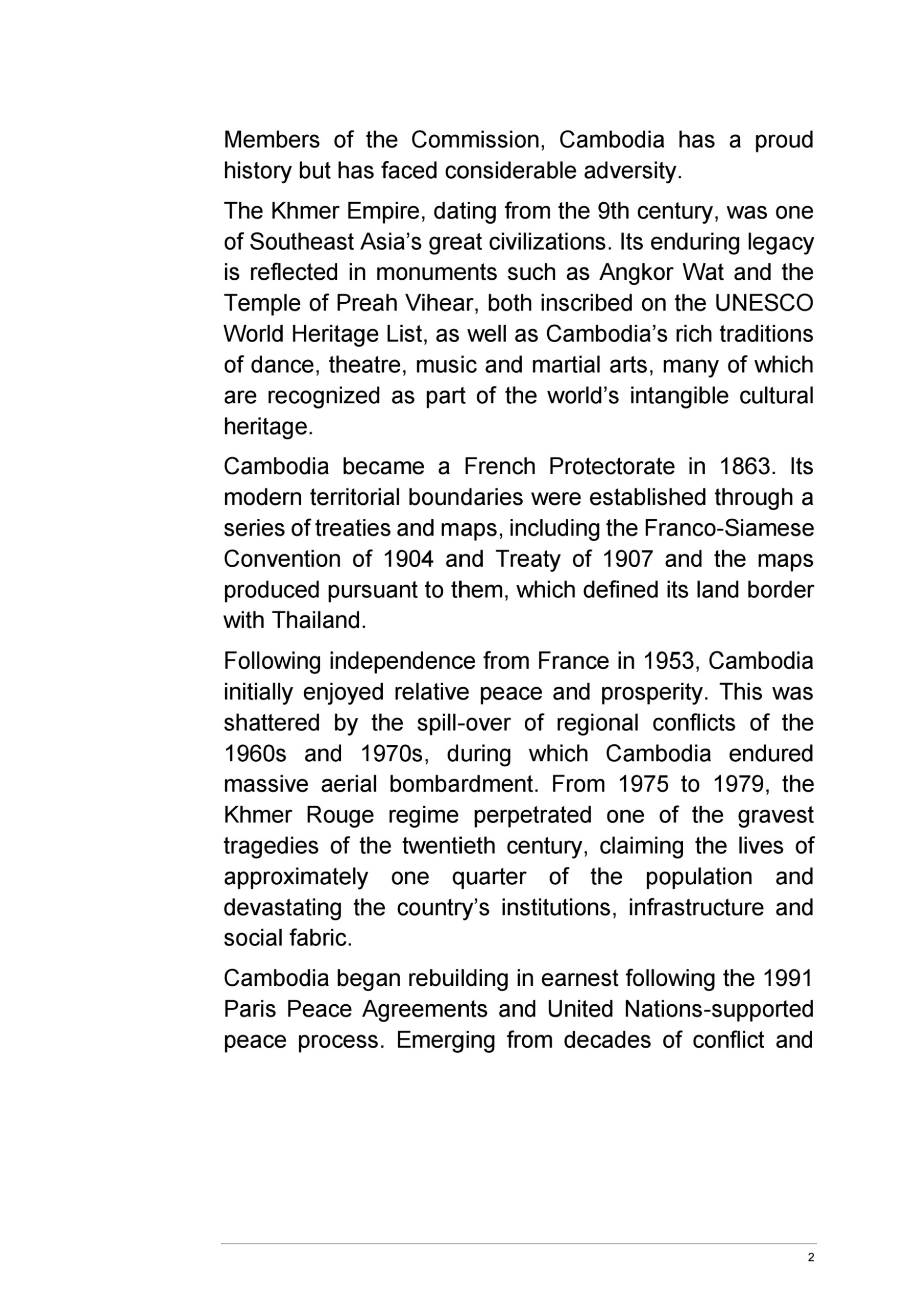
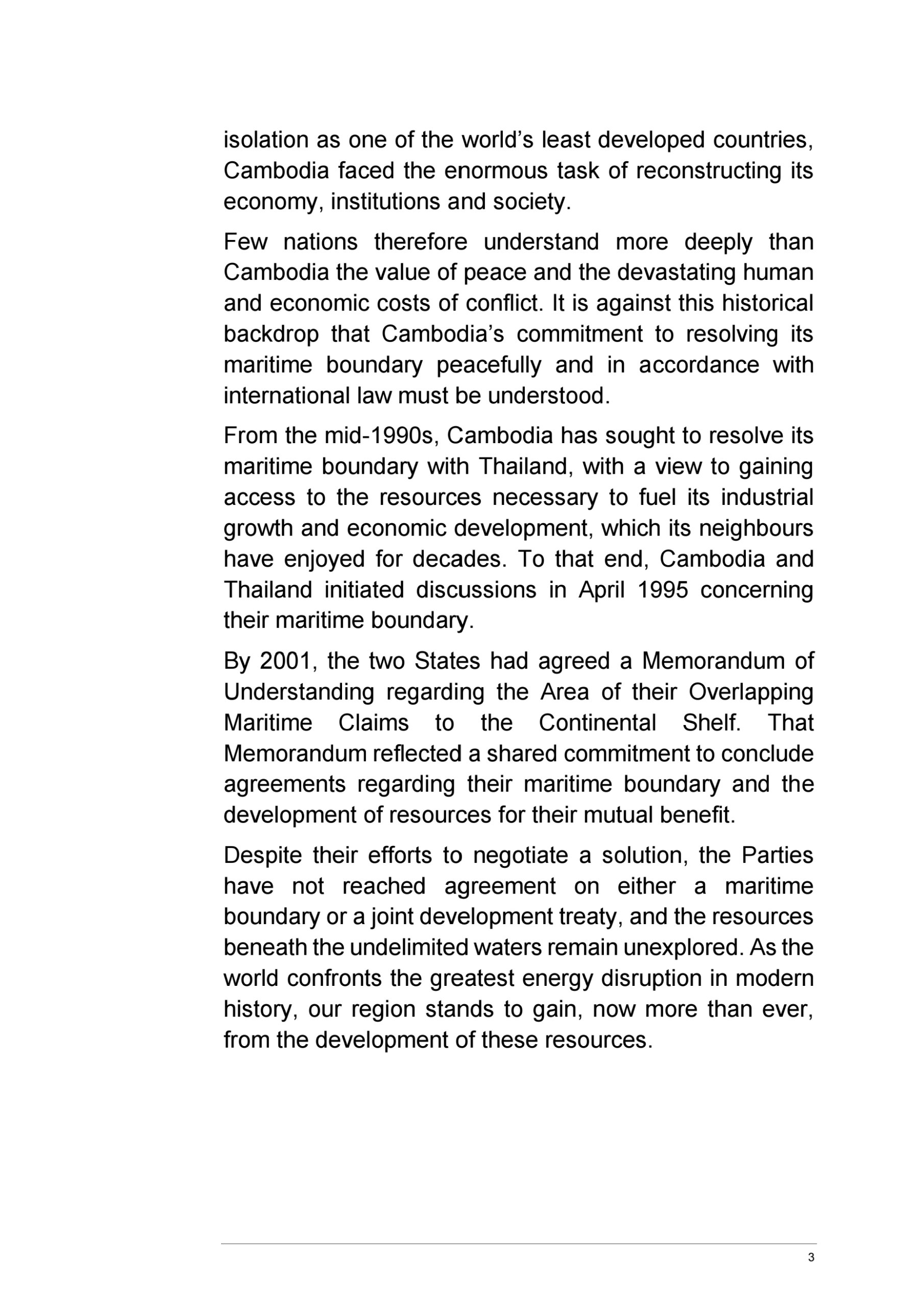
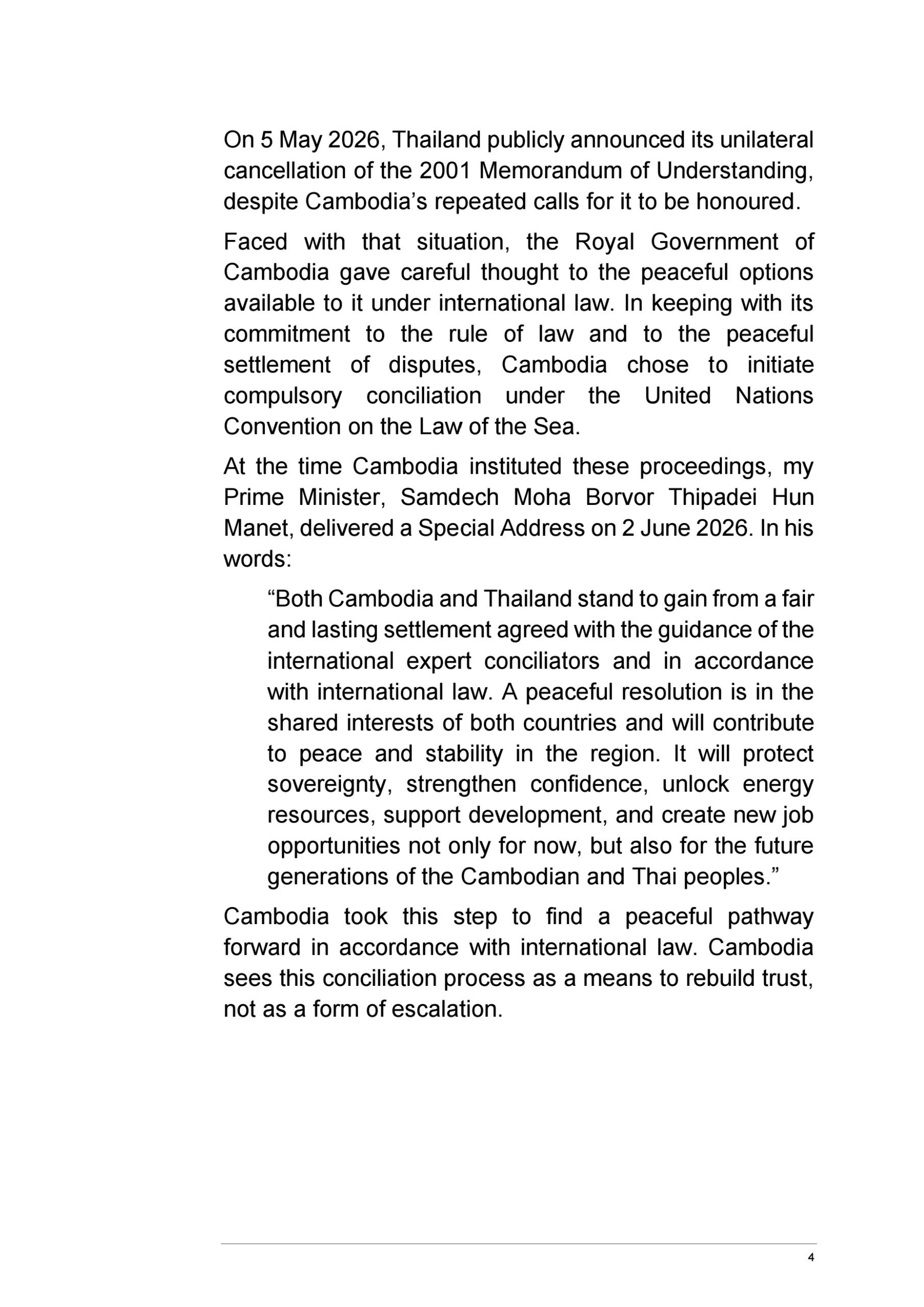
SINGAPORE, Sept. 15, 2026 — Cambodia has asked the Conciliation Commission handling its maritime boundary dispute with Thailand to prepare a report containing recommendations that both countries could use as a basis for reaching an eventual agreement if they are unable to conclude a final settlement themselves.
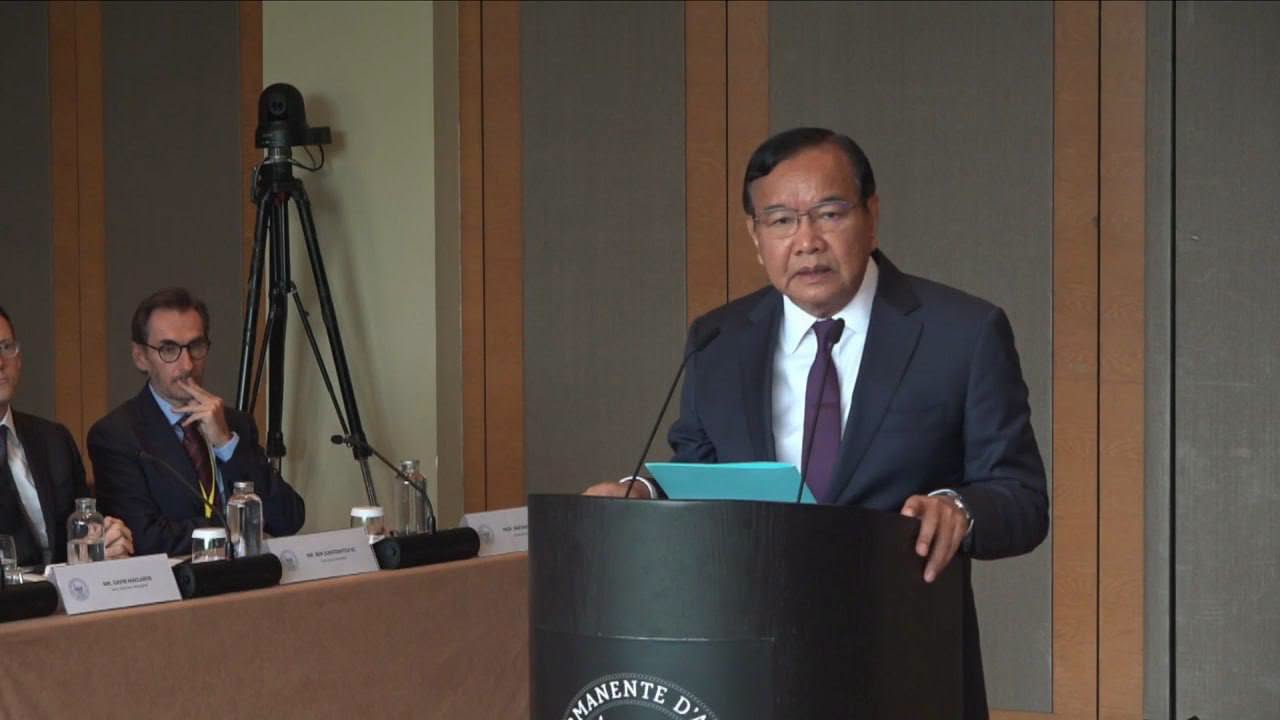
The proposal was outlined by Cambodian Deputy Prime Minister and Foreign Minister Prak Sokhonn, acting as Cambodia’s Agent, in his opening statement at the first meeting of the Conciliation Commission under the United Nations Convention on the Law of the Sea (UNCLOS) in Singapore.
Cambodia’s position is that the two countries should first seek to conclude a treaty delimiting a single, all-purpose maritime boundary between them.
However, Cambodia has also proposed an alternative pathway if the two sides cannot reach a final agreement.
“If a final agreement on either a maritime boundary or a joint development arrangement cannot be concluded, Cambodia would request the Commission to prepare a report containing recommendations to the Parties, on the basis of which such an agreement could subsequently be concluded in compliance with the Parties’ obligations under UNCLOS,” Prak Sokhonn said in the opening statement.
The proposal would give Cambodia and Thailand a common set of recommendations from the international conciliation process that could subsequently serve as a reference for negotiations, rather than allowing a failure to reach an immediate agreement to leave the dispute without a structured path forward.
Cambodia also said it would be prepared, as an alternative to immediate maritime delimitation, to conclude an agreement with Thailand for the joint development and equitable sharing of maritime resources while the two countries continue working toward a final boundary agreement.
The first Conciliation Commission meeting is being held in Singapore from Sept. 14 to 16 under the compulsory conciliation mechanism of UNCLOS. The proceedings follow Thailand’s unilateral cancellation on May 5, 2026, of the 2001 Memorandum of Understanding concerning the countries’ overlapping maritime claims to the continental shelf. Cambodia subsequently invoked the UNCLOS conciliation mechanism as a peaceful, rules-based avenue for resolving the dispute.
In his statement, Prak Sokhonn stressed that Cambodia’s decision to initiate conciliation was intended to provide a peaceful pathway forward, rather than escalate tensions.
Cambodia said its overarching objective is to achieve a resolution that serves the interests of both countries and contributes to peace, cooperation and shared prosperity in the region.
The Cambodian government has also pointed to the experience of Timor-Leste and Australia, whose maritime dispute was resolved through a UNCLOS compulsory conciliation process. Cambodia said that experience demonstrated that the mechanism can help neighbouring states overcome long-standing deadlocks and reach lasting treaty settlements.
The current Cambodia-Thailand commission is expected to work for approximately 12 months. The process is not a court case and does not produce a binding judgment; instead, the commission will make recommendations that the two countries can use in seeking a sustainable resolution.
The opening statements by Cambodia and Thailand are being publicly webcast in Khmer, English and Thai, providing direct access to the positions presented by both sides.