Prak Sokhonn: Cambodia Stands Firm on Int’l Law to Resolve Disputes With Thailand
 Prak Sokhonn: Cambodia Stands Firm on Int’l Law to Resolve Disputes With Thailand
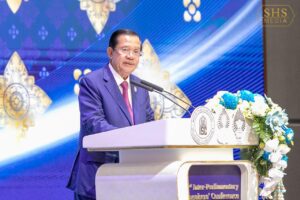
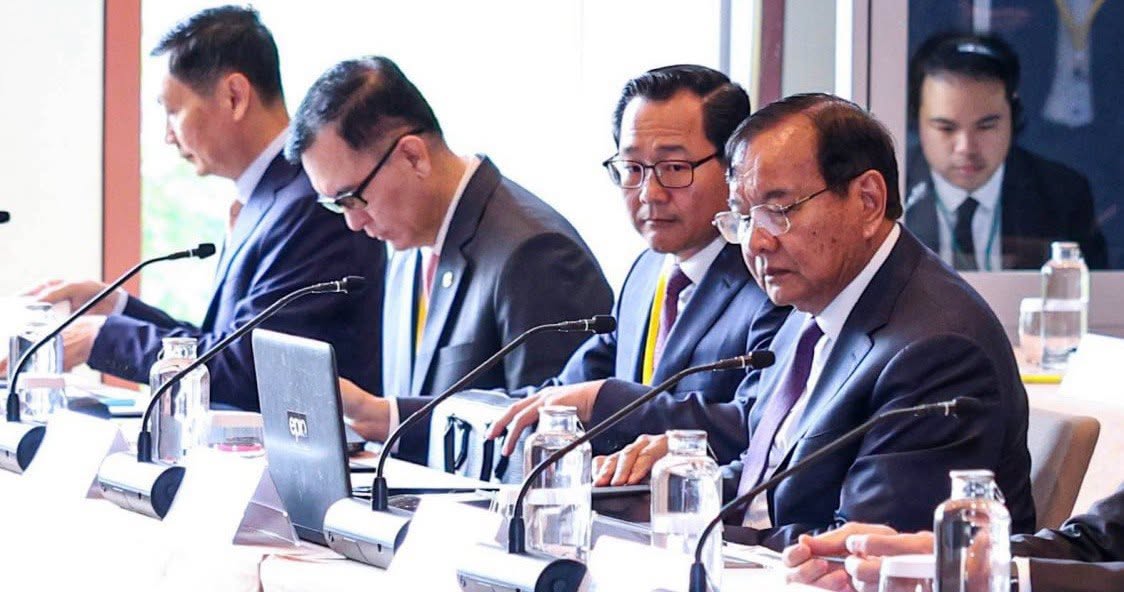
SINGAPORE, Sept. 15, 2026 — Cambodia has reaffirmed that its longstanding commitment to resolving disputes through international law and peaceful means is not merely a diplomatic position, but a principle it is prepared to put into practice, as Deputy Prime Minister and Foreign Minister Prak Sokhonn brought that message before the UNCLOS Conciliation Commission in Singapore on Tuesday.
Addressing the first meeting of the Conciliation Commission under the United Nations Convention on the Law of the Sea (UNCLOS), Prak Sokhonn, serving as Cambodia’s Agent, said Cambodia’s decision to initiate compulsory conciliation demonstrates its continued confidence in international law and international institutions as mechanisms for resolving disputes between states.
“Respect for international law, the peaceful settlement of disputes, and the institutions that uphold these principles is deeply rooted in Cambodia’s national experience,” Prak Sokhonn said in his opening statement.
His remarks came as Cambodia and Thailand began formal proceedings over their long-running overlapping maritime claims, following Thailand’s unilateral cancellation of the 2001 Memorandum of Understanding in May.
Rather than abandoning negotiations or seeking confrontation, Cambodia chose to invoke the compulsory conciliation mechanism under UNCLOS, bringing the dispute into a structured international process involving an independent Conciliation Commission. The Permanent Court of Arbitration is serving as the Registry for the proceedings.
For Cambodia, the move represents a concrete demonstration of a position it has repeatedly articulated: that even disputes involving matters of national importance should be addressed through law, dialogue and peaceful international mechanisms rather than force.
Prak Sokhonn pointed to Cambodia’s own history as evidence of this approach. He recalled the country’s previous recourse to the International Court of Justice, saying that experience showed that questions of the highest national importance can be addressed peacefully through multilateral mechanisms.
“That experience showed that questions of the highest national importance can be addressed peacefully and through multilateral mechanisms rather than by force, and that international frameworks can provide a stable and enduring foundation upon which neighbouring States can manage their differences,” he said.
Cambodia has now sought to apply that same principle to its maritime differences with Thailand.
The government says the decision to initiate UNCLOS conciliation was made after Thailand announced on May 5 that it was cancelling the 2001 MoU, which had provided the bilateral framework for negotiations over the two countries’ overlapping maritime claims. Cambodia had repeatedly called for the framework to be maintained.
Instead of treating the termination of the bilateral mechanism as the end of negotiations, Cambodia turned to a rules-based international process available under UNCLOS, to which both countries are parties.
Cambodia has stressed that this decision does not represent an escalation or abandonment of dialogue. Rather, it considers international conciliation another peaceful avenue for helping the two sides overcome their longstanding differences.
In his statement, Prak Sokhonn said Cambodia’s objective is ultimately to conclude, with the assistance of the Commission and in accordance with international law, a treaty establishing a single, all-purpose maritime boundary between Cambodia and Thailand.
Cambodia has also proposed an alternative arrangement for joint development and equitable sharing of maritime resources while the final boundary remains unresolved.
And if neither a final maritime boundary agreement nor a joint development arrangement can be reached, Cambodia has asked the Commission to prepare a report containing recommendations to both parties, which could subsequently provide a basis for reaching an agreement in accordance with their obligations under UNCLOS.
Cambodia also drew encouragement from the experience of Timor-Leste and Australia, whose UNCLOS compulsory conciliation process eventually contributed to a treaty establishing their maritime boundary in 2018.
The Cambodian government has repeatedly described the current process as consistent with its commitment to peace, dialogue and international law. On the eve of the proceedings, Cambodian officials said the decision to pursue compulsory conciliation demonstrated that Cambodia would protect its rights and national interests through peaceful and lawful means.
The significance of Prak Sokhonn’s statement in Singapore therefore extends beyond the maritime dispute itself: Cambodia is seeking to demonstrate that its stated commitment to international law is being matched by concrete action.
By bringing the issue into a UNCLOS mechanism rather than pursuing unilateral measures, Cambodia says it is choosing a legal and diplomatic pathway designed to produce a peaceful, fair and lasting settlement.
The first meeting of the Conciliation Commission is taking place in Singapore from Sept. 14 to 16, with the opening statements of both parties publicly webcast. The conciliation process is non-adjudicatory, meaning the Commission does not issue a binding court judgment; instead, it assists the parties in seeking an amicable settlement and may ultimately issue recommendations.
For Cambodia, the proceedings offer an opportunity to put into practice a principle it has consistently emphasized: national interests can be defended firmly while disputes are still resolved peacefully, through international law and respect for established legal mechanisms.