Thai PM Anutin Tells Israelis to “Go Die Back Home” Amid Cemetery Row
 Thai PM Anutin Tells Israelis to “Go Die Back Home” Amid Cemetery Row
BANGKOK, 18 September 2026 — Thai Prime Minister and Interior Minister Anutin Charnvirakul has sparked controversy after telling foreigners seeking private cemeteries in Thailand that they should “go die back home,” remarks that appeared to resonate particularly with Israel’s Jewish community amid a recent cemetery dispute.
Speaking at the Interior Ministry on September 17, Anutin was discussing the establishment of foreign religious sites and private cemeteries when he issued the blunt warning.
“You cannot simply set up a religious site on your own. Whatever form it takes, it must respect Thai society and culture. I have recently heard that there is also a request to build a private cemetery. That is going too far,” he said.
“They are already fortunate to be allowed to come here. If they come, they should make an honest living. If they are going to die, they should go die back home, not here. And do not come here to take advantage of people,” Anutin said.
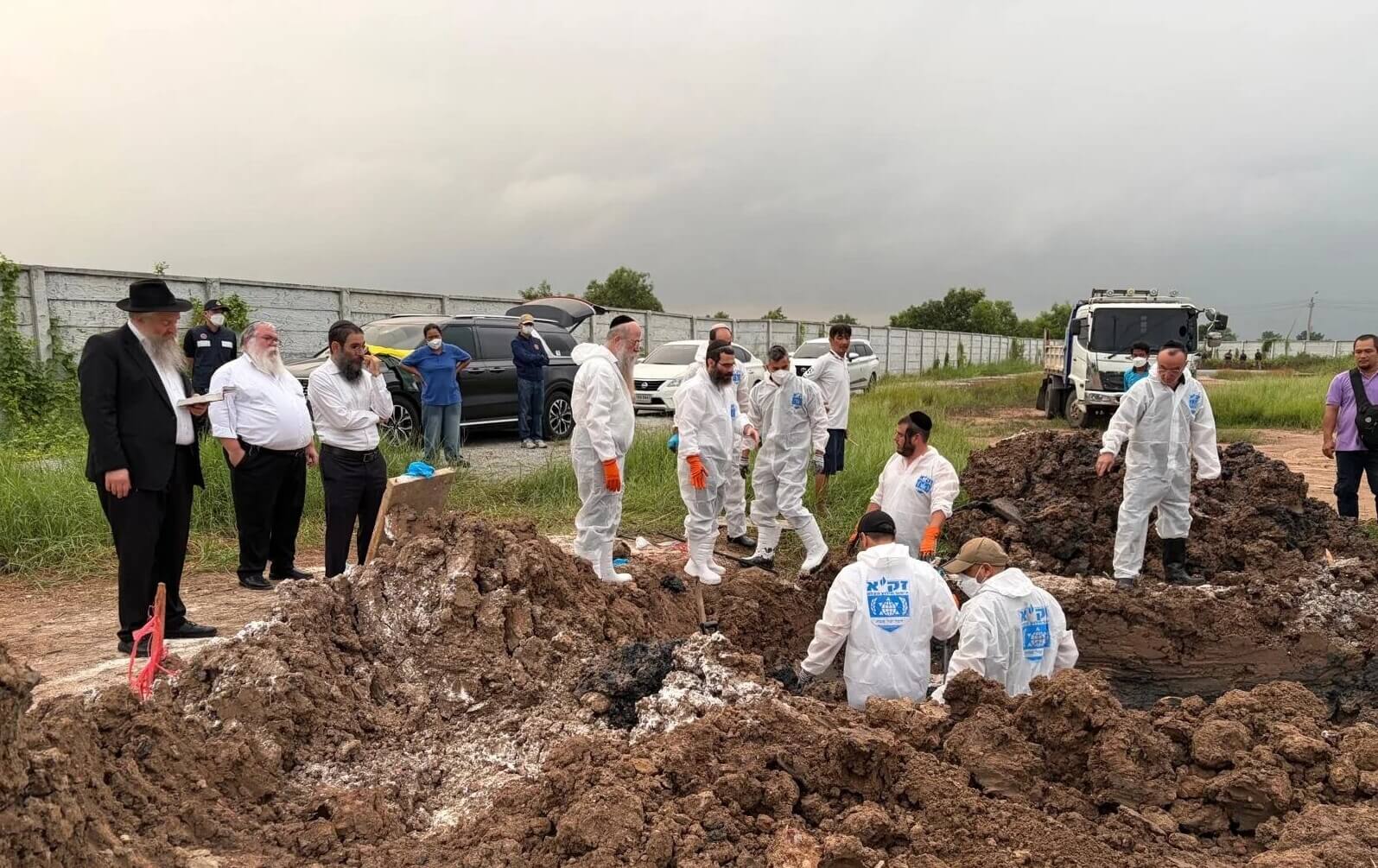
The remarks came just two days after Thai authorities oversaw the removal of four Jewish graves from an unlicensed cemetery in Chachoengsao province.
The cemetery in Bang Khla district had been established on land purchased several years ago by members of Bangkok’s Jewish community and Chabad. Its burial permit expired in 2023 and was not renewed.
Authorities subsequently found four people buried at the site — three Israeli nationals and one British national. Thai officials said some of the burials took place after the permit had expired and without the required notification.
The four graves were exhumed and transferred on September 15 to a licensed cemetery, with the process carried out in accordance with Jewish burial practices.
The timing of the relocation and Anutin’s subsequent remarks has drawn attention from Israeli and Jewish media, with reports suggesting that his comments could be interpreted as being aimed at Israelis or the Jewish community.
Anutin Says Warning Was Not About One Nationality
Despite the apparent connection to the cemetery controversy, Anutin said his broader crackdown was not directed at any particular nationality.
He said Thailand remains open to foreign tourists, investors and residents who obey Thai law, make an honest living and do not exploit Thai people.
His comments formed part of a wider directive to provincial governors to step up enforcement against foreigners suspected of violating Thai laws, including operating illegal businesses, using Thai nominees, holding land unlawfully, working without permits or using Thailand as a base for criminal activity.
Anutin also instructed authorities to investigate foreign religious premises operating without proper approval and criticised businesses that use one licence, such as a restaurant licence, while allegedly operating a religious facility on the same premises.
He further ordered officials to take action against establishments displaying signs barring Thai nationals from entering, except where restrictions are legally justified, such as private residences.
Cemetery Dispute Fuels Wider Scrutiny
The Jewish cemetery controversy comes amid increased scrutiny of foreign-linked activities in Thailand, including religious facilities, land ownership and businesses.
The government has also been examining foreign nationals accused of violating immigration and business regulations, with Anutin instructing provincial authorities to use available legal mechanisms to remove foreigners who meet the criteria for deportation.
Thai authorities have stressed that the enforcement drive applies across nationalities and is intended to ensure that foreigners comply with Thai law.
However, the prime minister’s unusually direct reference to foreigners who “are going to die” has drawn particular attention because it followed so closely after the relocation of the four Jewish graves.
For Israel’s Jewish community in Thailand, the remarks come at a particularly sensitive moment as authorities continue examining foreign religious and community facilities.
Anutin, meanwhile, maintained that foreigners who respect Thai laws and contribute positively to the country remain welcome, while those who violate the law or exploit Thai people should face enforcement action.